

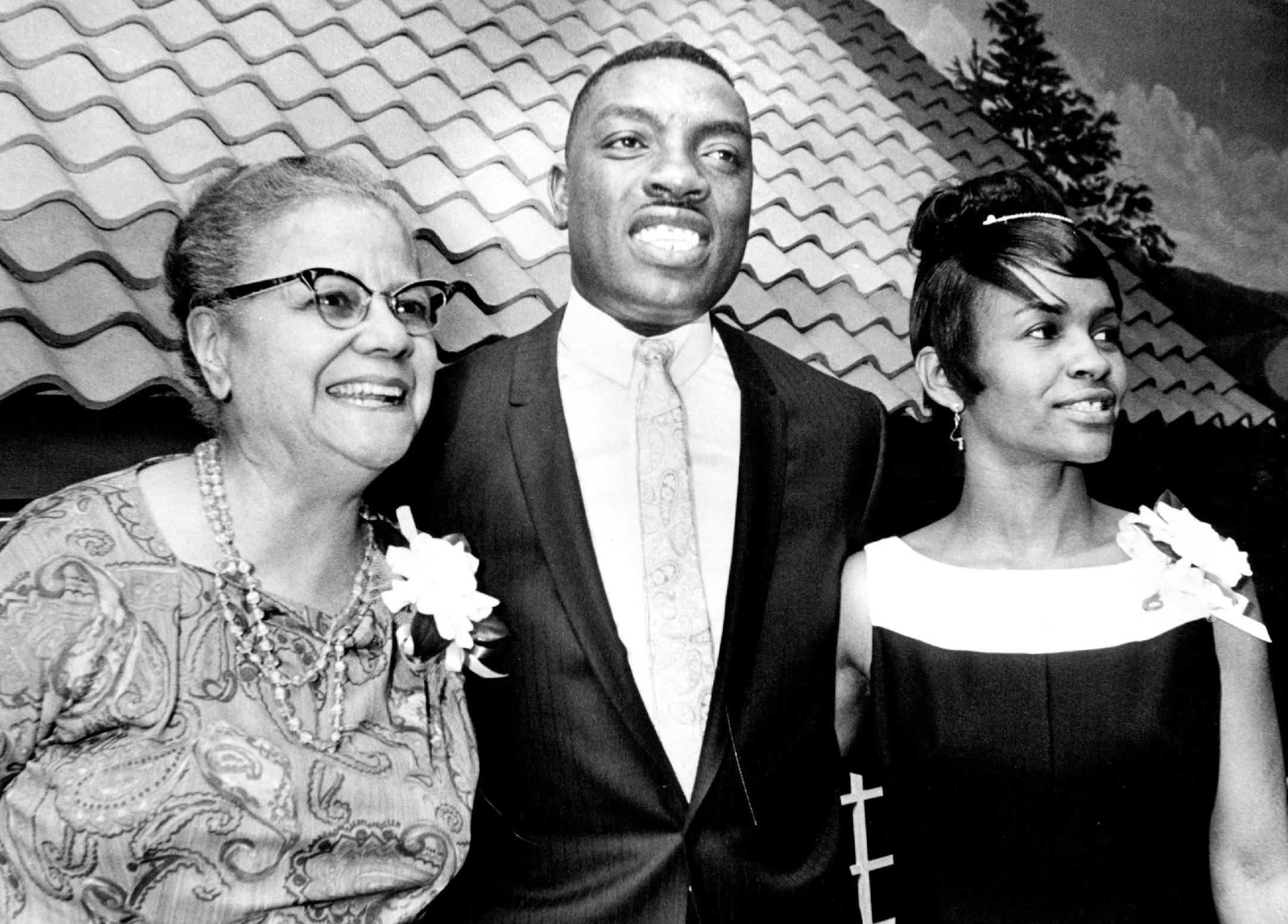
On a train to Mississippi in 1922, Anna Arnold Hedgeman first faced overt racism as jarring as the rumbling of the rails. From St. Paul to Chicago, she rode in the dining car open to both Black and white passengers. But when the train reached Cairo, Ill., the conductor moved her to the "colored" car behind the locomotive.
"I was shocked by all the ugliness that is the South — the Jim Crowism and segregation," she told Twin Cities audiences in 1950. And after working as executive director of a YWCA in Springfield, Ohio, she found "the Midwest was not much better."
Born in Iowa in 1899, Anna Arnold moved to Anoka as a child, the oldest of six in the city's lone Black family. In 1922, after becoming Hamline University's first African American graduate, she launched a career as a civil rights and women's rights crusader — working in the Truman administration, busting racial barriers in the New York mayor's Cabinet, playing a key role in the 1963 March on Washington and helping to found the National Organization for Women in 1966.
While many of her pioneering accomplishments came after she left Minnesota, Hedgeman returned to the Twin Cities in 1950 with her outspoken nature in full bloom during a series of speeches in which she toyed with a presidential run — though she admitted she was too busy to run.
"I think it's time that we ask white people, 'Aren't you embarrassed at keeping the fruits of democracy to yourselves?' It's time we said, 'You're missing a bet. Let's use everybody, not just the chosen few. We, the Negroes, are your greatest asset in the war for men's minds.' "
Hedgeman's parents, William and Marie Arnold, were born in the South and moved to Marshalltown, Iowa, where he worked as a music teacher. William Arnold, who later became a newspaper editor, "created an environment that prioritized education and a strong work ethic," and Anna learned to read at home, according to blackpast.org, an African-American history website.
When her first of two books, "The Trumpet Sounds," was published in 1965, Minneapolis Tribune staff writer Lora Lee Watson — a former Anoka neighbor of the Arnold family — wrote the review. "We in Anoka always felt that what distinguished the Arnolds was not their color but the fact that they had more talent, intelligence and charm concentrated in their home than probably any other home in town," Watson wrote.
After Hedgeman's second book, "The Gift of Chaos," came out in 1977, Watson wrote that Hedgeman was "uniquely qualified to recount the story of racial unrest and rebellion" because she had "devoted a half-century to the crusade for equality for all."


