

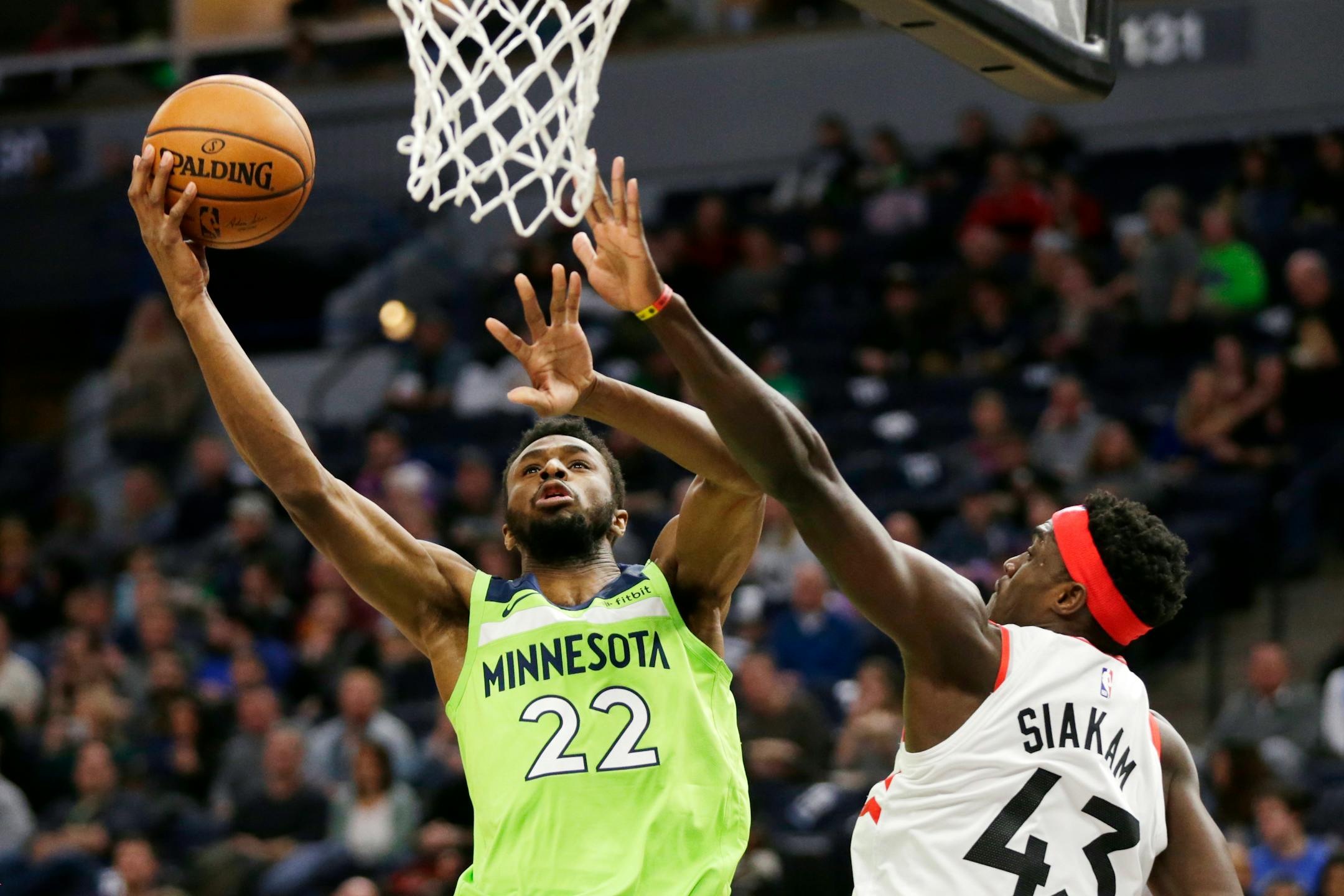
From the moment Gersson Rosas took over the job as Timberwolves president, he made a clear distinction between Karl-Anthony Towns and Andrew Wiggins.
Even though both were max-contract players, there was a difference Rosas acknowledged that previous coach and President Tom Thibodeau didn't: Towns was a productive player, and a burgeoning offensive talent while Wiggins wasn't living up to his potential.
Rosas made it clear that Towns was the centerpiece, the player around which the entire franchise would revolve. As a 6-11 center who could shoot, Towns was the kind of rare player who could help relaunch the team in Rosas' image.
Wiggins? Well, he had some work to do.
Rosas was always encouraging of what he saw in Wiggins, and never said a bad word about him. Rosas would always say the team needed more from Wiggins and the Wolves needed to provide the resources to help Wiggins thrive. At his introductory news conference, Rosas made a comment that takes on a different light after the Wolves traded Wiggins to the Warriors for D'Angelo Russell on Thursday.
"The reality is this: If I go out on the market to get a player, I'm not going to find a player that's got a bigger upside than Andrew," Rosas said in May.
Nine months later, the Wolves were sending two draft picks — a top-three-protected first-rounder in 2021 and a second-rounder in 2021 — to the Warriors for Russell, who the Wolves view as their point guard of the future.
The future never materialized for Wiggins in Minnesota after they acquired him in the Kevin Love trade with Cleveland in 2014. His tantalizing talent never equaled paramount production. He was trending in the right direction after his third season, when he shot 45% (36% from three-point range) and averaged 23.6 points per game. Jimmy Butler's arrival saw a noticeable regression for Wiggins, whose points per game declined to 17.7 and free-throw percentage from 76% to 64%. Last season wasn't much better before Rosas came to town.


