

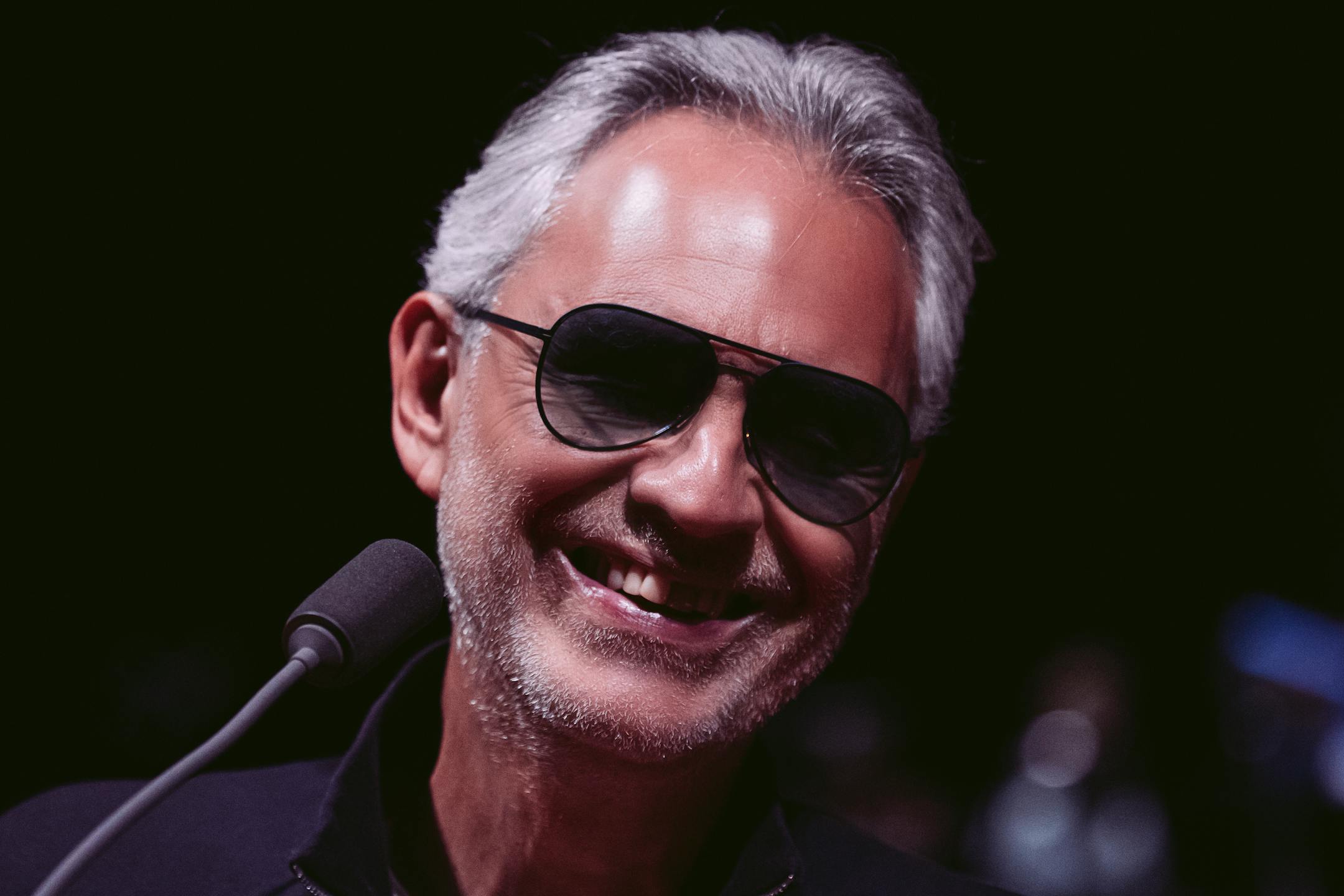
Make it big. That seems to be the primary directive in the classical crossover genre.
Perhaps your average American isn't going to become a classical music fan, but there's always an appeal to music that overflows with big sounds and earnest urgency. Such is classical crossover, which gives voice to that part in each of us that feels deeply passionate about something or someone.
Andrea Bocelli is the king of classical crossover. Yes, he sings operatic arias and periodically has performed in productions, but some call what he does "popera," a hybrid in which everything is infused with import.
On Sunday, Bocelli brings that formula to the Target Center stage with conductor Steven Mercurio and an orchestra, closing out a six-city U.S. tour. At age 64 and after 30 years in the business, the Italian tenor might be at the peak of his popularity.
But Bocelli is the heir to a long tradition of finding common ground between classical and popular music. While his specialty is mixing arias by Giacomo Puccini and Giuseppe Verdi with pop songs by David Foster and others (sometimes in tandem with Céline Dion, Sarah Brightman or Ed Sheeran), it's far from a new hybrid.
Here's a thumbnail sketch of how the past century of classical crossover has unfolded.
John McCormack: This Irish tenor achieved stardom on the stages of the world's great opera houses, but when RCA Victor started recording him in 1910, he turned to the popular songs of the day and became a star during World War I by making hits of "It's a Long Way to Tipperary" and "Keep the Home Fires Burning."
Mario Lanza: He may not have had the voice of opera legend Enrico Caruso, but Lanza did play him in a movie, "The Great Caruso" (1951), one of the tenor's many starring film roles. He also was among the first to bring operatic arias and Neapolitan balladry to the small screen via variety shows.


