

Minnesota's aquatic invasive species fight turns and twists almost daily. As recently as Friday, the Department of Natural Resources announced that faucet snails were found in leeches purchased in an Otter Tail County bait shop, after being harvested on the White Earth Indian Reservation.
A day earlier, a zebra mussel was found in Lake Minnewaska. And a week ago, the same critters were discovered in Pelican Lake near Brainerd.
Add to this what hasn't been widely reported by the DNR -- that it is developing tentative plans to install three Asian carp barriers in southwest Minnesota rivers; that the DNA technology the agency has been using through a contractor to determine possible whereabouts of Asian carp in the St. Croix and Mississippi rivers might be faulty; that, increasingly, the idea of installing an electrical barrier in the Ford Dam seems overly fraught with dangers; and that in any event, according to a new study, only 10 adult male and a like number of female Asian carp might be needed to establish a population of those fish in the Great Lakes -- and you have, quite simply, chaos.
Consider also two truisms: that individuals rarely act to benefit community ahead of self, and that government and its bureaucrats seem nearly universally incapable of behaving swiftly and effectively enough to thwart significant threats in a timely manner.
Put another way, we're in a world of hurt.
Or could be. Time will tell.
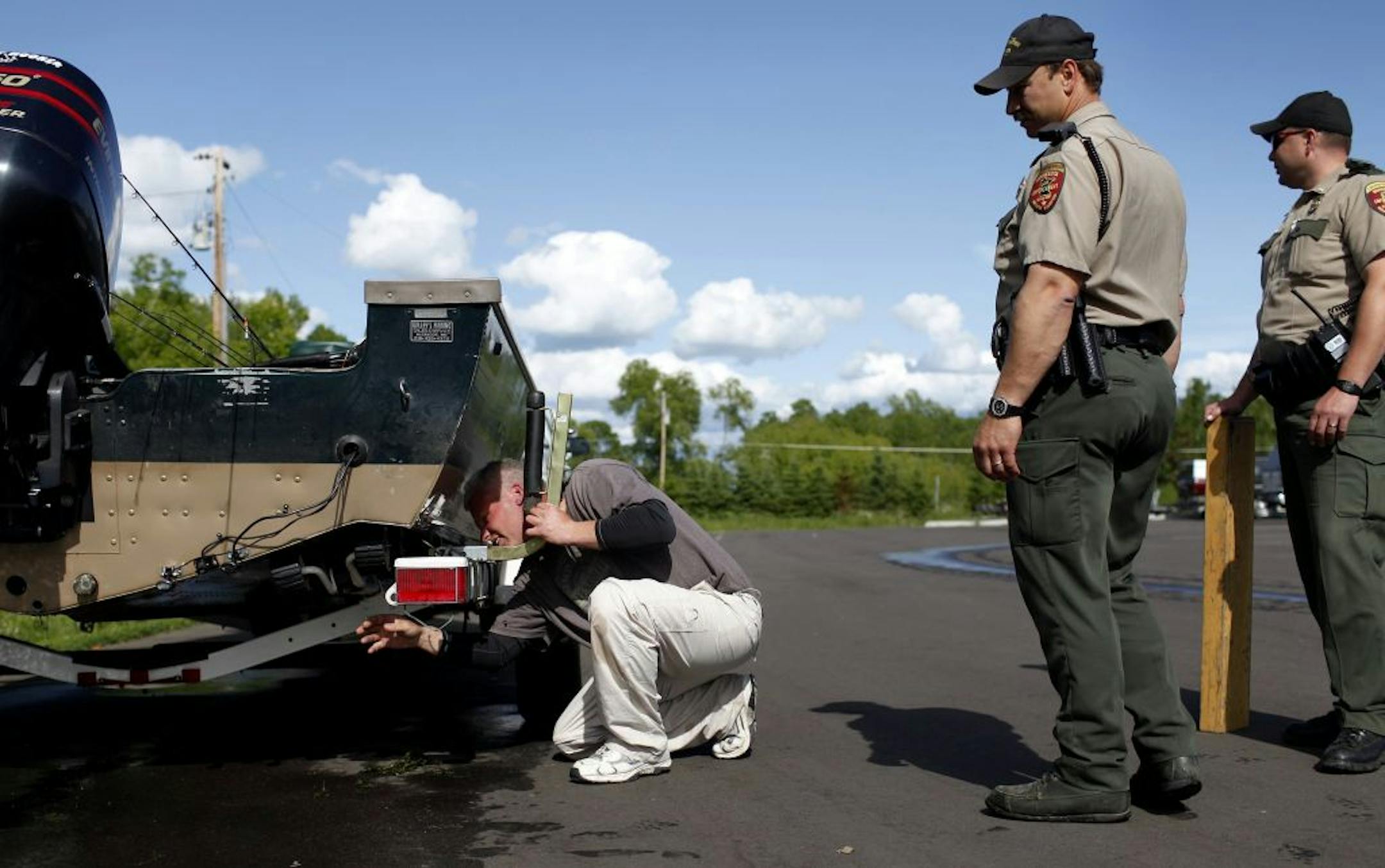
Until it does, an issue no less threatening deserves attention: the power invested by the Legislature in DNR conservation officers to divert from traffic for inspection at "roadside checks" vehicles that are pulling boats.
Some background:


