

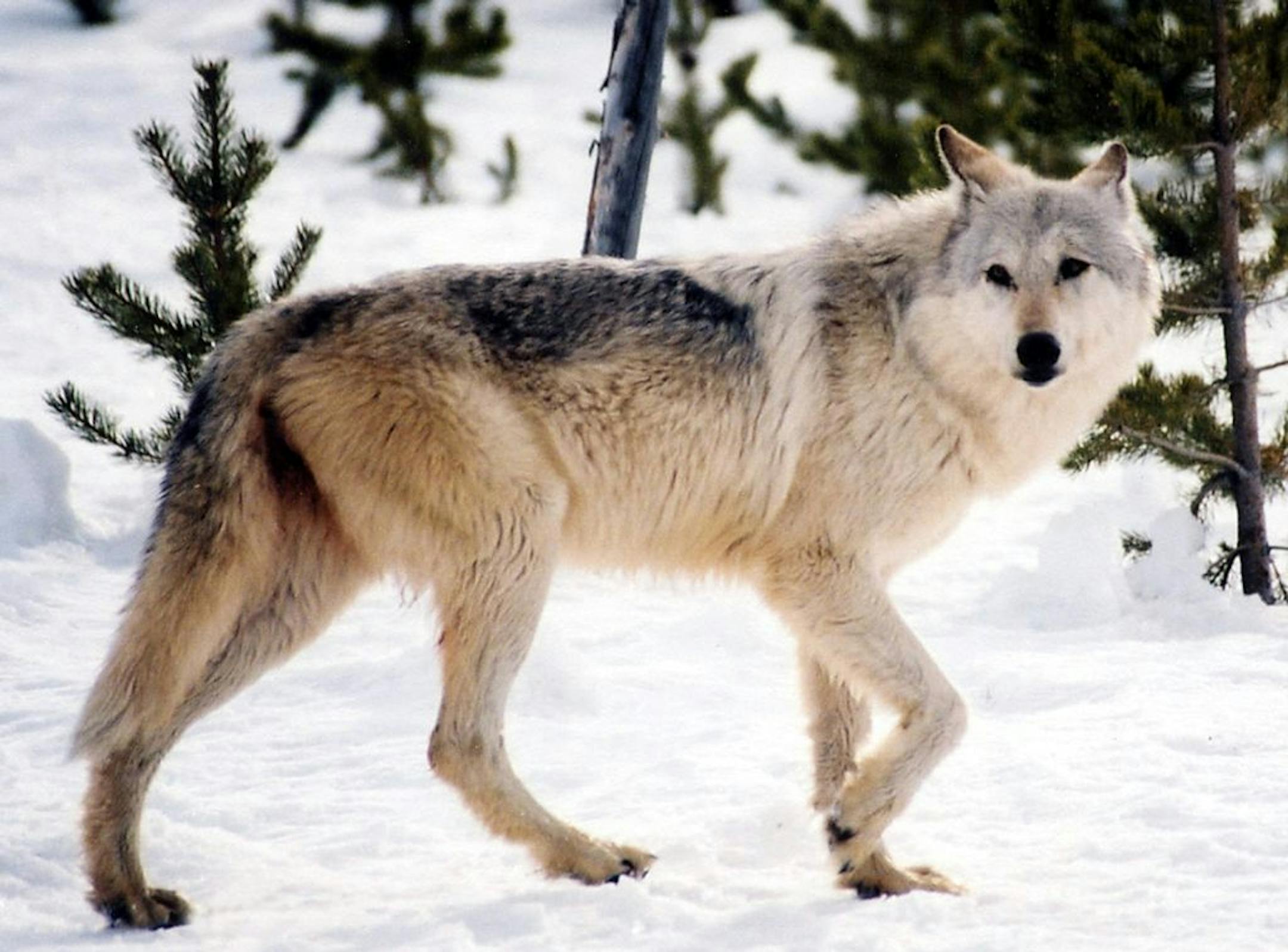
Though the Legislature doesn't convene until next month, maneuvering already has begun by those who intend to stop, or suspend, wolf hunting and trapping in Minnesota. Their primary argument is that the Legislature, the Department of Natural Resources or both irresponsibly jumped into the wolf-killing business absent due and careful consideration.
Those who buy into this fatuous fact dalliance will be gullible indeed. Regardless, expect plenty of loud talking, fist pounding and perhaps even a few tears to accompany the claim.
All of which should be considered for what it is: a marketing campaign to increase contributions to various groups, not least the Humane Society of the United States, which has threatened to sue the U.S. Fish and Wildlife Service over the delisting of Minnesota, Wisconsin and Michigan gray wolves from the Endangered Species Act.
In point of fact, never has a Minnesota wildlife species received so much attention and so much scientific analysis as the gray wolf, while incurring the deliberation and costs of so many lawyers.
And all along, wolf hunting and trapping were part of the plan should the state's wolf population rebound from its low point in the 1960s.
"It is important to remember," the U.S. Fish and Wildlife Service said in its 1978 wolf recovery plan, "that the wolf is controversial, so there will be local opposition to any attempt to re-establish the animal or afford it any measure of protection. Similarly, there will be opposition from other quarters to any effort to control the animal, although control may be necessary for the good of the animal itself in certain areas. If re-establishment of the wolf is accomplished, regulated taking of the animal undoubtedly will be necessary in the restored range sooner or later."
Officially, a "recovered" state wolf population was expected to be 1,250 to 1,400 animals statewide, up from the 350 to 700 wolves that existed here before their protection was afforded in 1974 under the Endangered Species Act.
Everyone, or virtually everyone, agrees the listing was appropriate, because wolves here were so few, due in large part to bounties and unrestricted gunning and poisoning, both of which were highly effective.


