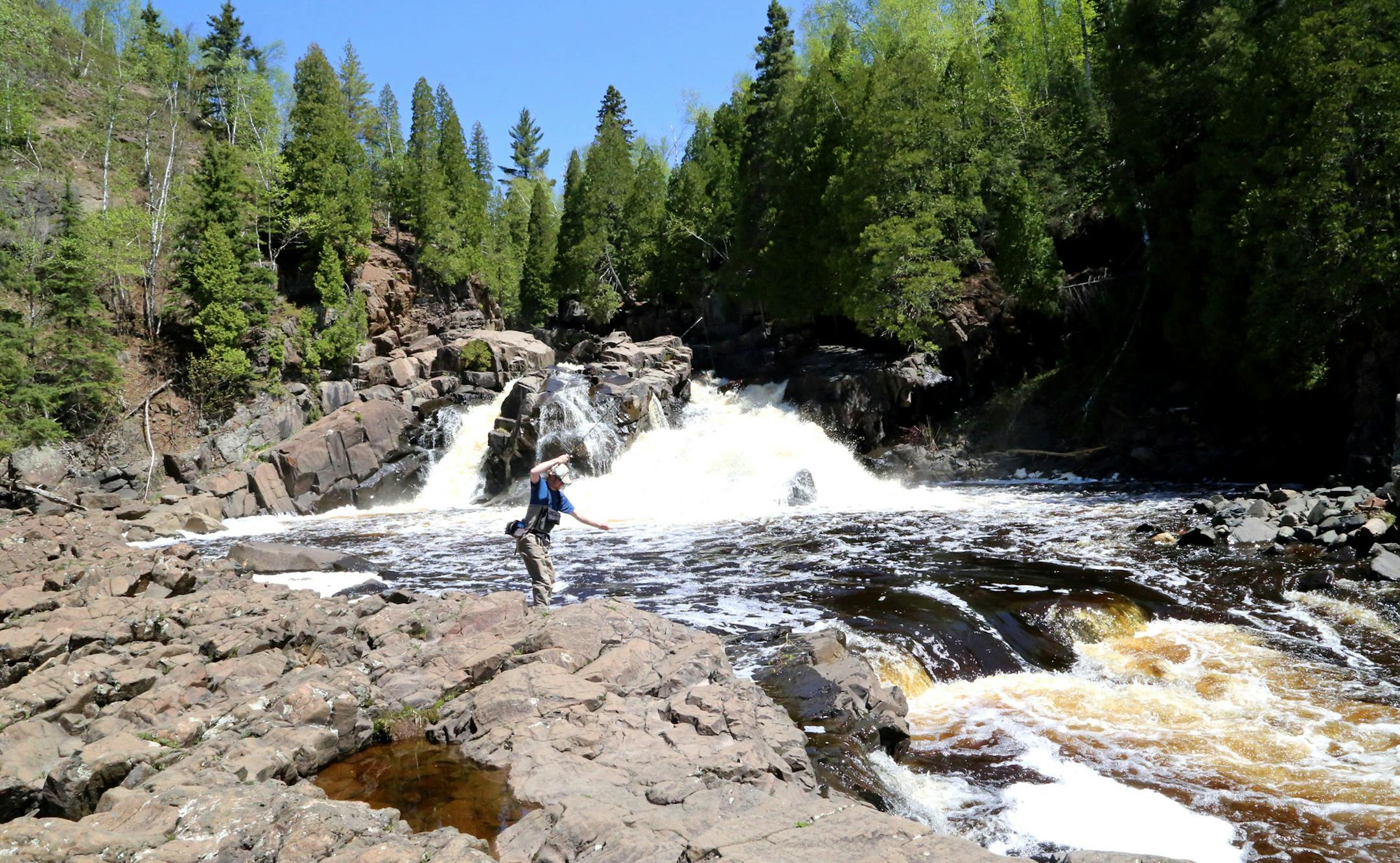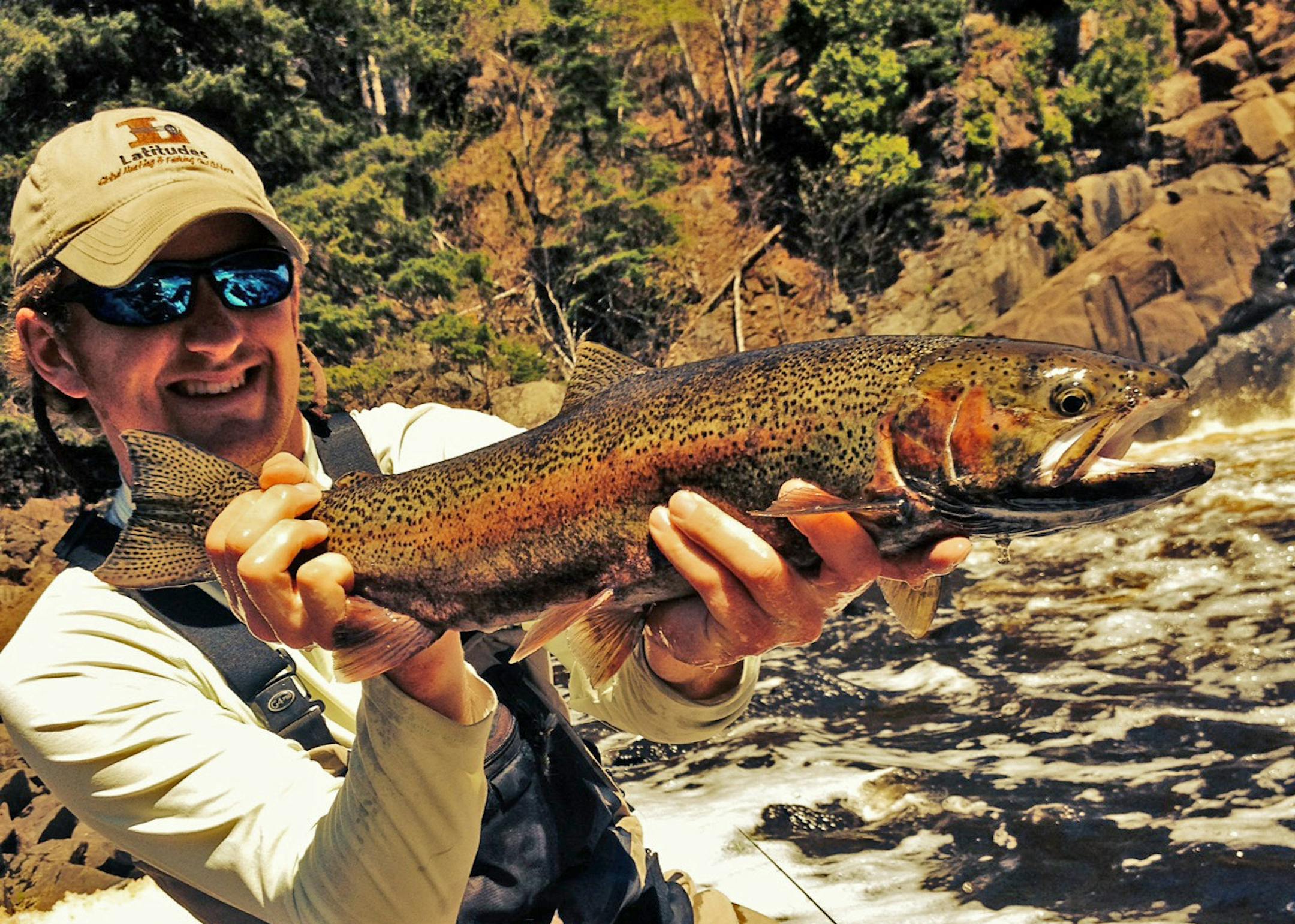
ON THE NORTH SHORE – As I pulled on my waders here Wednesday morning, watching the rushing river far below that I would fish, I thought again how just how wacky spring's biological clock has turned the past couple of years.
For the next eight hours, I would chase steelhead with my son, Trevor, 21, who was home from Montana for a couple of weeks, and I was hoping at this late date — May 28 —we could still find a fish or two that would take a yarn fly.
In most years, such an effort wouldn't be worthwhile.
Steelheading is a long-shot game in any event, pursued, oftentimes, in April's bitterly cold rain and sleet, with North Shore stream banks still covered in snow. Ditto those along Wisconsin's Lake Superior shoreline not far away.
But fish, like other wildlife, and also people, respond to weather variations in ways large and small; some so minute as to be barely perceptible.
Steelhead that enter North Shore streams and rivers in spring to spawn, for instance, behave differently than many of those that spawn in Wisconsin rivers that empty into Lake Superior. And not just because Wisconsin rivers are farther south, and warm more quickly.
Example:
Wisconsin's Brule River (Minnesota's North Shore also has a Brule River, north of Grand Marais) receives its biggest runs of steelhead in fall; fish that overwinter in the river before spawning in spring and slipping back downstream, sometimes tail-first, to Lake Superior.