
Anderson: Status quo on land, water issues is a threat to the state

It's time to rethink, dramatically, Minnesota's approach to conservation.

October 27, 2013 at 9:41PM
MARLIN LEVISON * mlevison@startribune.com Assign. #00005814A November 20, 2008] - GENERAL INFORMATION: Long Meadow Lake in the Minnesota Valley National Wildlife Refuge does not produce as many waterfowl broods as similar flood plain lakes. Lake waters are also unusually low in number of invertebrates and insects. Officials are concerned that pollutants flowing through storm sewers from the developed areas on surrounding bluffs including the Mall of America may be the root cause of the decline i
A wide variety of wildlife, from ducks to pheasants to bees, depends on a healthy and diverse farmland landscape, which is fast disappearing in Minnesota. (The Minnesota Star Tribune)

This ain't working, and we need to try something different.

Radically different.

And we'll have to do it ourselves. Because government's not the answer.

By now, that should be obvious.

The Department of Natural Resources. The Board of Water and Soil Resources. The Pollution Control Agency.

Each has a role, and each employs many smart, well-meaning people. But as tools to fix the vast land and water issues embroiling this state, they're ineffective.

Or at least incapable of matching the speed at which Minnesota's water, grasslands and wetlands are being lost or severely degraded.

We don't need another group. We have plenty of conservation, wildlife and environmental organizations in Minnesota.
We don't even need more money.

What we need are new ideas.

Because who knows? Maybe we'll never again see another farm conservation program like the old Soil Bank, or the more recent Conservation Reserve Program, both of which set aside vast acreages of undisturbed grasslands that invited hen pheasants, songbirds and other wildlife to nest undisturbed.

So we need a new approach.

Perhaps, for example, we'll have to genetically engineer a different kind of pheasant — one that proliferates in and among people, like white-tailed deer and Canada geese do.

Or maybe we need to pool our money to provide more attractive incentives for farmers and other producers to leave marginal lands idle, rather than put them under a plow.

Or perhaps we need to pay the best and brightest researchers to intensify their quest for crops that are more land- and water-friendly than soybeans and corn.

Or, here's an idea:

Why don't we establish demonstration farms in every township to serve not only as examples of sustainable agriculture but as laboratories to test and develop crop and grass mixes that conserve natural resources, including top soil, and soil fertility, while maximizing economic return?

Think it can't be done?

Then you're not the type of person our times demand.

Government not the answer

It would be a lot easier to sit back and wait for the DNR to fix the problem. Or, how about (fill in the blank)? Maybe they'll do it.

No, they won't.

Among reasons: In Minnesota, the DNR and other state agencies ultimately are lapdogs for the Legislature. And for the governor.

That's why natural resources in this state aren't defended with the vigor they require. Bureaucrats know above all else that their budgets and even their jobs can be at stake if they propose big solutions to big problems, such as revising the state's ancient ditch laws, or regulating the vast subsurface tiling that has occurred, and is occurring, across southern and northwestern Minnesota.

It's not that state agencies don't employ good and qualified people. They do. But they're leashed to the Legislature, sometimes for the better, but mostly for the worse. Consequently, as a matter of survival, over time the risk-taking gene has been bred out of most state employees.

Doubt that? Recall, then, the major environment or conservation movements in this state, not least the recent passage of the Legacy Act, whose enactment depended not on government but on a groundswell of public support.

What, then, to do?

For starters, recognize the problem, its scope and complexity, and recognize as well it won't be solved if we keep doing what we're doing.

Then we form a council, made up of representatives from the most successful conservation, wildlife and environment groups, as well as advisory professionals from state and federal agencies.

The council also must have members from Minnesota businesses — entities that, frankly, have been AWOL while the state's resources have been compromised.

That means 3M, General Mills, Medtronic, United Health, Target, Ecolab and/or others must lend some brain power to this effort, if only to benefit their employees and therefore their bottom lines.

Twofold mission

The council, the executive committee of which should number no more than a dozen or so, and which also should include representatives from academia and agriculture, should develop a mission that is at least twofold:

• Recognize that innovation and out-of-the-box thinking will be central to any lasting solution, and that, while federal farm bills and other hoped-for pie-in-the-sky legislation might someday provide some relief, that relief eventually will be rescinded. So we need a new, better and more permanent approach.

• The council must also recognize that any proposed solutions will be only as good as the number of people they engage.

Fortunately, Minnesota's natural resources enjoy a constituency that runs wide and deep — witness, for example, the overwhelming voter support for the Legacy Act.

Yet rarely have that constituency's conservation interests manifested themselves as political force, a conundrum that won't resolve by mere formation of a council.

Rather, however it's done, conservation delivery (and action) in Minnesota must be organized at more local levels, rather than from the top down, as the presence of government agencies suggests will happen (but rarely does).

One idea: Form councils at regional or subregional levels, each of which would prioritize conservation opportunities in their areas, while melding the interests and energies of affected citizens with the funds, work forces and staffs of conservation groups, sportsmen's clubs, government agencies and others.

Or perhaps you have a better idea.

If so, write me at danderson@startribune.com. I'll publish a sampling of responses in a coming Sunday edition of the Star Tribune.

Dennis Anderson danderson@startribune.com


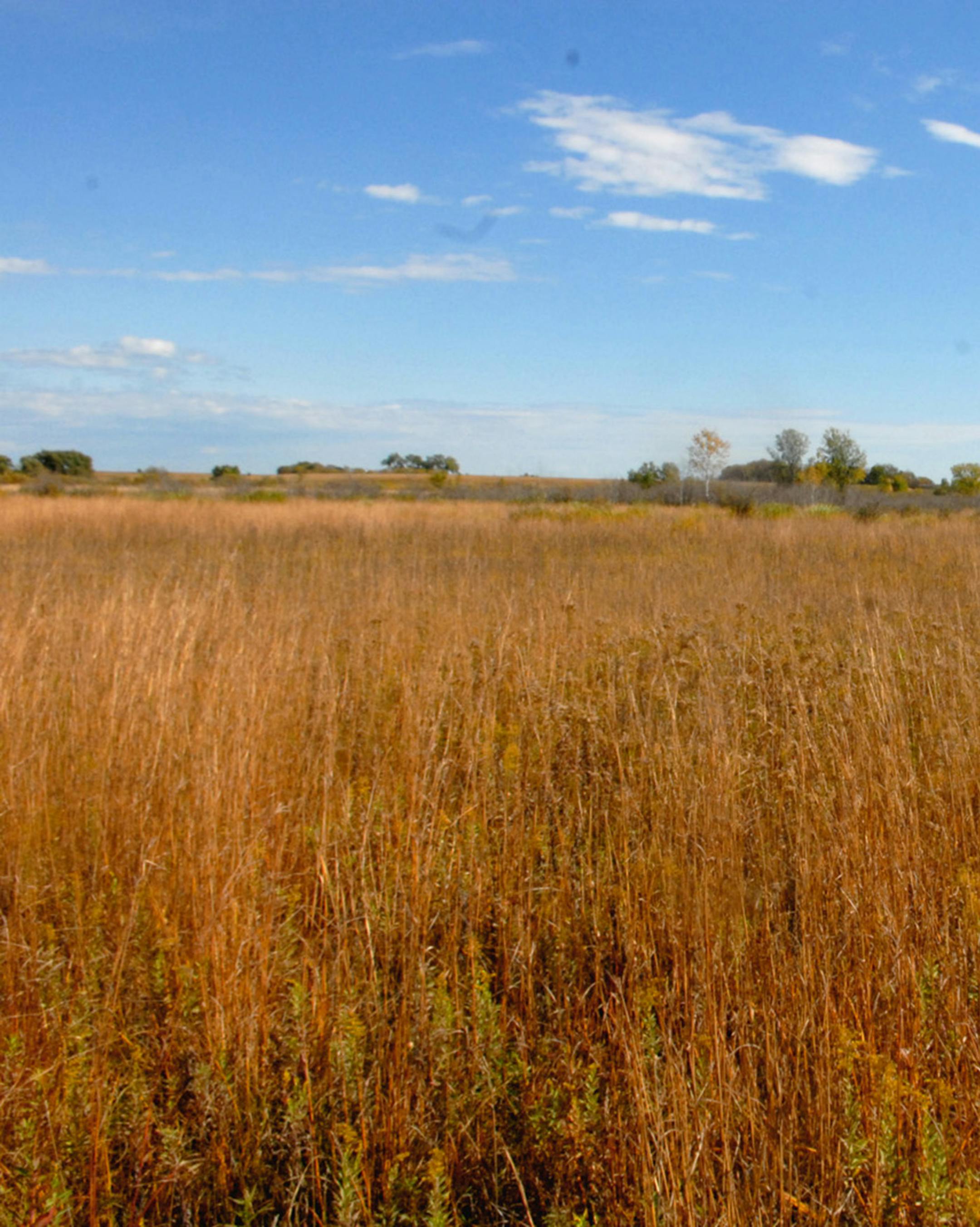
The 300 acres purchased from Bill Keller will be part of a habitat corridor that will connect with other lands that benefit soil conservation and wildlife, including this adjacent natural area owned by The Nature Conservancy. (10/2008) ORG XMIT: MIN2013102421523416
Minnesota’s grasslands are threatened by the status quo in conservation, as are the state’s wetlands and water sources. (The Minnesota Star Tribune)
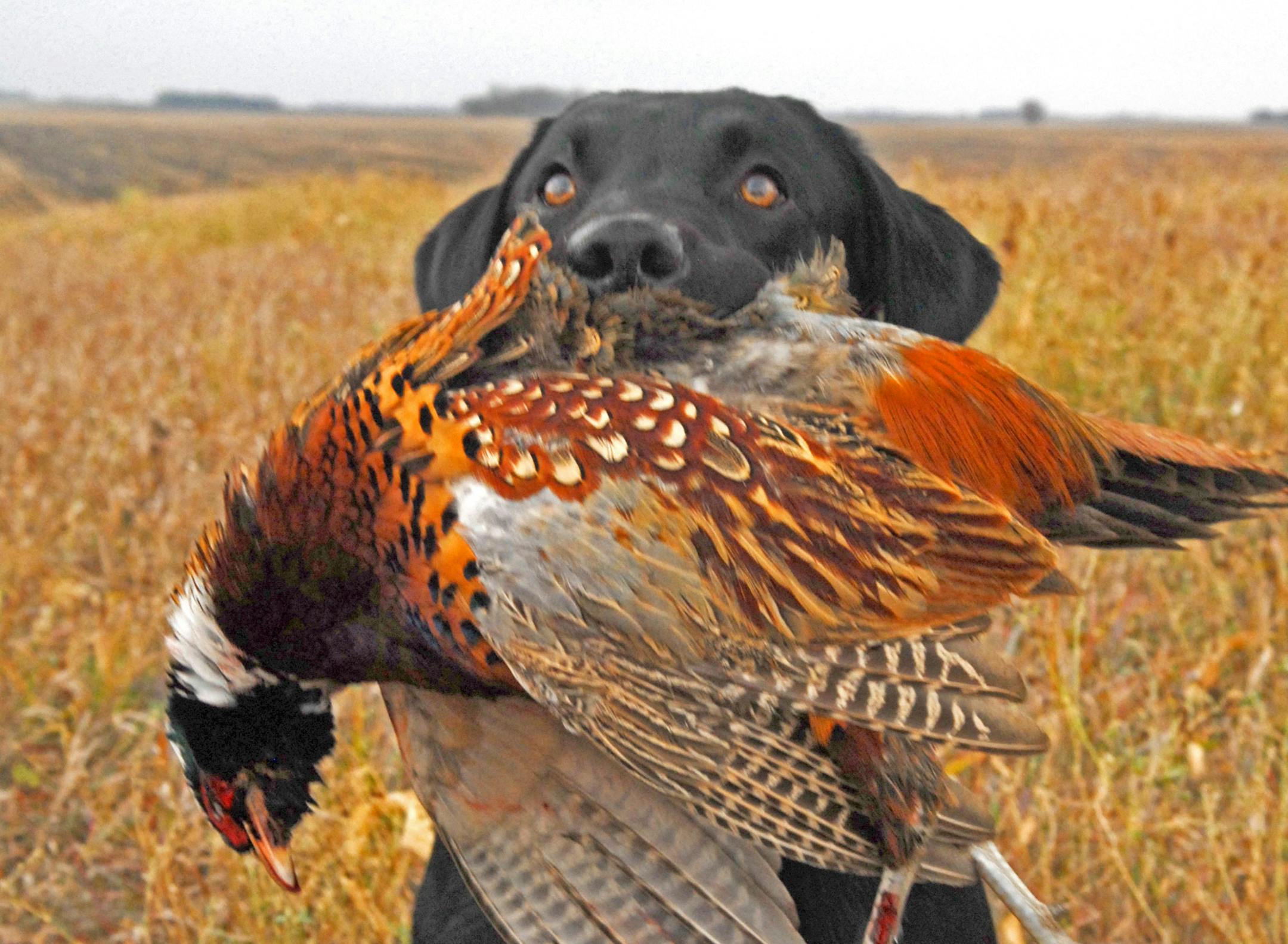
Duke, a black Labrador, in Yellow Medicine County with a rooster pheasant. Pheasant numbers have been down in Minnesota and throughout the Upper Midwest in recent years due to habitat loss and cool, wet spring nesting conditions.
Duke, a black Labrador, in Yellow Medicine County with a rooster pheasant. ORG XMIT: MIN1310041245540852 (The Minnesota Star Tribune)
about the writer

about the writer

Dennis Anderson

Columnist

Outdoors columnist Dennis Anderson joined the Star Tribune in 1993 after serving in the same position at the St. Paul Pioneer Press for 13 years. His column topics vary widely, and include canoeing, fishing, hunting, adventure travel and conservation of the environment.

See Moreicon