NEAR NORTH BRANCH, MINN.
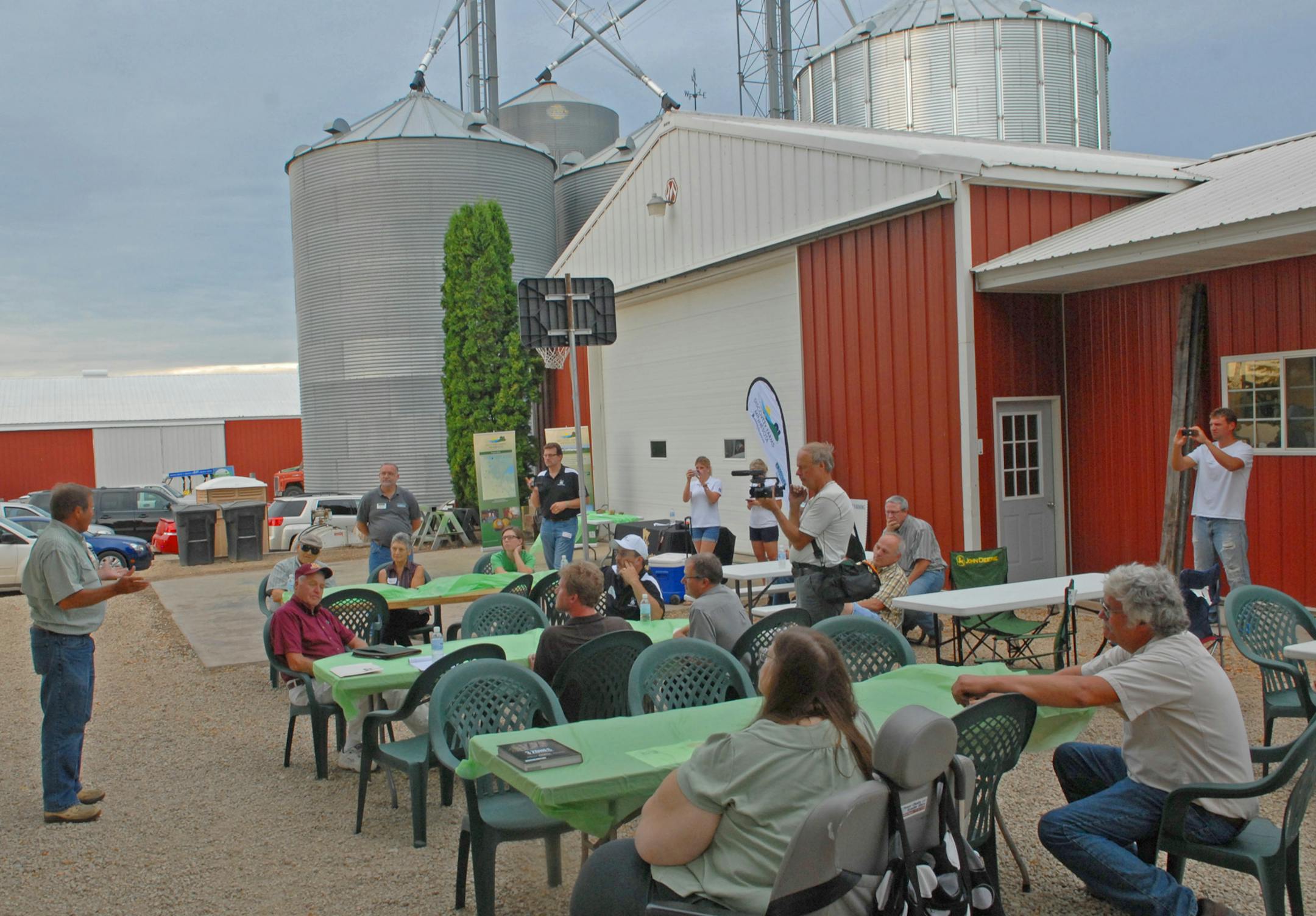
Wednesday evening, rain threatened to fall here on the 1,400-acre corn and soybean farm owned by the John and Jewell Peterson family. But ultimately, no showers were received, leaving the Petersons — like farmers throughout much of Minnesota — still searching the skies for rain that hasn't appeared for nearly two months.
The Petersons and their operation, Spring Creek Farms, were hosting a gathering of about 20 people sponsored by the Minnesota Soybean Research and Promotion Council.
A group called Discovery Farms Minnesota also had representatives on hand to explain how they are conducting research on the Peterson farm and on other farms throughout Minnesota to determine, in general, sediment and nutrient losses from runoff.
The Peterson farm was selected for the event, I was told, because of its conservation practices.
I would like to say my insatiable intellectual curiosity prompted me to attend. But in fact I attended in large part because my former colleague Ron Schara has been fronting for the soybean folks on his "Minnesota Bound" television program, and in other venues, and — to bare all — more than a few Minnesota conservationists have wondered why, money notwithstanding, he would succumb to helping out conservation's "dark side'' — namely farmers.
It's farmers, after all, who are bailing out of the Conservation Reserve Program as if it were the plague, in the Dakotas as well as in Minnesota, in some instances putting under the plow lands that are highly erodible, that butt up against streams and rivers, or are otherwise best left in cover crops or wildlife habitat.
It's also farmers who are contributing to ground- and surface-water pollution in Minnesota and to the "dead zone'' in the Gulf of Mexico at the mouth of the Mississippi River.