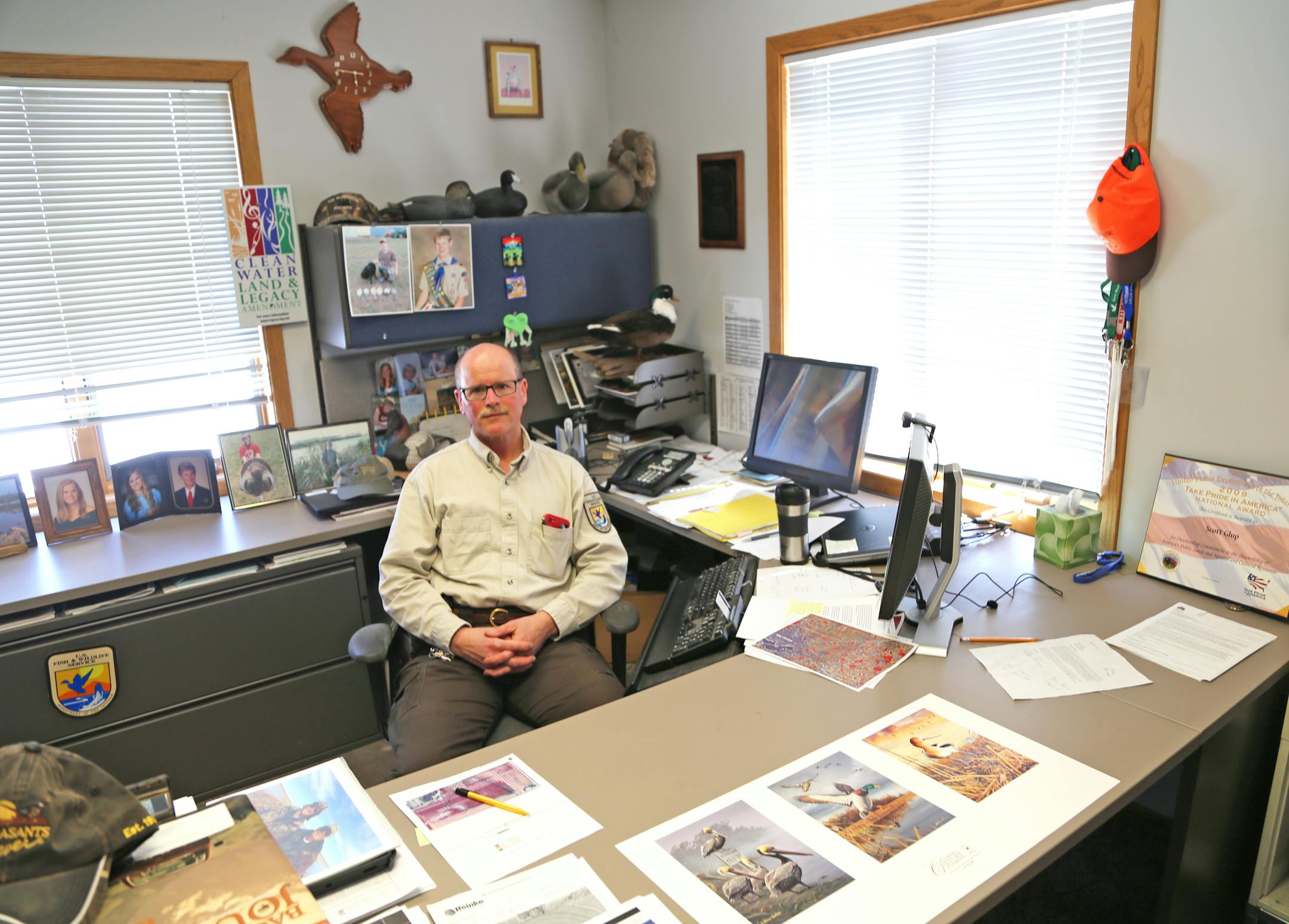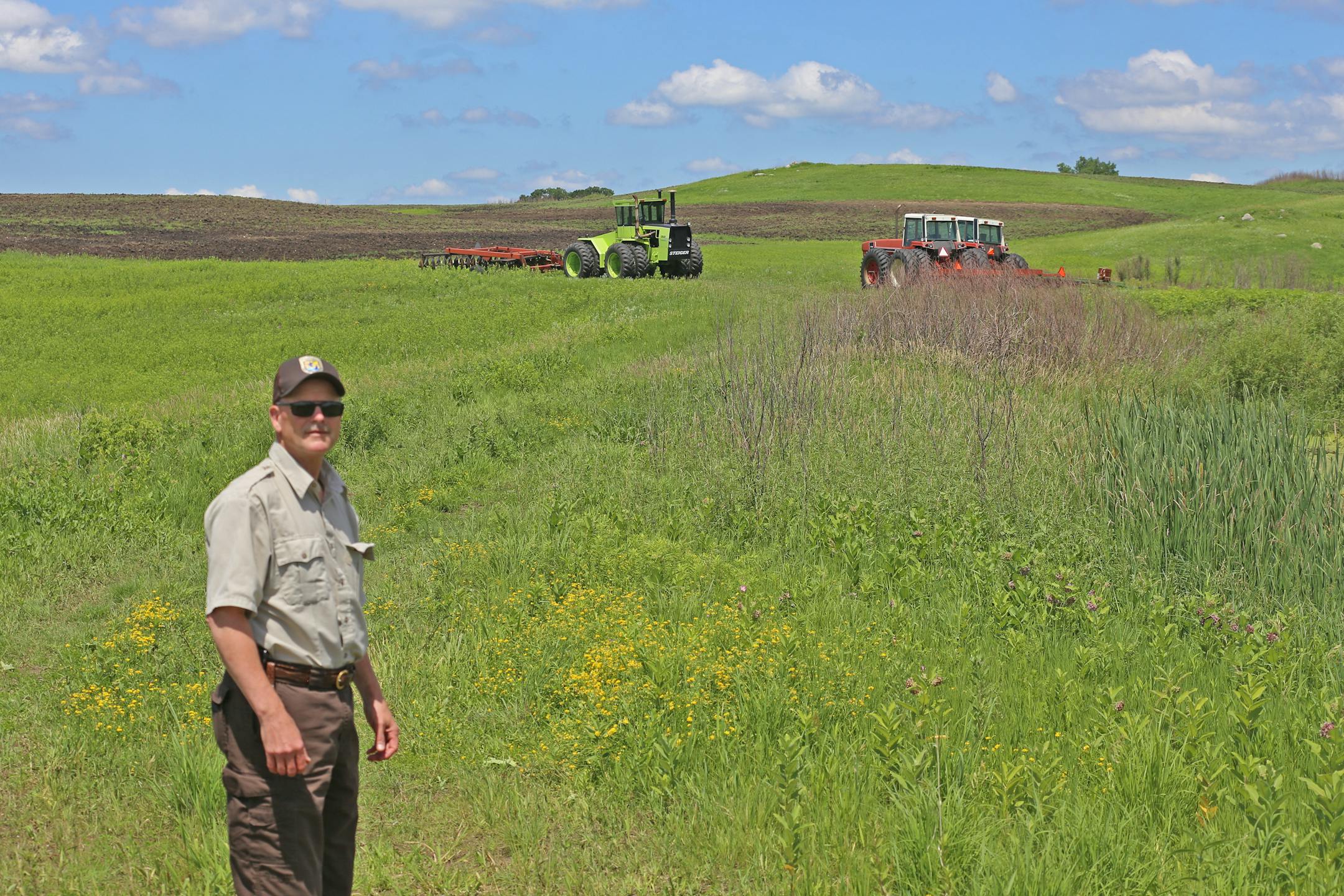
LITCHFIELD, MINN. – Scott Glup cast an eye toward three tractors that sat idle on a large tract of land near this town of 6,700 west of the Twin Cities. "In a less rainy year,'' he said, "their work would be done by now.''
Glup, the U.S. Fish and Wildlife Service project leader for the Litchfield Wetland Management District, was lamenting that the extensive upland and wetland wildlife habitat work his crews are responsible for each spring and summer has been delayed considerably — and in some instances postponed until next year — due to heavy and persistent rains.
The tractors were parked on a large federal Waterfowl Production Area (WPA) that was scheduled to be burned this spring before being plowed. Brome grass had overtaken the area, which wildlife managers consider an invasive plant, and the plan after plowing was to allow the brome to regrow before killing it with Roundup.
"Then we'd reseed it with a mixture of native prairie grasses and other plants that are wildlife and pollinator friendly,'' Glup said. "We'll have to see whether we get that done this year or not.''
Across southern and western Minnesota, incessant downpours have filled drainage ditches and caused some of the state's relatively few remaining wetlands to overflow. The frequent showers also have delayed corn and soybean planting, and in some cases will reduce crop yields. Whether ducks, pheasants and other wildlife also fall victim to the rains won't be known until August, and perhaps not until hunters go afield beginning in late September.
Because WPAs and state wildlife management areas often serve as unwitting drainage repositories, the heavy inrushes this spring in some cases have wiped out the aquatic vegetation needed by ducks and other wildlife. Carp infestations from one water body to another likely have also been aided by the high water.
Additionally, some control structures that were built as many as 25 years ago to back up water into reclaimed wetlands have collapsed, sending water cascading onto neighboring farm fields and wildlife areas.
Glup and other U.S. Fish and Wildlife Service project leaders try to rebuild the structures. But in many cases the ground has been too wet this summer to support the heavy machinery needed to do the work.