

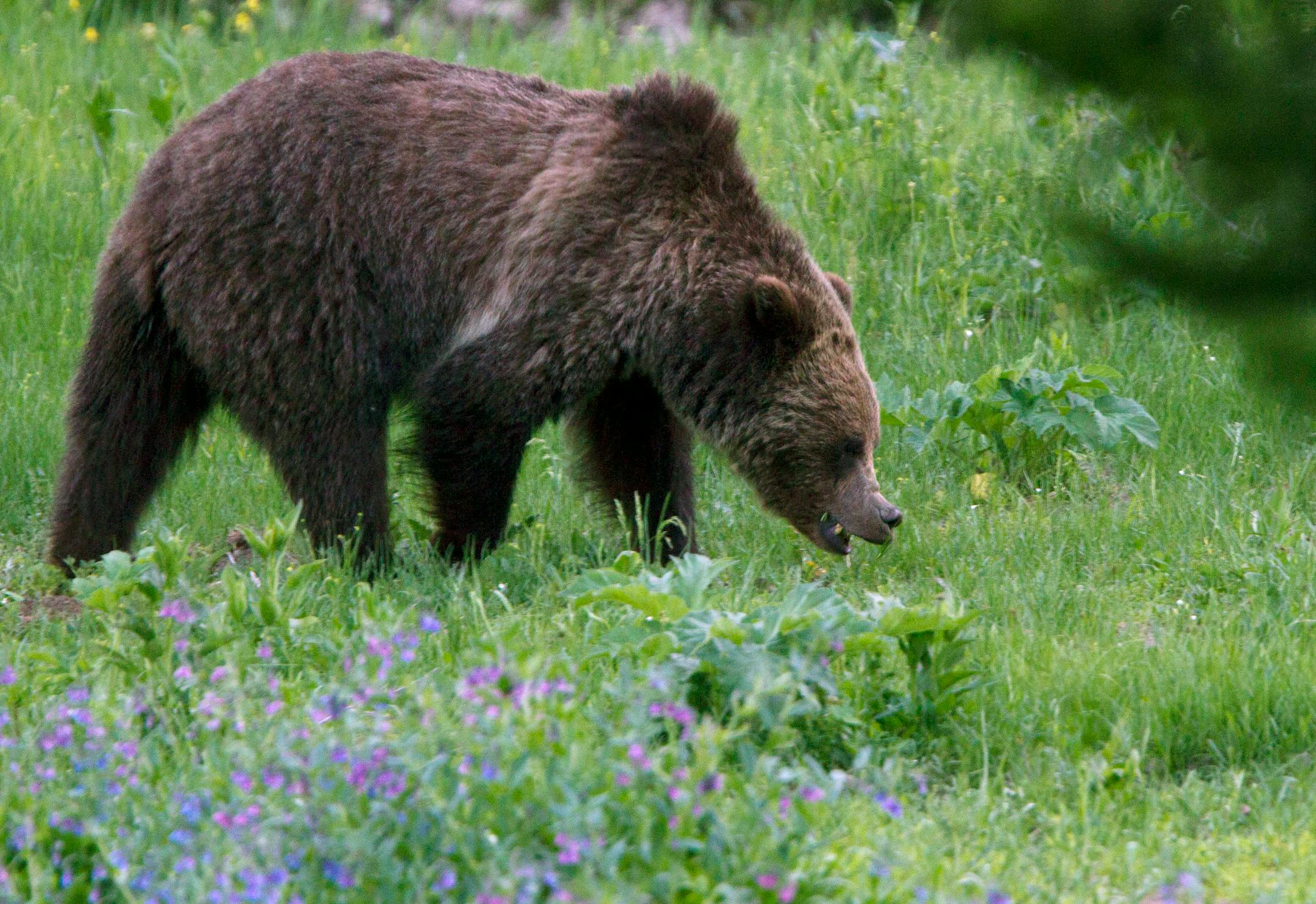
Last week, Montana decided not to hold a grizzly bear hunt this fall, though it could have — maybe.
It's the "maybe" part that complicates the issue, and draws parallels between Montana's dilemma vis-à-vis grizzly bears, and Minnesota's seemingly never-ending wolf management impasse.
The comparison isn't exact. Minnesota wolves can reproduce quickly, and even if a pack were run out of a 40-square-mile area of northern Minnesota (a typical pack range), that region wouldn't be devoid of wild canines for long.
Grizzly bears, by contrast, are much slower to reproduce, thus their population is more vulnerable. Which is why these apex predators in 1975 were protected by the Endangered Species Act, after their Greater Yellowstone Ecosystem population had fallen to only about 150.
Last year, when grizzlies in that region were removed from federal protection and their management was returned to Montana, Wyoming and Idaho, their population was believed to hover around 700, with some biologists estimating it as high as 1,000.
After delisting, a 19-member committee made up of wildlife biologists, managers and other representatives from Montana, Idaho and Wyoming, as well as federal and tribal officials, was formed to oversee Yellowstone-area grizzlies.
The group is led by Frank van Manen, a U.S. Geological Survey biologist who has chaired the federal government's Interagency Grizzly Bear Study Team since 2012.
Charged with sustaining the Yellowstone grizzly population at about 674 animals, the coordinating committee can set limits on the number of bears in the region that can be killed by hunters or wildlife managers.


