

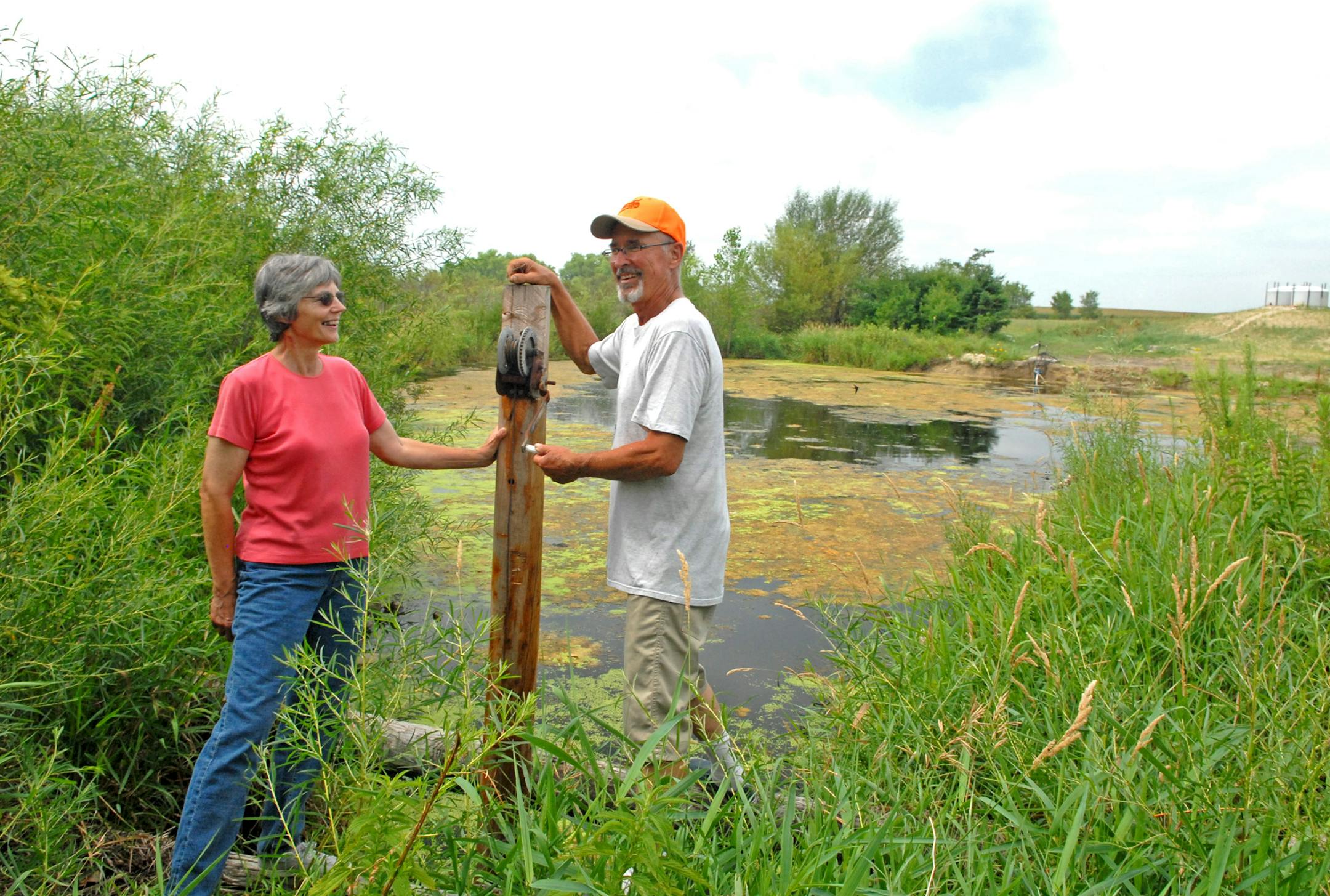
LITCHFIELD, MINN. - Amid the seemingly endless waves of corn and soybeans that stretch westward of this town, David and Jeanette Stottrup cultivate an oasis of native grasses, wild flowers and trees. "If I don't do anything more in life than conserve this land for future generations, I'll be happy," David Stottrup said Thursday morning.
Reluctant farmers of a sort, the Stottrups have been on their 220-acre spread since 1980, when they purchased it from Jeanette's parents, who had farmed the property for more than three decades.
David and Jeanette also attempted to farm the land, but a generalized aversion to indebtedness, as well as an unwillingness to increase profits by growing the size of their farm, left them on the sidelines of the more industrialized row cropping operations that evolved around them.
"When the Conservation Reserve Program began in 1985, we bid some land into it, and have enrolled more whenever we could since then," said David, 70, who in addition to farming also taught school.
Now the Stottrups' entire farm is in CRP -- an enrollment process that occurred over 25 years.
Their operation was showcased Thursday by various conservation groups and agencies because the Stottrups are among the first Minnesota property owners to sell a perpetual easement to the state that will help clean up the creek that divides their property, while also providing wildlife habitat.
Called the Reinvest in Minnesota (RIM) Riparian Buffer Easement Program, the undertaking is a joint venture of the Clean Water Fund and the separately managed and appropriated Outdoor Heritage Fund, both of which were created following passage in 2008 of the Legacy Amendment.
"We have more than $10 million available for the riparian buffer program," said John Jaschke, executive director of the Minnesota Board of Water and Soil Resources (BWSR). "We're looking for landowners interested in the multiple benefits of the program."


