

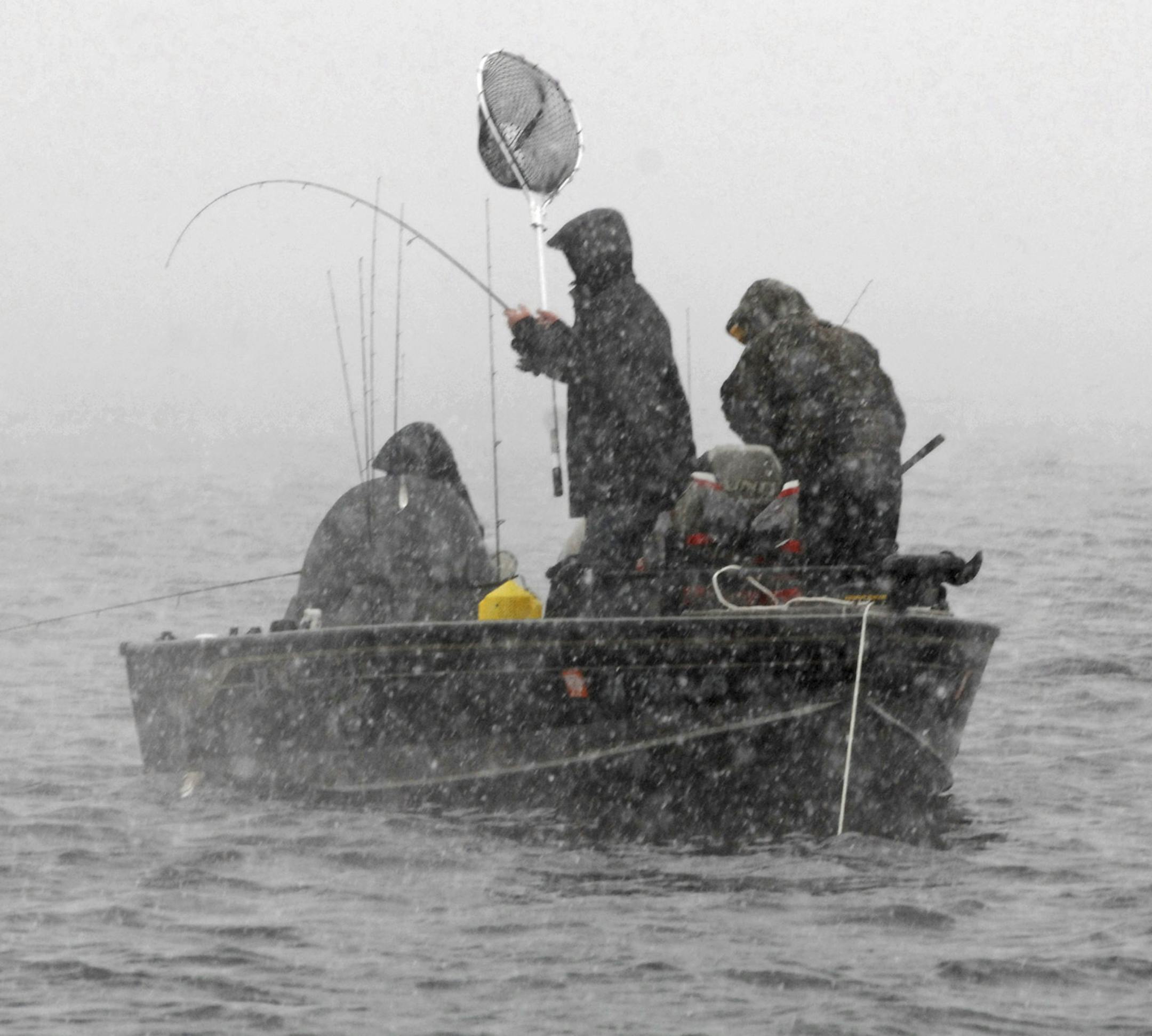
That the Minnesota Legislature can be convened — as it will be Saturday — at the same time the state's walleye season opens suggests the yin and yang of everything.
Seemingly opposites, the two instead are complementary. The latter, fishing, is a celebration, while the former reminds us what a gathering of fools is capable of. In the process, we recall also, as Keats argued, of the necessity of beauty, manifested as it will be Saturday by the purr of outboards, the slap of waves and the tug — just maybe — of walleyes.
And how a person needs to fish after a winter like the one just past! No matter that ice will blanket some northern lakes. Come Saturday morning, wherever in the state open water can be found, Minnesotans en masse will make their own decisions about where to fish, when to fish and how to fish; actions that, like Fourth of July parades, are the essence of freedom.
But first, today, Friday, on the eve of the opener, the Minnesota House will debate its Legacy bill, rearranged as the measure has been by Rep. Phyllis Kahn, DFL-Minneapolis.
A legislator since 1972 — that's no typo — Kahn's meanderings this session as chair of the House Legacy Committee were amusing, to a point. Attendees got to hear the importance she ascribes to ducks eating "breakfast and lunch" near her downtown Minneapolis home before flying on, presumably, to dinner in more typical haunts. And many of her committee attendees will not soon forget Kahn's soliloquy about the Legislature's Easter-Passover break, during which she had lots of houseguests and big meals to fix. Which is why, she said, she didn't have time to explain further to the Lessard-Sams Outdoor Heritage Council why she was padding the budgets of metro parks at the expense of the Outdoor Heritage Fund (OHF). Or explain to the council why she wanted to switch the fund's expenditures from annual to biennial.
But so it goes in the Legislature, and knowing this, supporters of the 2008 constitutional amendment that raised the sales tax fractionally to benefit game, fish and wildlife, parks and trails, and the arts and cultural heritage, bypassed the Capitol, offering their proposal instead directly to voters.
Legislators, lest we forget, had over many decades proved themselves incapable of funding the state's natural resources adequately, and incapable also of leaving their sticky fingers off money intended to clean the state's waters and to otherwise ensure that future generations of Minnesotans can fish, bird, hike, hunt, swim and otherwise recreate outdoors as past generations have.
Constitutionally, the OHF is intended for game, fish and wildlife habitat. And in the past four years, the 12-member, citizen-dominated Lessard-Sams Outdoor Heritage Council that screens OHF projects has performed its duties fairly, transparently and expertly, and recommended the best, most cost-effective projects to the Legislature.


