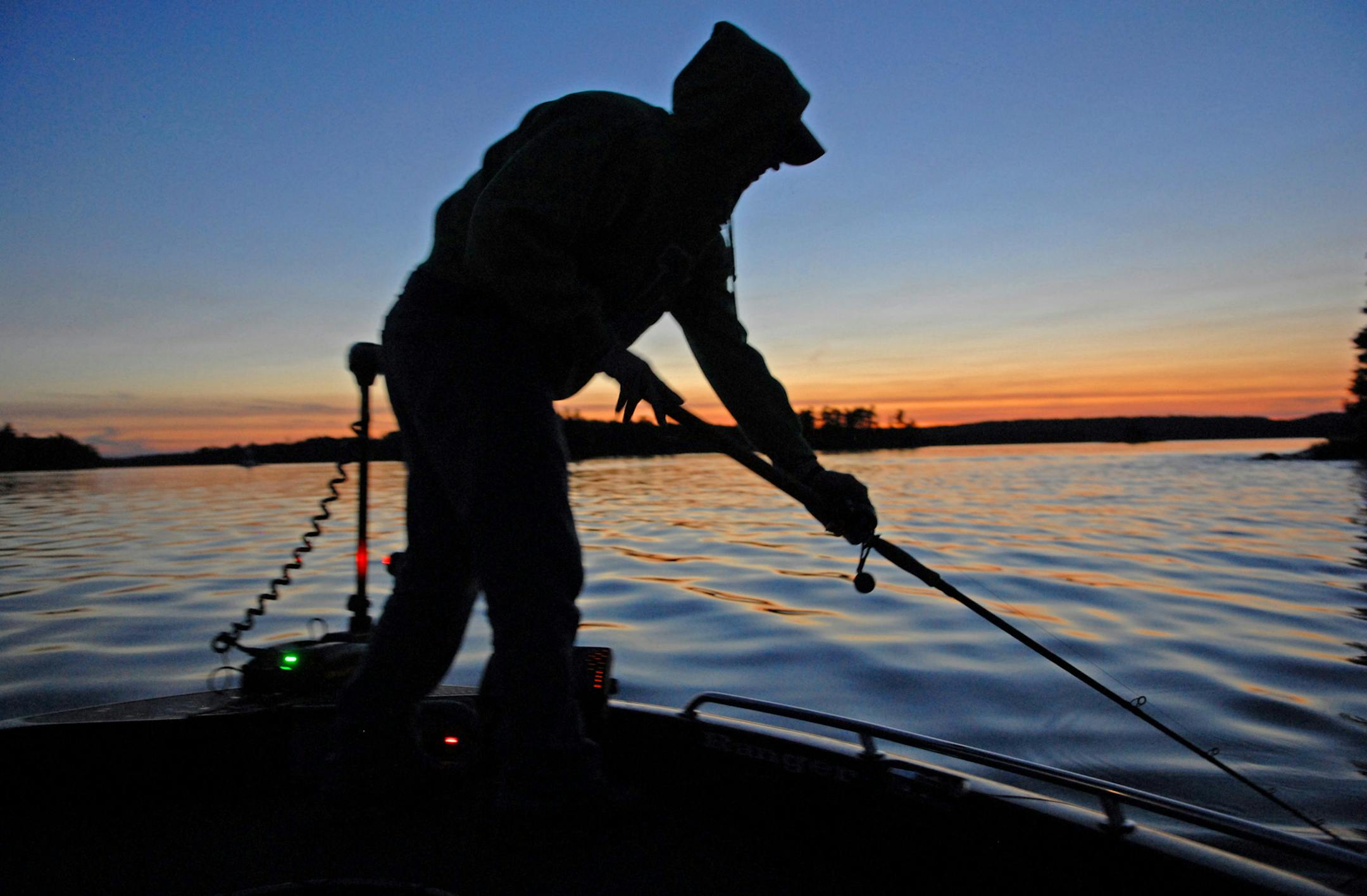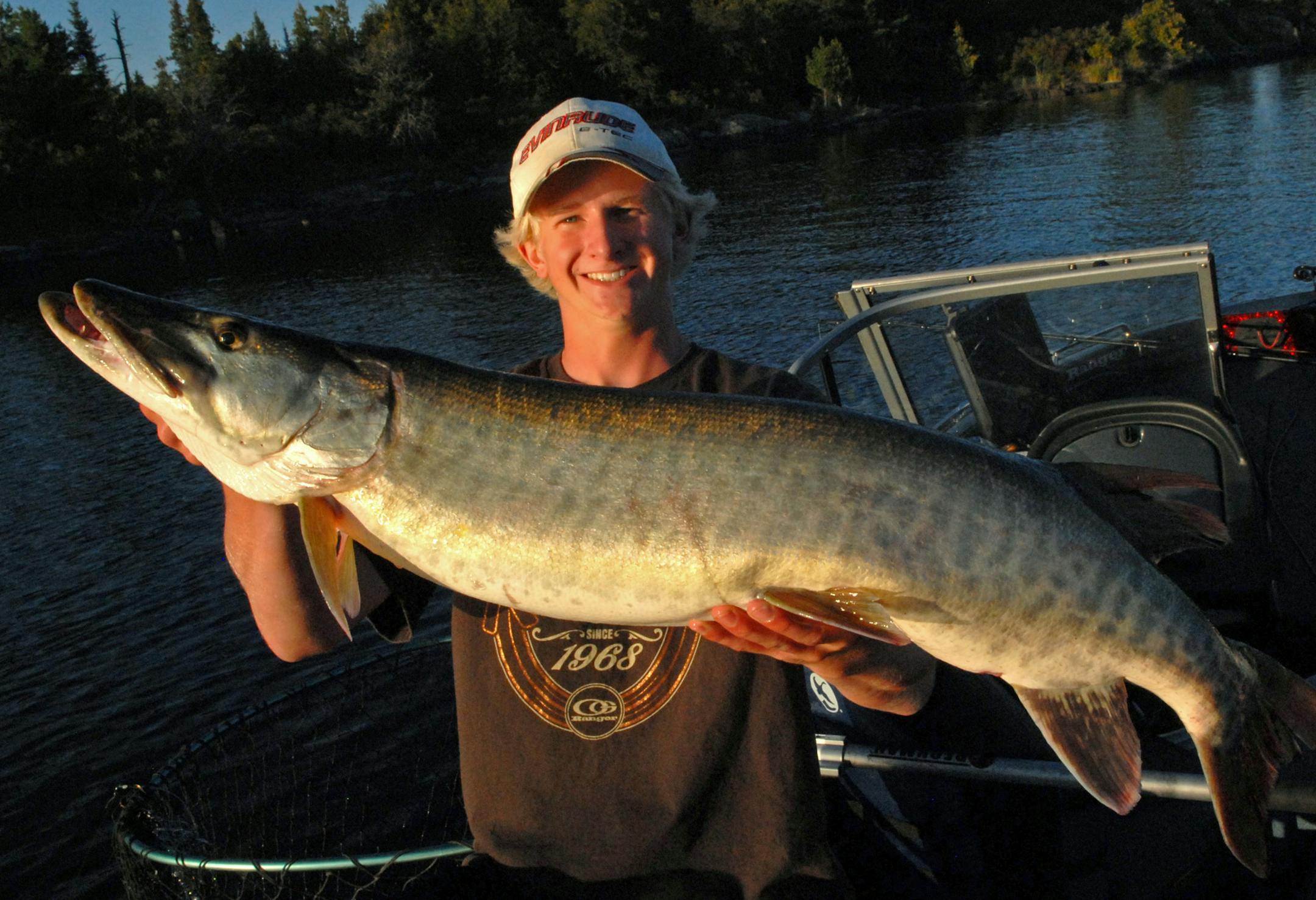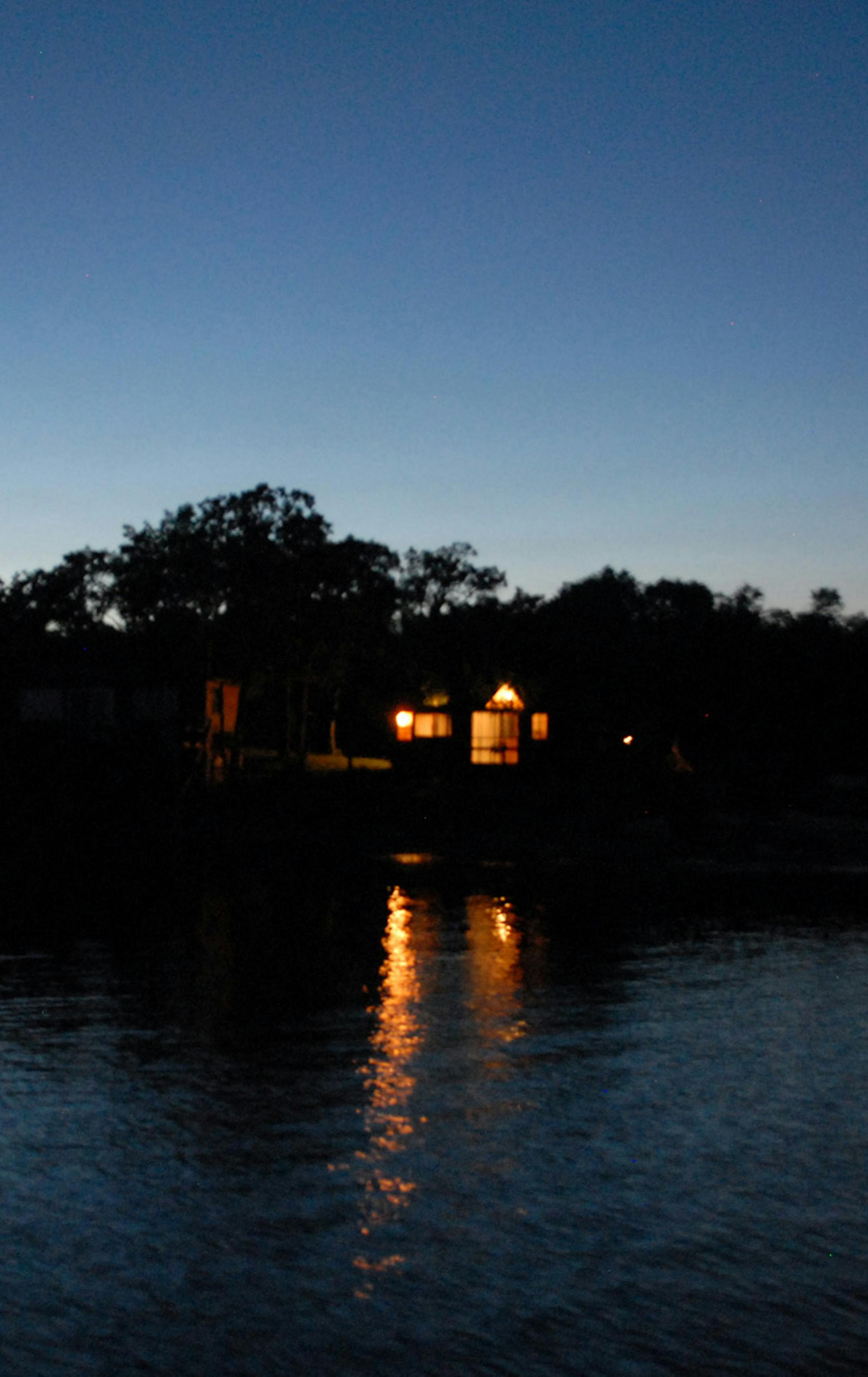
LAKE OF THE WOODS, ONTARIO – Thursday morning, sunrise came early, and our boat was tied quietly at the dock wet with dew. We had fished until after dark the night before, landing one muskie, our second, and we thought we had it figured out. This was on a quiet evening when the lake lay like a mirror beneath a sky fading quickly to midnight blue.
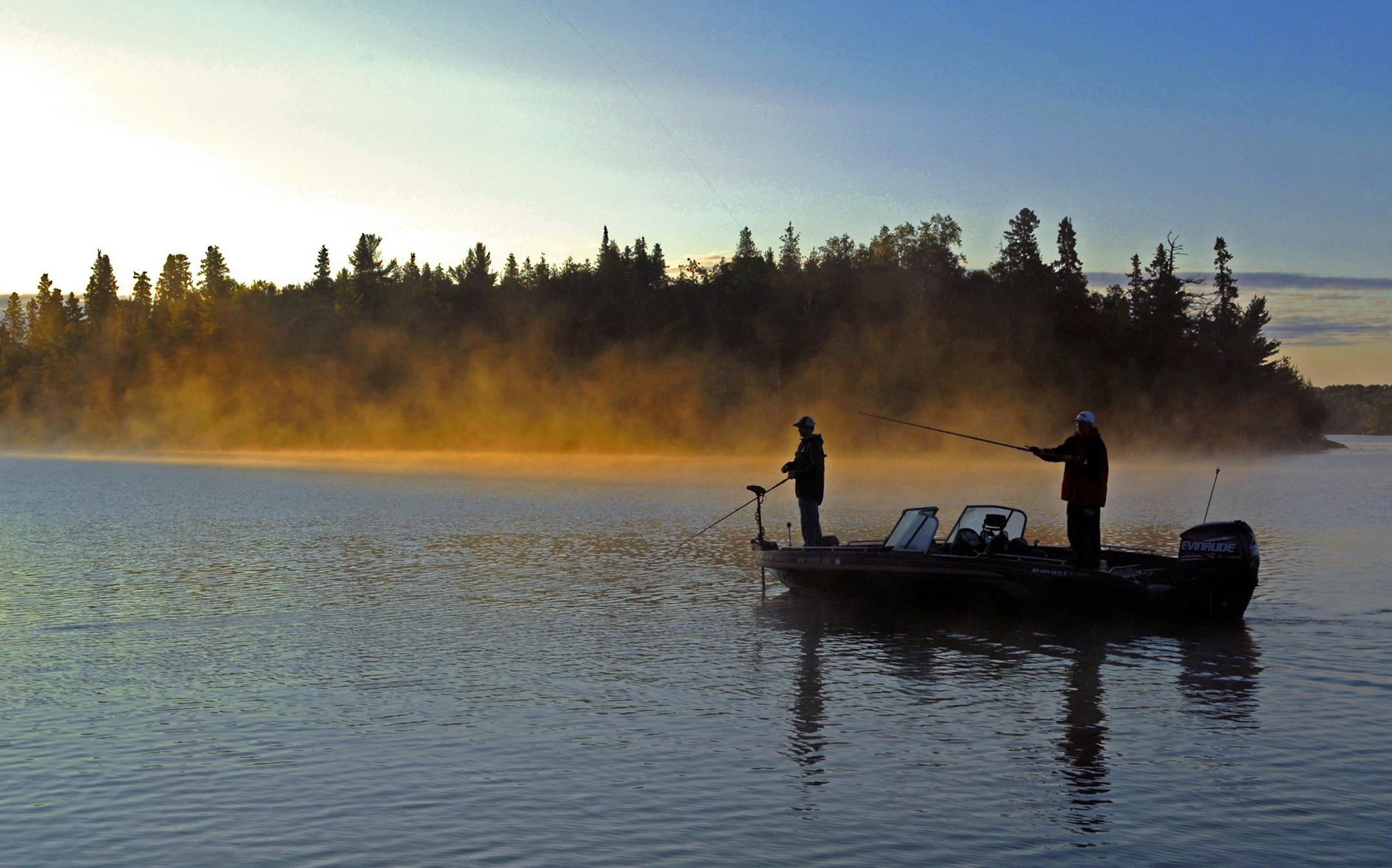
Exactly how many bent props and lost lower units of outboard motors Lake of the Woods accounts for each summer is unknown. But it is a myth that the island-studded lake can't be safely navigated, assuming ownership of proper maps and a good GPS. I had thought about this earlier as I made coffee in the half-light. Now my son Cole, 17, and his friend Dominic Schneider, 20, were in the boat with me. This was our last morning on the lake and Cole was turning the key. The outboard rumbled to life and we let it idle while an amber mist rose against the coming daylight. The water temperature was 67. We zipped up our coats. Cole put the boat on plane. We headed down the lake.
When I was a kid, I fished with my dad on Lake Michigan. The town where we lived was on a small bay and the fishing was just so-so. Our boat was 14 feet long and we had a 7½-horsepower Johnson. I was too young to have an absolute handle on what Dad was thinking. But my sense was he liked big fish more than small fish. We trolled for hours, and when a northern pike bit one of our plugs he boated the fish, opened its toothy mouth with a jaw spreader and removed the lure. Then he set the fish free. For this reason I think he would have been a muskie fisherman, had he lived long enough to find out.
On this morning, we saw no bears swimming in Lake of the Woods, as we had the night before, a young cub. But eagles were aloft already, in advance of the midday thermals, their eyes peeled for their next meal. By now Cole had leveled the boat at about 35 miles per hour, and we wound through watery passageways narrow and wide, trailing a wake that rolled neatly to opposite shorelines. Twenty minutes later, Cole throttled back, killing the engine. Dominic, a junior at the University of North Dakota, deployed the bow trolling motor, and we were casting again.
Like all fishing, muskie fishing is a mental game. But it's also quite physical. The rods are heavy and the lures big, especially those with large spinning blades, which are a challenge to retrieve. Not the first 100 times or so. But the second 100 and the third and fourth will for sure keep you off the dance floor at night. Yet all is forgiven when a muskie comes in hot on a bait and bites at the boat with all the terror and violence it can muster. Then you decide whether to hold the fish fast, pitting your arms and shoulders and equipment against the muskie's horrified strength. Or instead whether to give the fish some line and gamble that in time you can bring it to the net.
Fish. Fish.
This was Dominic, bent at the knees in the bow. His leader had been reeled nearly to his rod tip, with a thick-shouldered, fat-tailed muskie trailing his flashibou-skirted bait.
If the fish were sufficiently crazed with hunger, aggression or anger, in any combination, it would bite while Dominic maneuvered the lure in a large circle boatside. If not, it would become just another in a legion of muskie "follows'' that quicken the heart rate. But produce little else.