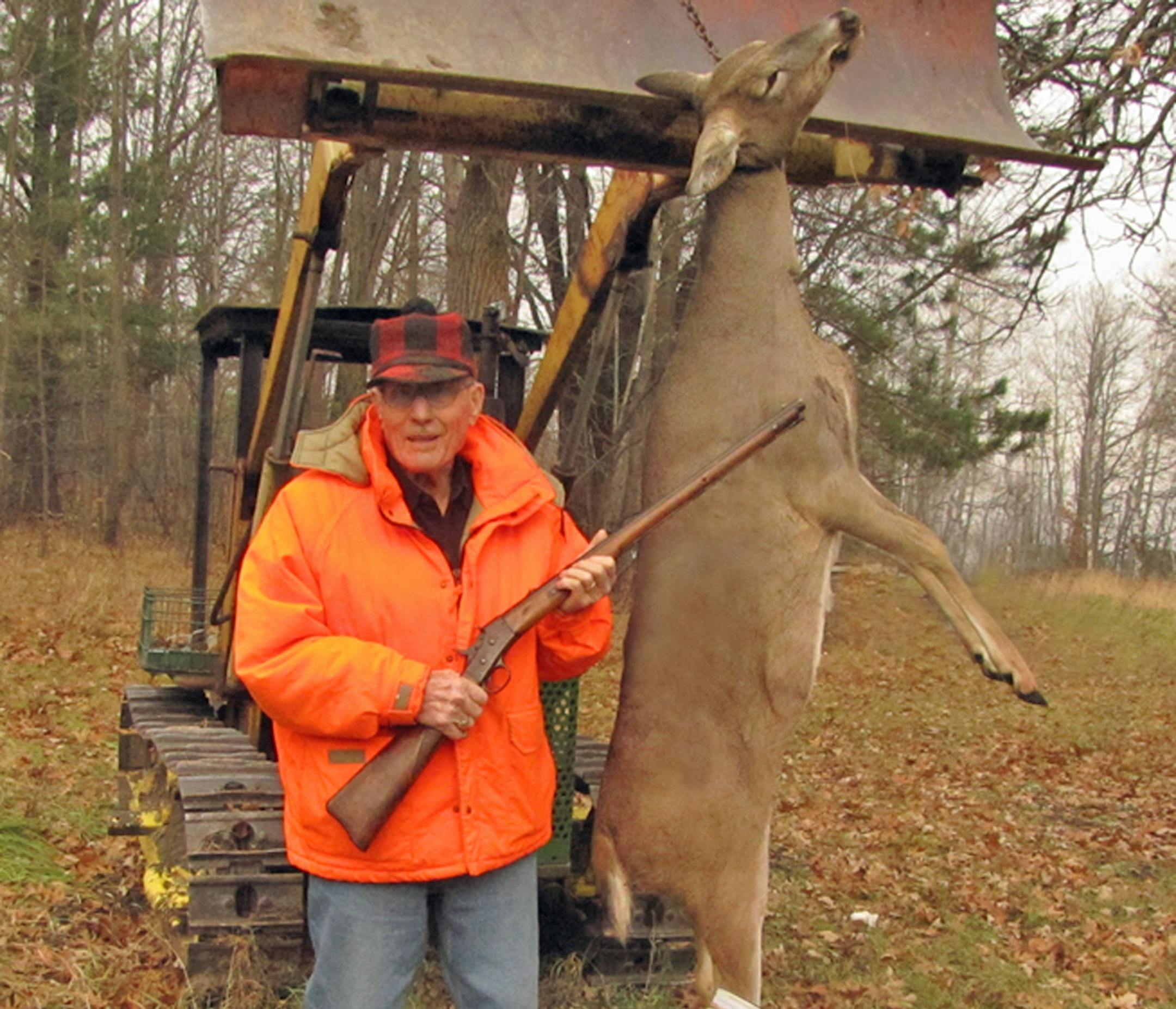
On the Wednesday of the first week of Minnesota deer hunting, Kenneth Felt went looking for a buck. Living not far from Itasca State Park, in northern Minnesota, on the same land he's occupied for decades, he knew a few animals were in the area. So he grabbed his rifle and a handful of cartridges, and walked out his farmhouse door, toward his four-wheeler.
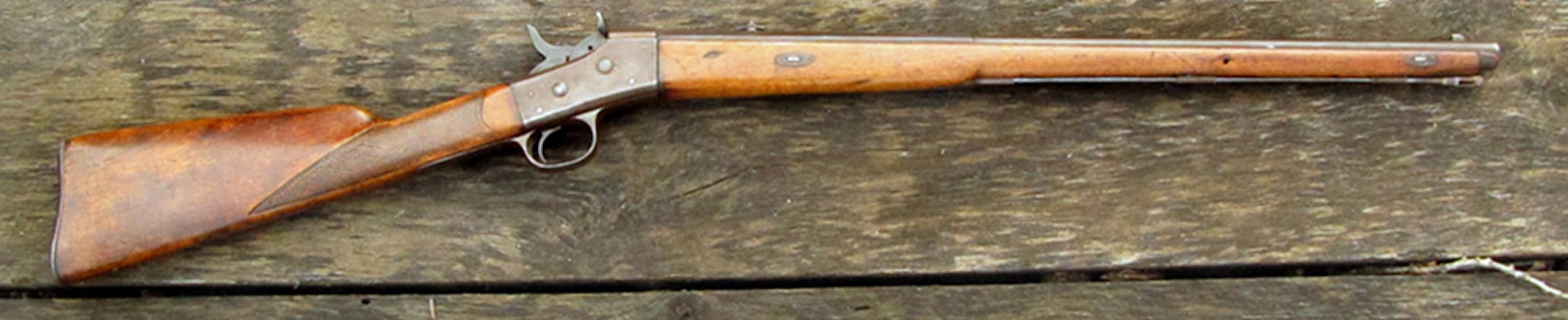
Felt is 93 years old. But he didn't consider his age a problem. And while his long gun hadn't been leveled in the direction of a game animal for more than 100 years, and then in his grandfather's hands in Sweden, Kenneth had practiced with the firearm enough to know it was accurate.
"I took the rifle hunting a few times last year, but I wasn't too serious about getting a deer because I was worried about field-dressing it,'' he said. "My heart is bad and it would be kind of difficult to do that.''
Felt's gun was a .50 caliber Husqvarna with a Remington rolling block action, the same type of rifle George Custer carried into the Battle of the Little Bighorn.
The rifle is a smokepole — that is, black powder — but its cartridges are self-contained, not unlike modern-day ammunition, except that when the trigger of the Husqvarna is pulled, a large plume of white smoke appears at its muzzle, obscuring vision for long moments.
"I put the Husqvarna in a case and strapped it on the four-wheeler,'' Felt said. "I drove out to a field, and I was surprised to see a big doe standing right there. I thought, 'Oh, no, I don't want a doe. I'll just drive farther on, and look for a buck.' ''
In World War II, Kenneth served in the Navy, ship-bound variously in Ireland, then the Mediterranean, and finally in Tokyo Bay on Sept. 2, 1945, when Japan formally surrendered.
Returning to Minnesota after the war, he bought the 260-acre spread he still lives on, the first step in a varied career that ultimately would see him serve as Clearwater County sheriff for 10 years.