


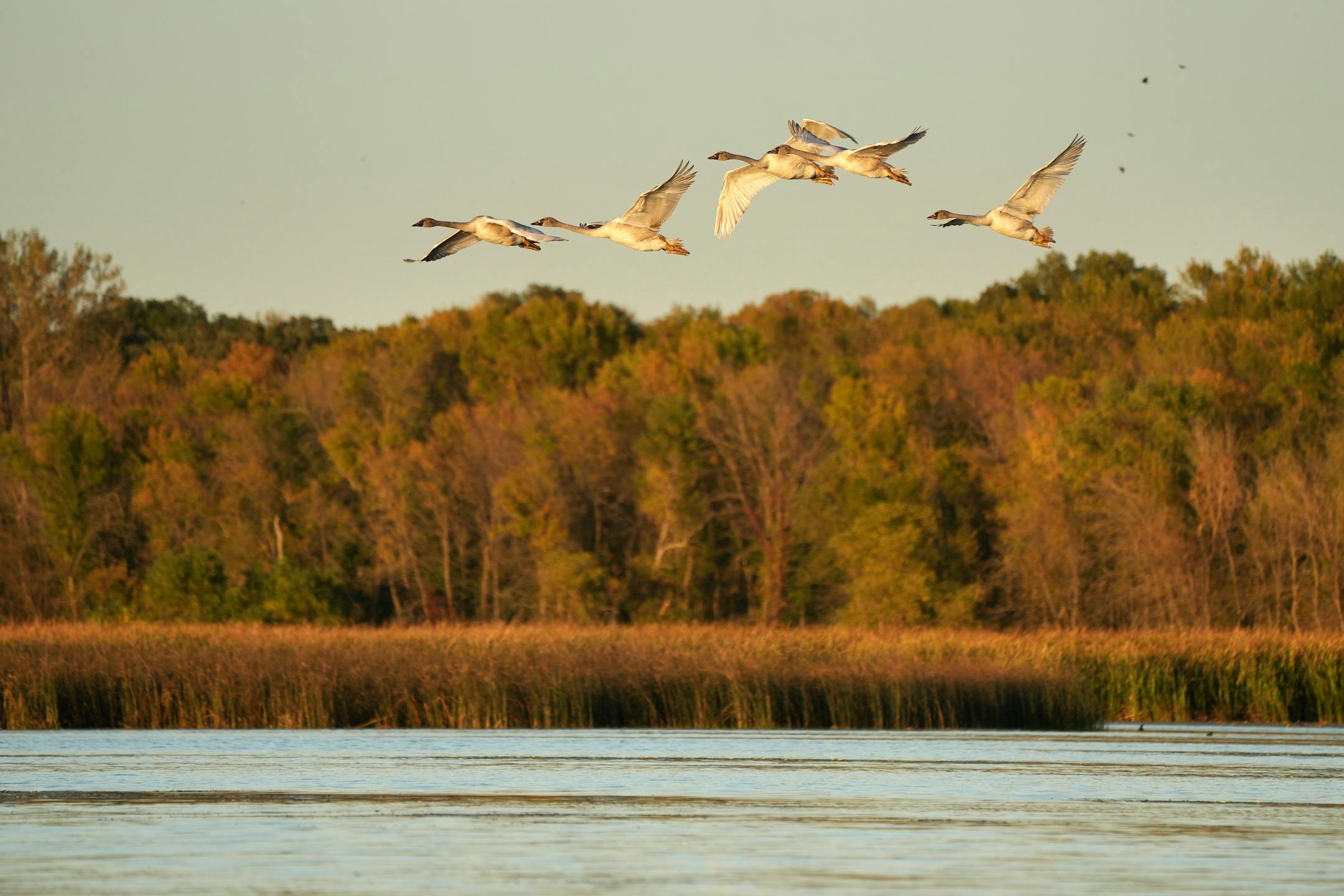
They’re big. They’re beautiful. And there’s lots of them.
Perhaps too many?
Trumpeter swans are now reproducing at a rate no one predicted when 150 fragile eggs were transported to Minnesota from Alaska, beginning in 1987.
Carrol Henderson was the Department of Natural Resources non-game wildlife chief at the time, and he captured the eggs from the Minto Flats wetland complex about 35 miles west of Fairbanks, Alaska.
Weighing as much as 30 pounds as adults, with wingspans that can exceed 10 feet, Minnesota’s trumpeter swans were killed for food by early settlers. By the 1880s, few, if any, were left in the state.
“I put together a proposal to bring 50 trumpeter eggs back from Alaska in three successive years and hatch them here,” Henderson said. “We had the money to do it from the chickadee checkoff on state taxpayer forms. Northwest Airlines provided free transportation from Alaska. To keep them warm, we carried the eggs in overhead compartments in first class.”
Hatched at Carlos Avery Wildlife Management Area not far north of the Twin Cities, the young swans — cygnets — were released at just under 2 years of age in the Detroit Lakes, Minn., area.
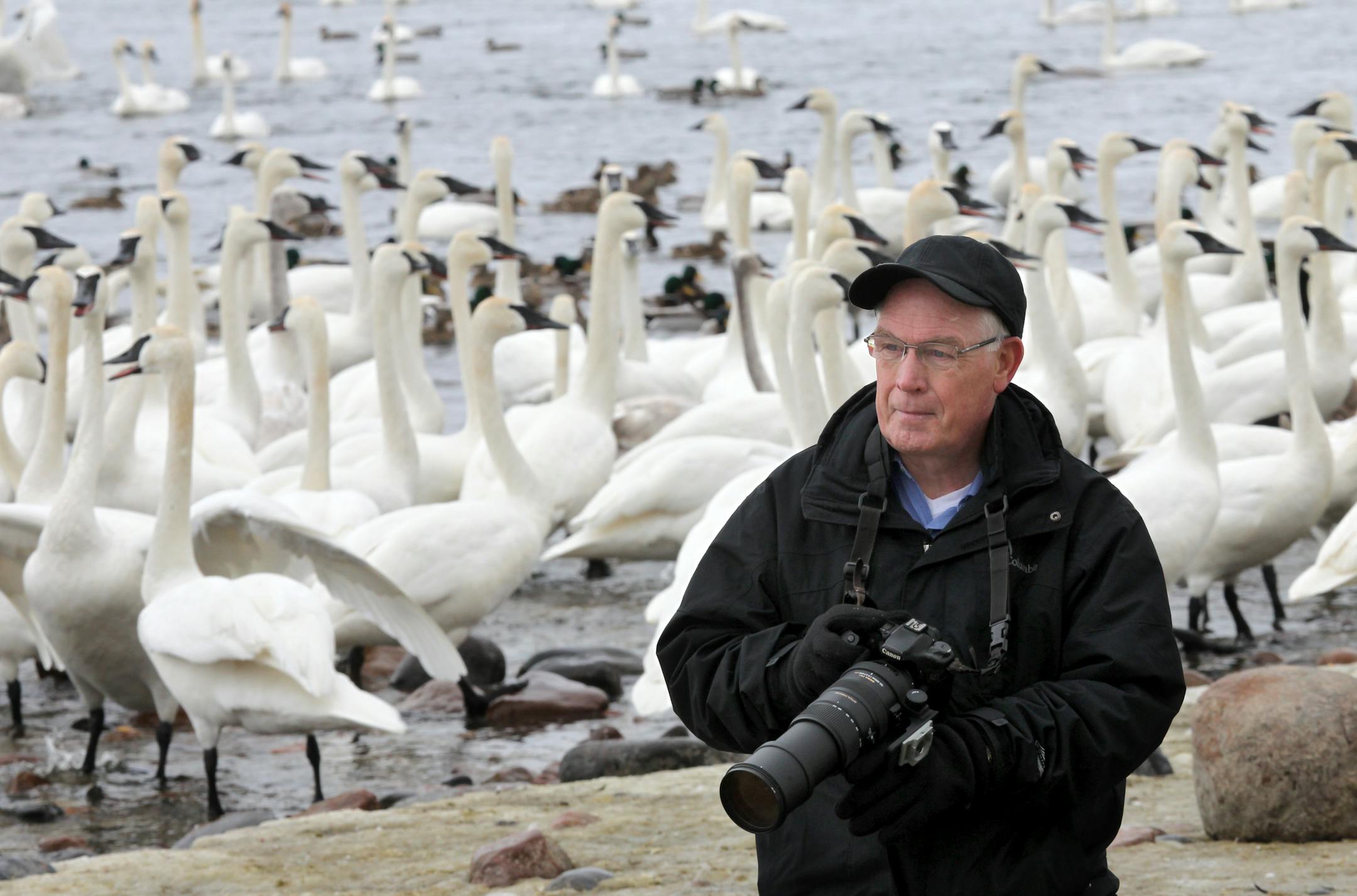
The re-establishment followed a smaller trumpeter swan restoration effort in the early 1980s by Three Rivers Parks District, among others.


![Attendees of Frostbike made their way through the convention Saturday at the Quality Bike Products campus in Minneapolis. ] (AARON LAVINSKY/STAR TRIBUNE) aaron.lavinsky@startribune.com Frostbike 2016 was held at the Quality Bike Products Campus on Saturday, Feb. 27, 2016 in Bloomington, Minn.](https://arc.stimg.co/startribunemedia/NH2BSHB74ND2V6GF2G2HI5X4MM.jpg?&w=252&ar=3:2&fit=crop)