

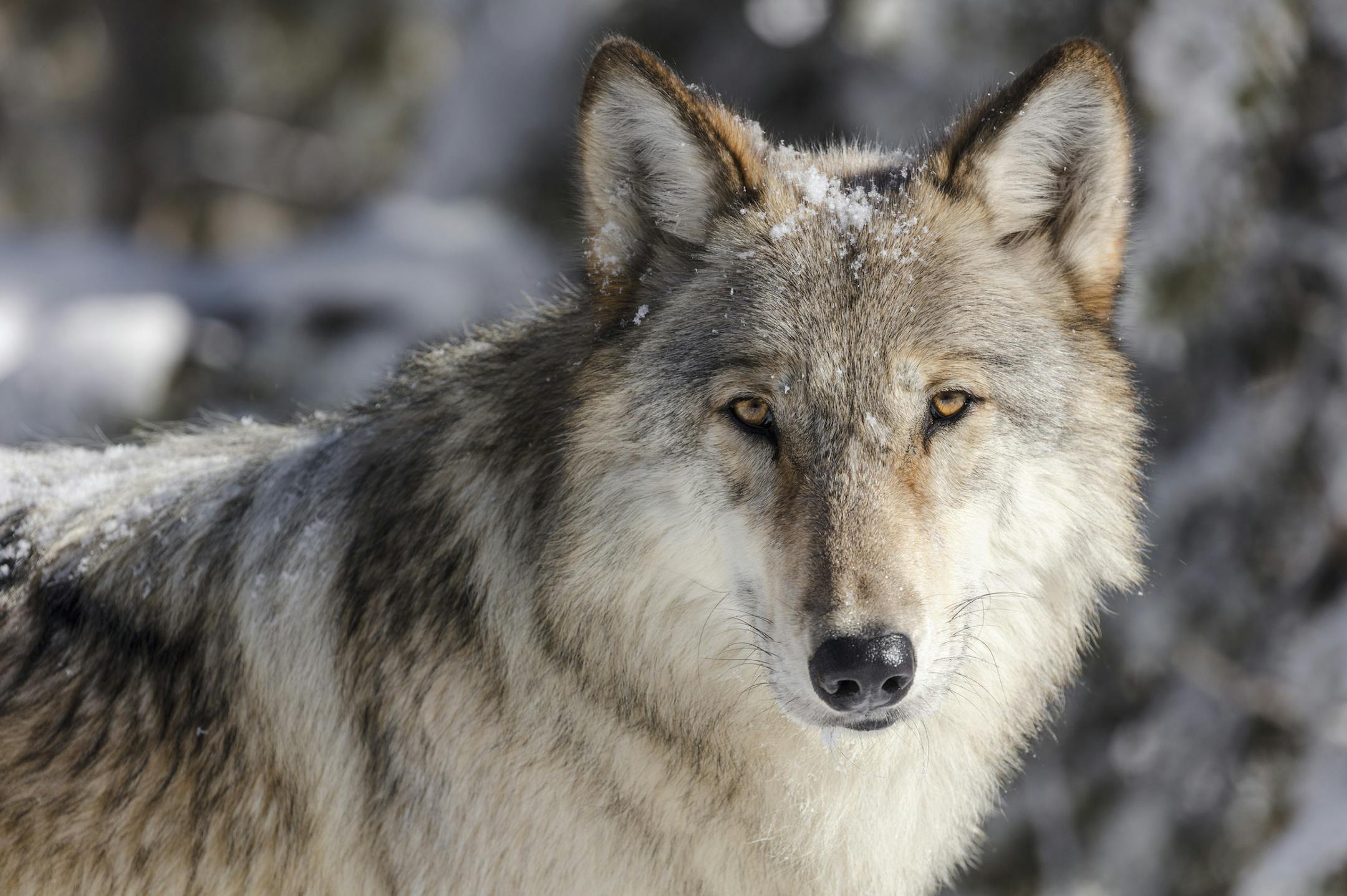
The gray wolf has long been a cash cow for the Center for Biological Diversity and other environmetal groups, and when Interior Secretary David Bernhardt announced in Bloomington Thursday the government's intent to remove the wolf from Endangered Species Act protection and return it to state management, the bank accounts of these organizations stood ready to benefit.
With about 2,700 wolves in Minnesota — about twice the number required for "recovered" status — the state is a poster child for conservation achievements that can be won for certain species under certain circumstances.
In the 1950s, only about 400 "timber" wolves roamed Minnesota, thanks mostly to decades of legal and illegal eradication efforts, including poisoning. Given that wolves throughout time have threatened humans' welfare in fact and in fiction, efforts to kill these animals by whatever means necessary, especially during early settlement, were, in retrospect, understandable, albeit, in many cases, deplorable.
But when intensive killing efforts were stopped, especially by poisoning, wolves rebounded, and today recovered populations thrive in Wisconsin and Michigan, as well as in Minnesota.
Wolves have recovered in these states because northern portions of each feature the largely wooded environs wolves prefer, and because sufficient numbers of deer, moose, hunting dogs and other pets are available to satisfy the rather robust appetites of Canis lupus.
Bobolinks in Minnesota aren't so lucky. Neither are meadowlarks. Or evening grosbeaks, tri-colored bats or Richardson's ground squirrels.
Each is rare and a species of special concern in Minnesota, while many others, like the eastern spotted skunk and northern pocket gopher, are even more threatened.
No one has intentionally tried to eradicate any of these, as they did the wolf. Instead, like countless songbirds and other wildlife, they suffer in Minnesota because we, each of us, including our politicians, prefer to ignore them while we wipe out their habitats.


