

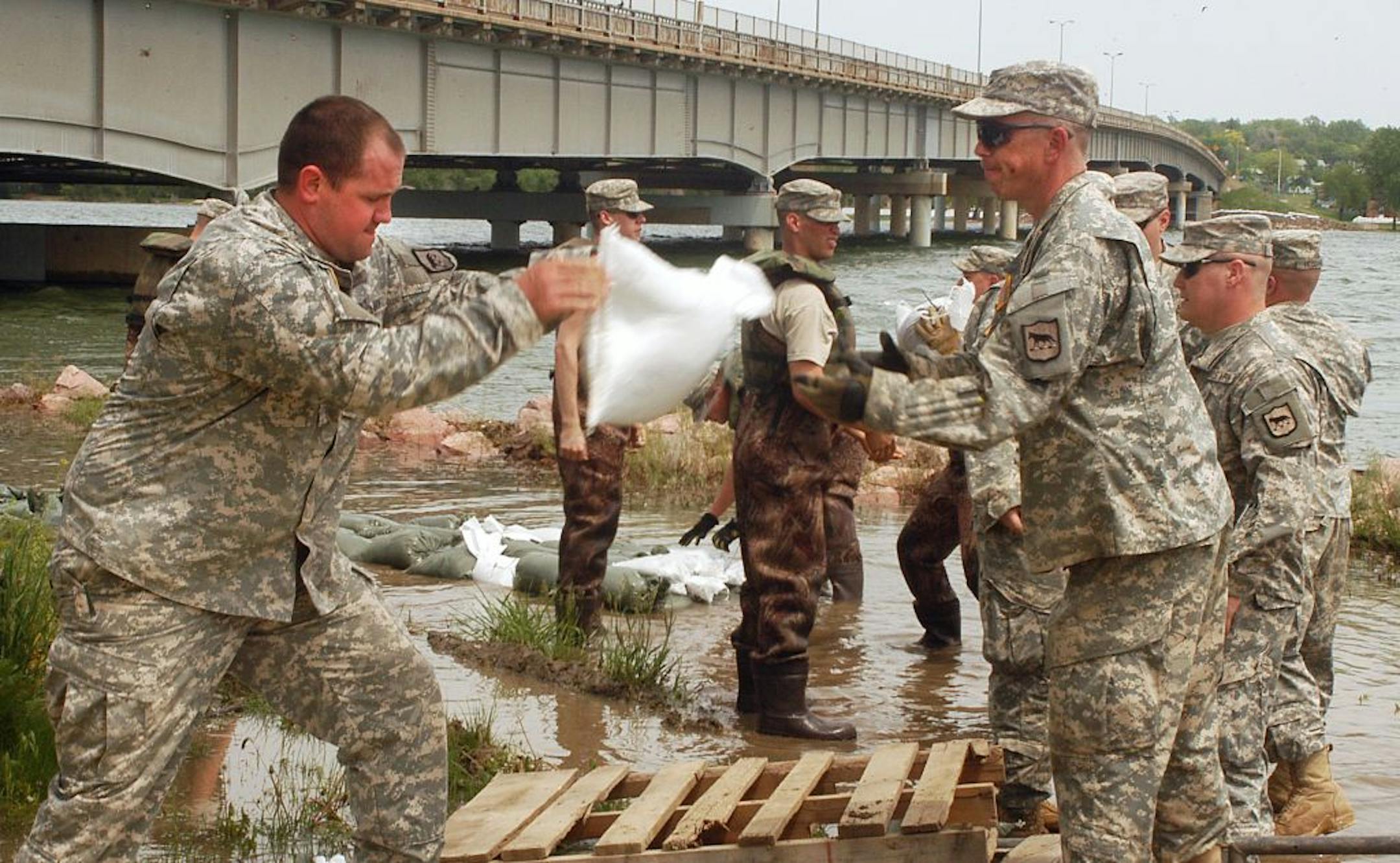
Flooding of the kind seen across the northern U.S. this spring and summer is unprecedented in modern times. Changes that will occur as a result will range from landscape -- human developments and wildlife habitats will be lost, and some new ones (of the latter) made -- to political, as Congress doubtless will begin hearings later this year to try to pin blame on someone for the disastrous flooding now occurring particularly on the Missouri River, from Montana to Missouri.
It's a disaster that is far from over. Some of the largest dams in the world are built on the Missouri, some constructed more than a half- century ago, and water is rushing through them at levels that are testing the nerves of many observers, if not the Army Corps of Engineers itself.
A significant letup of pressure on the dams isn't expected until August.
A prime walleye fishing destination for many Minnesotans, the Missouri and its entire watershed are also visited each fall by tens of thousands of Minnesota hunters. Some seek ducks, others pheasants, deer, grouse or other wildlife.
For these sportsmen, the notion that state boundaries any longer restrict their consideration of what's important environmentally or recreationally is anachronistic. They might live in the Twin Cities or Winona or Ely, but the Missouri is where they fish.
Similarly, the Souris River, which is now flooding Minot, N.D., might be the placid stream they cross while goose hunting in October.
For these Minnesotans in particular, some considerations:
• Incessant rains that have inundated prairie Canada, Montana and the Dakotas this spring and early summer virtually ensure that duck production this summer will be high, according to Delta Waterfowl and Ducks Unlimited, both of which have offices in Bismarck. Breeding duck numbers were down 9 percent in North Dakota this spring, but with so much water on the landscape, surveyors might have missed some birds, or ducks that were in North Dakota last year might be in South Dakota, Montana or Canada this year, also enjoying excellent habitat. So the fractional decline is inconsequential.


