

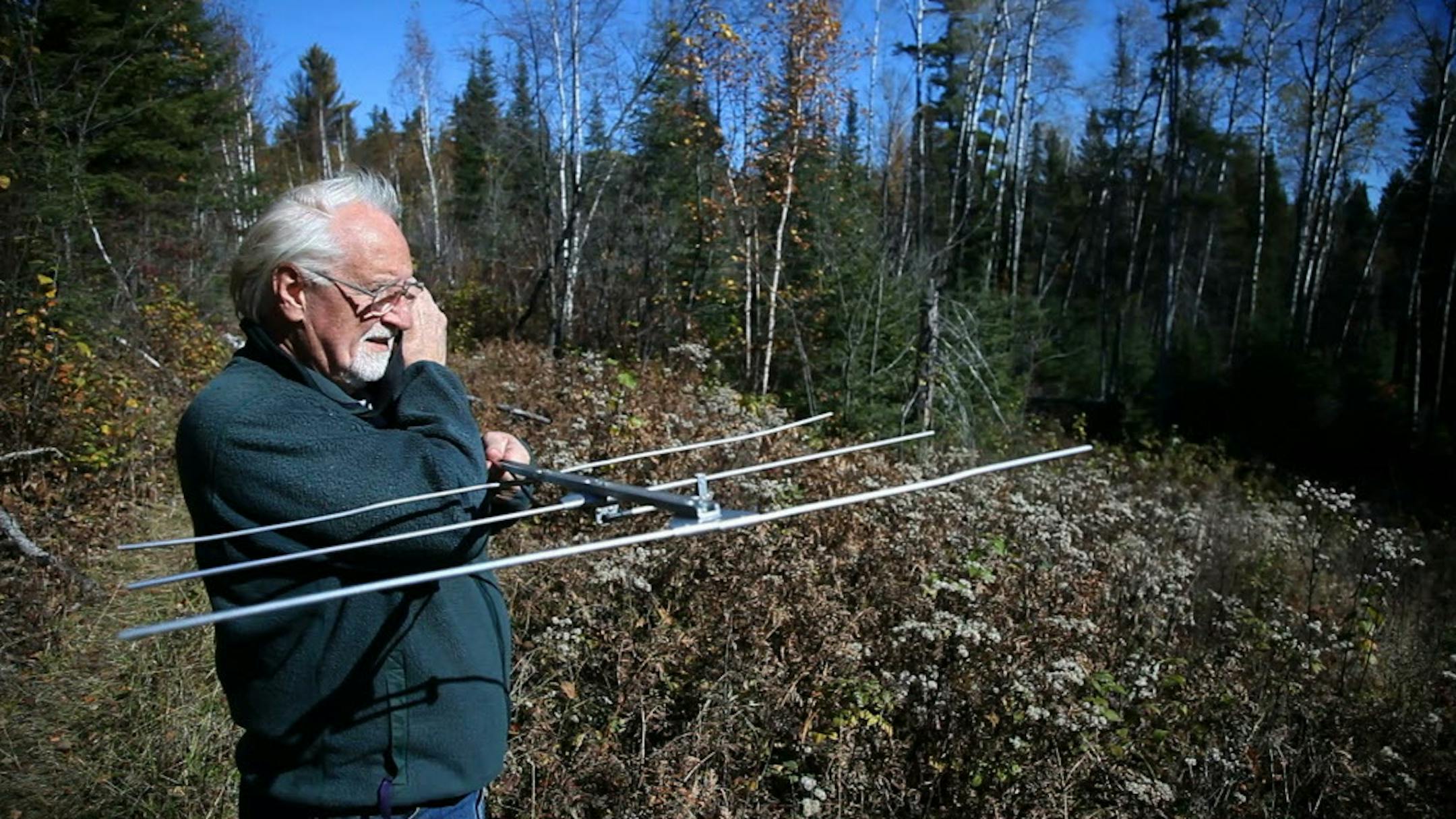
The administrative law judge's ruling this week that the Department of Natural Resources correctly exercised its authority when the agency revoked Ely researcher Lynn Rogers' permit to place radio collars on bears should mark the end of the long-running dispute between him and the agency.
Should. But probably won't.
An interesting guy, Rogers is in many ways a sympathetic figure.
I've known him since 1976, when I lived in Ely. At the time, he was a researcher with the U.S. Forest Service. But bears weren't his only interest. He also studied deer, and managed to "walk'' with some of them in the woods, as he eventually would with bears, gaining him fame in the process.
Rogers' list of accomplishment is long, culminating in recent years with establishment of the North American Bear Center on the outskirts of Ely, financed with $1 million of his own money. Visitor receipts ultimately helped repay him (and his wife), and the center remains today an educational and well-appointed tourist attraction, as well it should.
Additionally, notwithstanding the at-times withering criticism by the DNR of Rogers' methodologies, he stands at or near the head of a very short line of wildlife researchers who have successfully communicated with the public on a broad scale. Worldwide, many thousands of his "fans'' revere him, and many more believe his work with bears, and his relationship with them, represents the future of wildlife science, and of human-animal interaction.
But it remains true that the bumpy road Rogers, 75, has sometimes traveled has been of his own making.
Case in point: Ultimately, the Forest Service and the DNR are bureaucracies run by bureaucrats with little tolerance for individualists such as Rogers. Had he sensed this reality more deftly over the years, he could have carved a more nuanced, accommodating and less conflict-filled relationship with both agencies. And perhaps saved himself a lot of grief.


