

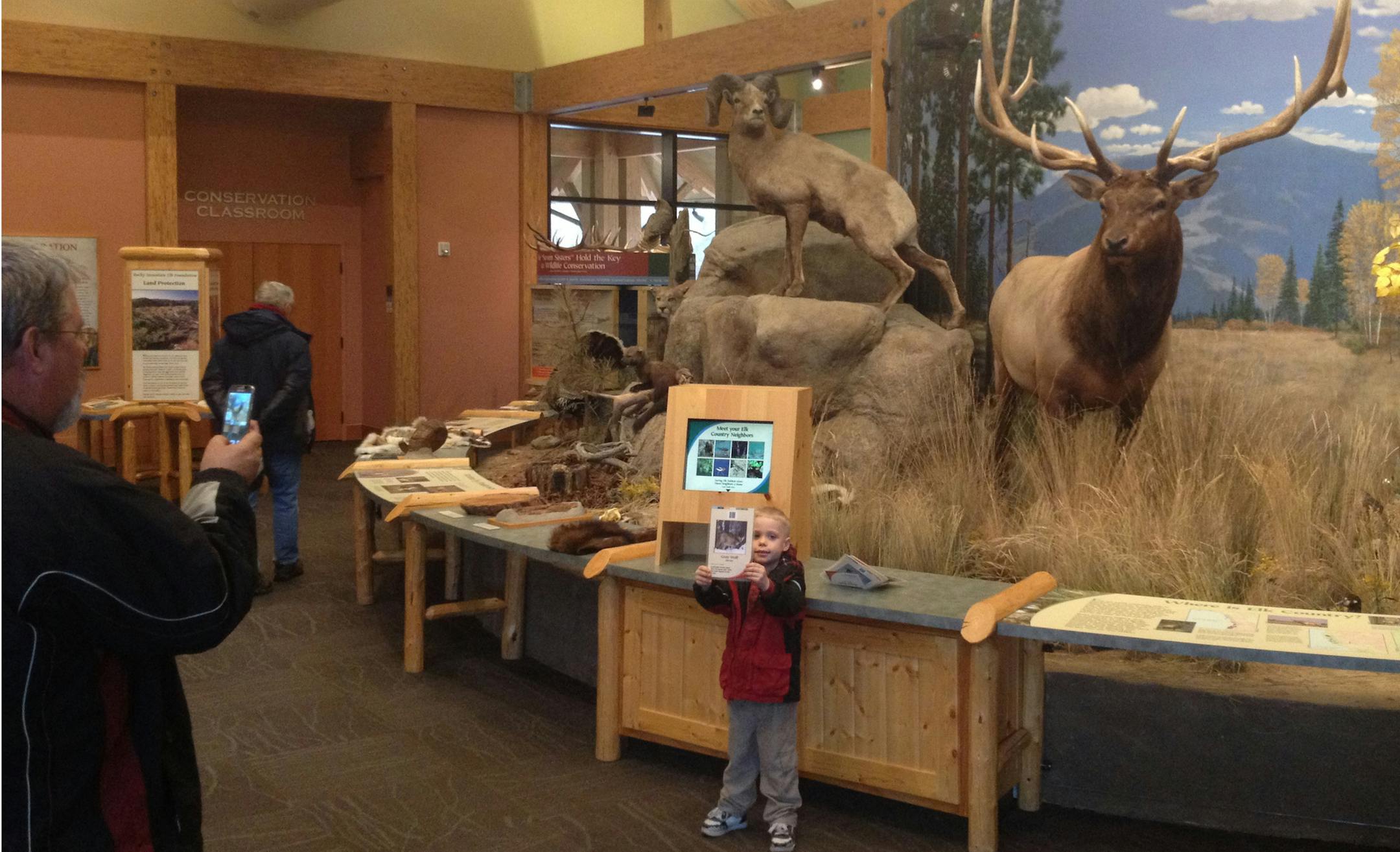
MISSOULA, Mont. – Here in the West, where big-game hunters outnumber bird hunters, elk reign supreme, especially the bull, with its branchy antlers, haunting autumn bugle and confounding ability, even at 700 pounds, to evade most pursuers, whether afoot or horseback.
Though largely a mountain animal now, more than 10 million elk roamed the United States and parts of Canada before white settlement and were as comfortable on the plains as they are now in the Rockies, where they were pushed by overhunting and habitat loss.
The continent's elk population has dropped to about 1 million. But the animal's attraction endures and is celebrated in this western Montana city by the Rocky Mountain Elk Foundation (RMEF), whose national headquarters and informative, museum-like visitor center welcome travelers from throughout the United States, among them some of the organization's 210,000 members.
About 6,000 of those members hail from Minnesota, spread among nearly 20 chapters. That the state has that many elk supporters but only about 120 of the animals within its borders speaks equally to Minnesota's conservation ethic and the elk's magnetism. Also, an elk hunter is an elk hunter, regardless of his or her home address, and records indicate almost 7,000 Minnesotans apply to chase elk in the West each year.
Now some northwest Minnesota residents are arguing the state's herd should be grown in that region, much as other states outside the Rockies have expanded elk numbers in recent years. Wisconsin (180 animals), Michigan, Arkansas and Pennsylvania are among places where elk — a native species, after all — have increased in number.
Pennsylvania is particularly noteworthy. The last native elk was shot there in 1877. But not long afterward, between 1913 and 1926, state game officials reintroduced the animals, transporting them from Yellowstone National Park, where federal officials feared an overpopulation.
Notably, Minnesota this year celebrates the 100th anniversary of its elk reintroduction, after the Legislature in 1913 allotted $5,000 to rekindle the herd. Now the Department of Natural Resources is beginning to develop a new elk plan, and before that process ends, at least a few hackles will be raised in the northwest, where some farmers and cattle producers worry about the elk's proclivity, absent other options, to munch crops or stored hay.
Still, the elk management plan the DNR eventually writes could differ from the current plan and support a larger herd.


