

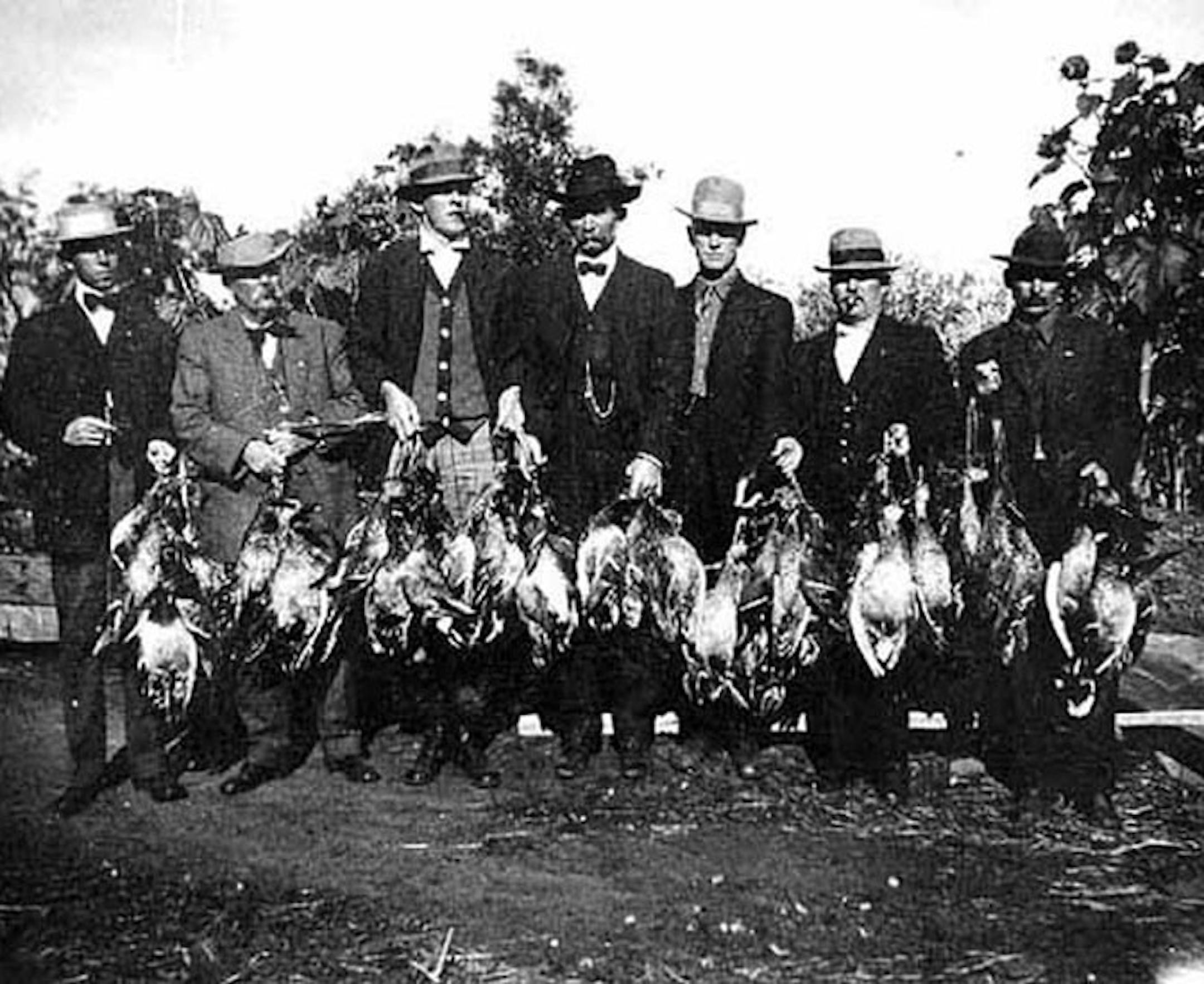
Minnesota has a long and storied history of duck hunting clubs, but few can trace their roots back more than a century. One that can is the St. Paul Heron Lake Gun Club, located on Heron Lake in extreme southwest Minnesota.
The club's existence, dating to 1913, reflects in many ways the arch of the state's waterfowling history, from a marsh and wetland mecca in the late 1800s that was home to millions upon millions of ducks, to an also-ran duck state whose shallow waters have largely been drained, ditched and degraded.
Still, Christopher Ward, 50, and his two sons, Charles, 22, and Connor, 20, will be on site at Heron Lake on Saturday morning when the curtain lifts on Minnesota's 2014 waterfowl season.
"My grandfather, William Ward, and my dad, Charles, were both members of the club," Christopher Ward said. "I was first taken there when I was 13. Now my sons are members. So that's four generations."
Heron Lake was home to so many ducks in the mid-to-late 1800s that it often was referred to as the "Chesapeake Bay of the West." Canvasbacks inundated the lake in fall in such large flocks that school kids in the small town of Heron Lake rushed to classroom windows upon hearing their thunderous wing beats.
Heron Lake and the entire Prairie Pothole Region that stretches into the Dakotas and beyond were formed about 12,000 years ago, when glaciers receded. A mosaic of marshland and dry ground, covered in tall prairie grasses, was left behind.
Market hunting flourished at Heron Lake in the late 1800s. But by the turn of the century, the lake's canvasbacks, redheads and other ducks became relatively scarcer, and intense conflicts arose between market hunters and sportsmen, most of whom were from the Twin Cities.
Transportation to and from the small towns of Heron Lake and Lakefield was by train, and at the villages' railroad stations, Twin Cities weekend hunters (and often their dogs) were met by their guides and transported to their respective duck clubs in advance of Saturday morning's shoot.


