

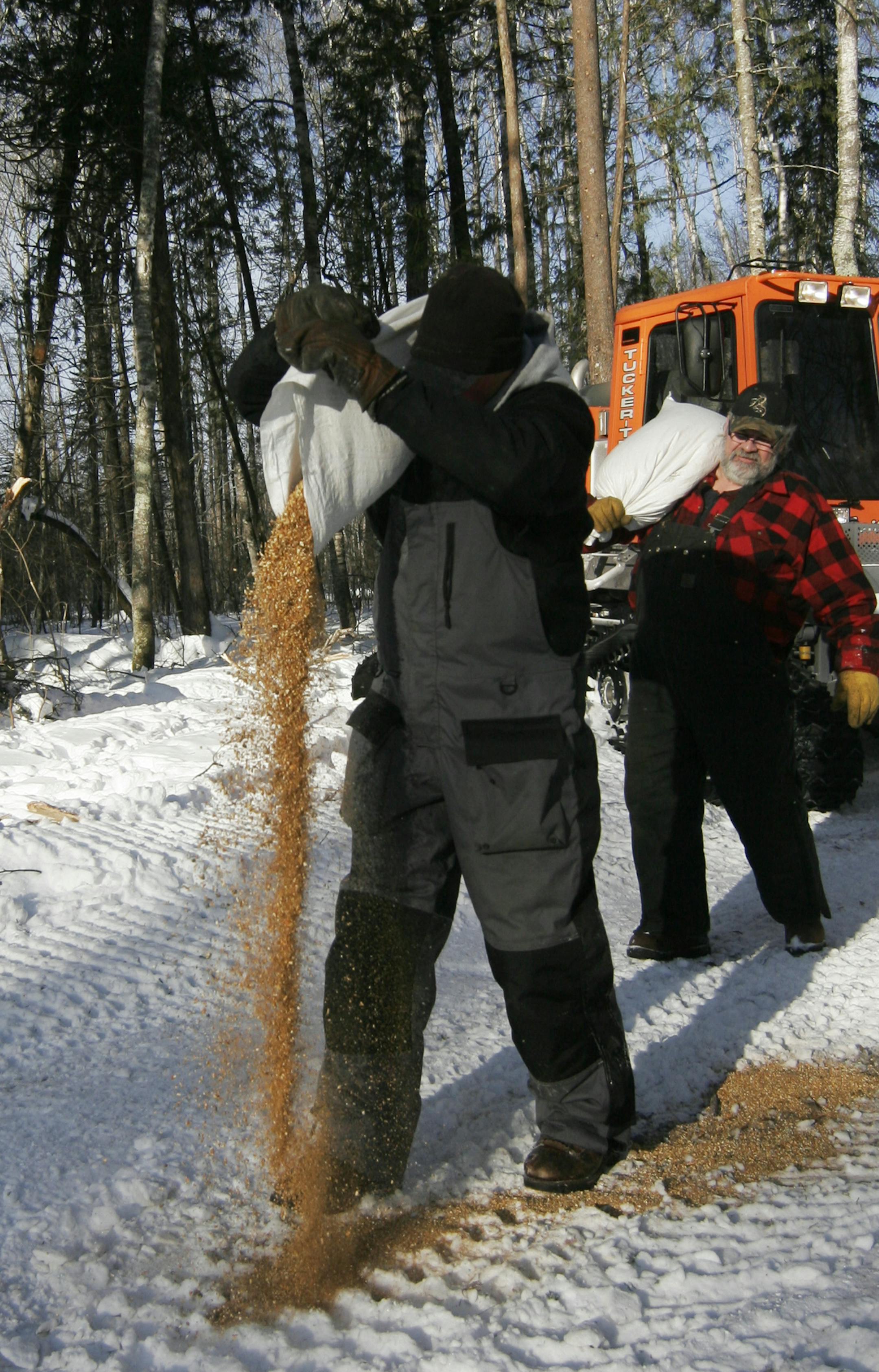
Deer feeding in Minnesota has a long history, and during severe winters, food distribution to whitetails has been the norm, not the exception. Occasionally feeding has transpired in the farmlands. But most often it's happened in the north, where it's occurring this winter also, led by the Department of Natural Resources and the Minnesota Deer Hunters Association.
In most of these operations, the DNR has been a reluctant participant, citing costs, manpower requirements and the difficulty of reaching significant numbers of forest deer with feed. The agency also argues that deer have evolved to survive difficult winters, and that any herd losses will be recovered.
Additionally, since the discovery of chronic wasting disease (CWD) in wild Wisconsin deer, and the discovery also of CWD in captive Minnesota elk (and one wild Minnesota deer), the DNR says the risk of transmitting disease among animals by congregating them for feed is significant, and should be avoided.
True enough. But it's also true the DNR might have avoided the current scrum over deer feeding had it followed its own recommendations after a huge 1989 statewide deer-feeding effort, and followed as well recommendations it included in a report to the Legislature in January 1998.
More on that report in a minute.
First, rewind to 1982, when the DNR, wanting to institute lottery drawings for bear-hunting and antlerless-deer permits, asked the Legislature to increase the price of resident deer and bear licenses by $1, with 50 cents of the deer license hike set aside for emergency deer feeding (as well as the feeding of "pheasants and other wild animals'').
In winters when deer feeding wasn't necessary (which was most winters), the money was spent for "deer management" and/or it reverted to the Game and Fish Fund, a DNR account supported by hunting, fishing, trapping and related license sales.
Then came 1989, a very severe winter, and a bill was passed early in the legislative session to allot $300,000 for deer feeding — part of what would become a $1 million effort that winter by the DNR and 8,000 volunteers to dole out about 8 million pounds of deer pellets.


