

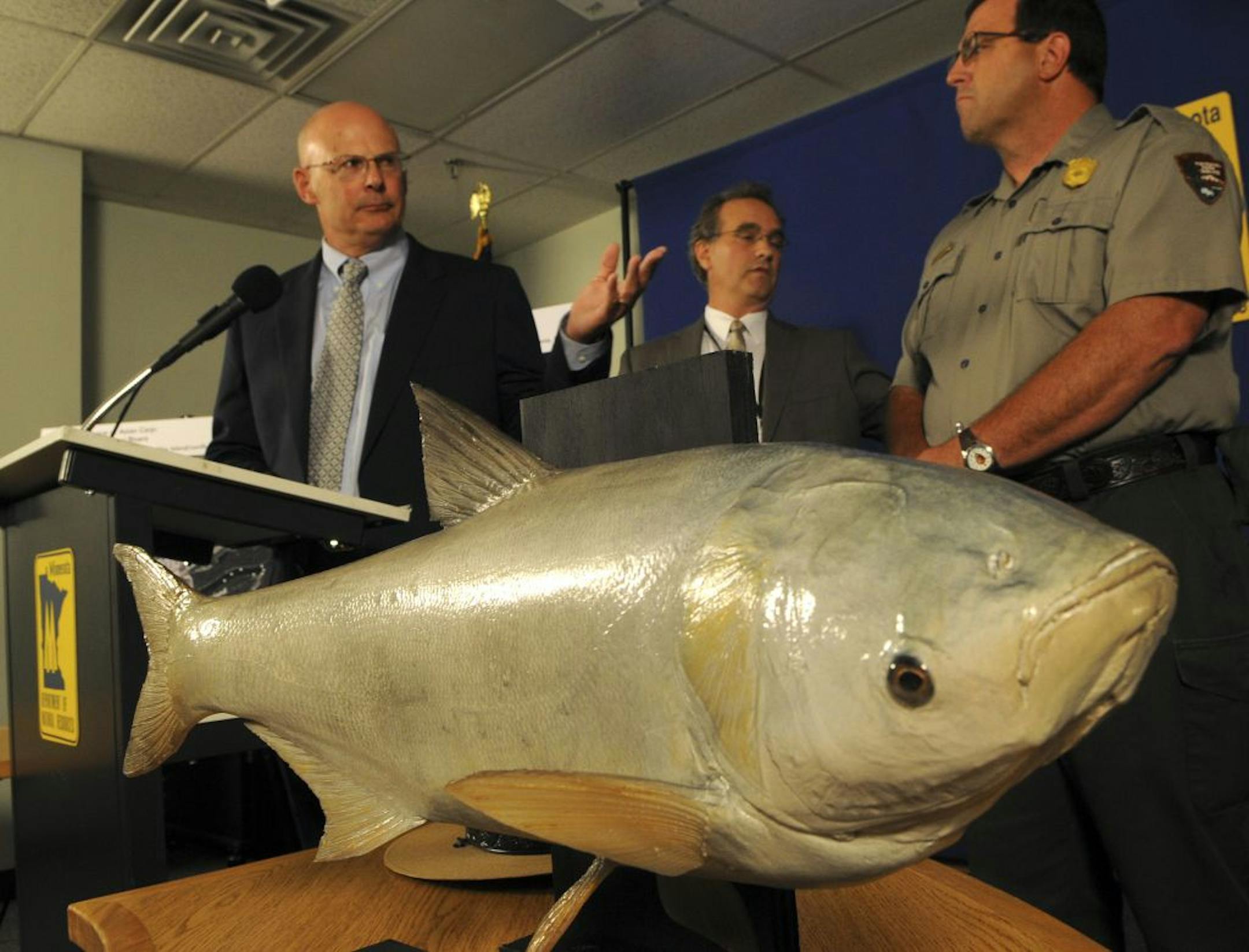
DNR Commissioner Tom Landwehr discusses a plan by a coalition of west-metro lake associations to significantly expand boat-inspection rules.
Q The proposal to require boat inspections across a swath of the west metro is controversial among anglers and other boaters, who believe their access to lakes would be too restricted.
A There are approximately 3,000 lake accesses in the state, only about half of which the DNR has authority over. On accesses we control, inspections, gates and other, similar requirements by local authorities can only be done with our permission. Conversely, on the other accesses, we have no authority.
Q The coalition plan presented to the Minnehaha Creek Watershed District is far reaching, requesting that certain private accesses be shut down and gates be placed on certain public accesses, through which entry could be gained only after inspection.
A We have said, and the law allows, that local watershed districts and other governments can develop these types of plans. But we will only review them after they've been approved by the watershed district or other government body. We would have to agree to any restrictions that affect the public accesses we control.
Q Explain how the gate on the Christmas Lake access is allowed.
A That access dates to the 1980s and has been controversial among lakeshore owners from the start, many of whom opposed it. It is owned by the city of Shorewood. But because it was built in part with federal dollars, there are restrictions the DNR placed on the access requiring it to be open 14 hours a day. No one decades ago imagined the AIS [aquatic invasive species] issues we're facing today that brought about that gate and the private inspectors stationed there, which the lakeshore owners and city support.
Q If broader, more stringent boat inspection protocols were cast across the west metro, what would stop other groups from forming coalitions elsewhere in the state or requiring perhaps even more stringent inspections, creating a checkerboard of launching rules?


