

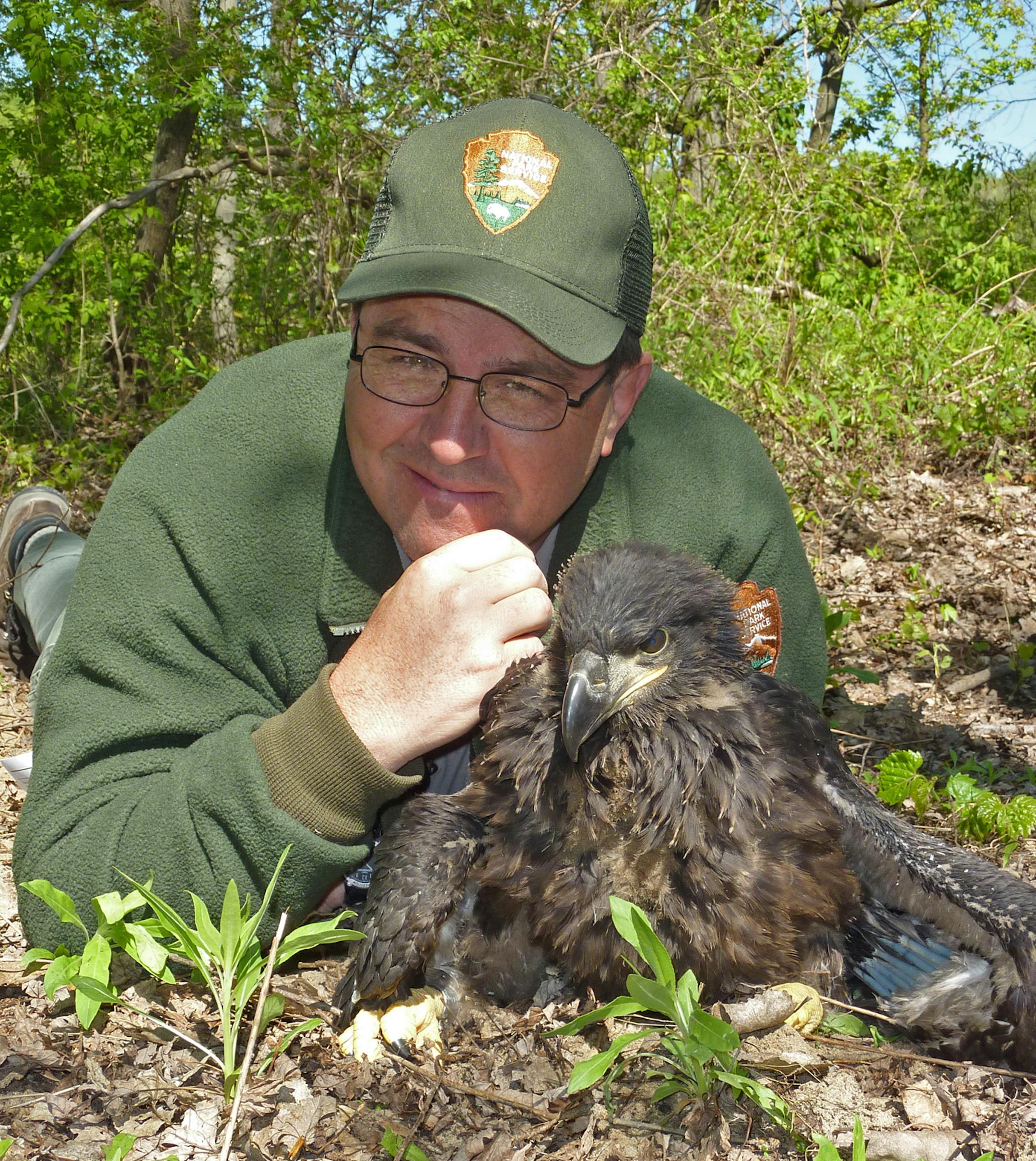
Risk taking and government service generally aren't mentioned in the same breath. But they are here in honor of Paul Labovitz, a National Park Service superintendent who has overseen the Mississippi National River and Recreation Area (MNRRA), headquartered in St Paul, since 2007, and who soon will take a similar job managing the Indiana Dunes National Lakeshore.
In his time in Minnesota, Labovitz has improved not only the Mississippi River, but the lives of many people who live near it, especially kids who might not otherwise have had a chance to see it up close.
Additionally — this is the risk-taking part — Labovitz has spoken out forcefully in defense of the Mississippi and all Minnesota waters, regarding the coming invasion of Asian carp, when it would have been more bureaucratically expedient to lie low and say little. Or nothing.
Yet you are forgiven if you're unfamiliar with Labovitz or his responsibilities, because unlike national parks such as Yellowstone, Yosemite or even our own Voyageurs on the Minnesota-Ontario border, the Mississippi National River and Recreation Area lacks well-defined boundaries, entrances and exits.
The MNRRA instead consists of 72 miles of the Mississippi River between the Twin Cities' northernmost and southernmost suburbs. The area was federally designated by Congress in 1988, and was championed by the late U.S. Rep. Bruce Vento, a Democrat, and Sen. Dave Durenberger, a Republican, both from Minnesota.
"Our charge is to help protect and interpret a long list of resources and values associated with the Mississippi River, ranging from cultural to economic,'' Labovitz said Thursday. "This is our one national park about the Mississippi River.''
Aided by a staff that has been ever-shrinking because of federal budget cuts, Labovitz has focused his efforts on:
• Getting people to and on the river. "When I came here we were doing no canoeing, kayaking or fishing programs,'' Labovitz said. "I'm proud now to say that with the help of our partners, including Wilderness Inquiry and the Mississippi River Fund, we've gotten about 60,000 kids onto the river.''
![BRIAN PETERSON • brianp@startribune.com SAINT PAUL, MN 8/4/2010 ] With the help of Minneapolis based Wilderness Inquiry and the National Park Service, more than 60 young paddlers participating in a Let’s Move Outside Junior Ranger Program arrived at Harriet Island by voyageur canoe. Obama Administration officials, Congresswoman Betty McCollum, Congressman Keith Ellison, Minneapolis Mayor R.T. Rybak, Saint Paul Deputy Mayor Ann Mulholland, NPS Midwest Regiona](https://arc.stimg.co/startribunemedia/TS2P2AVZGBBQWTAALXQK5VJXMA.jpg?&w=1080)


