

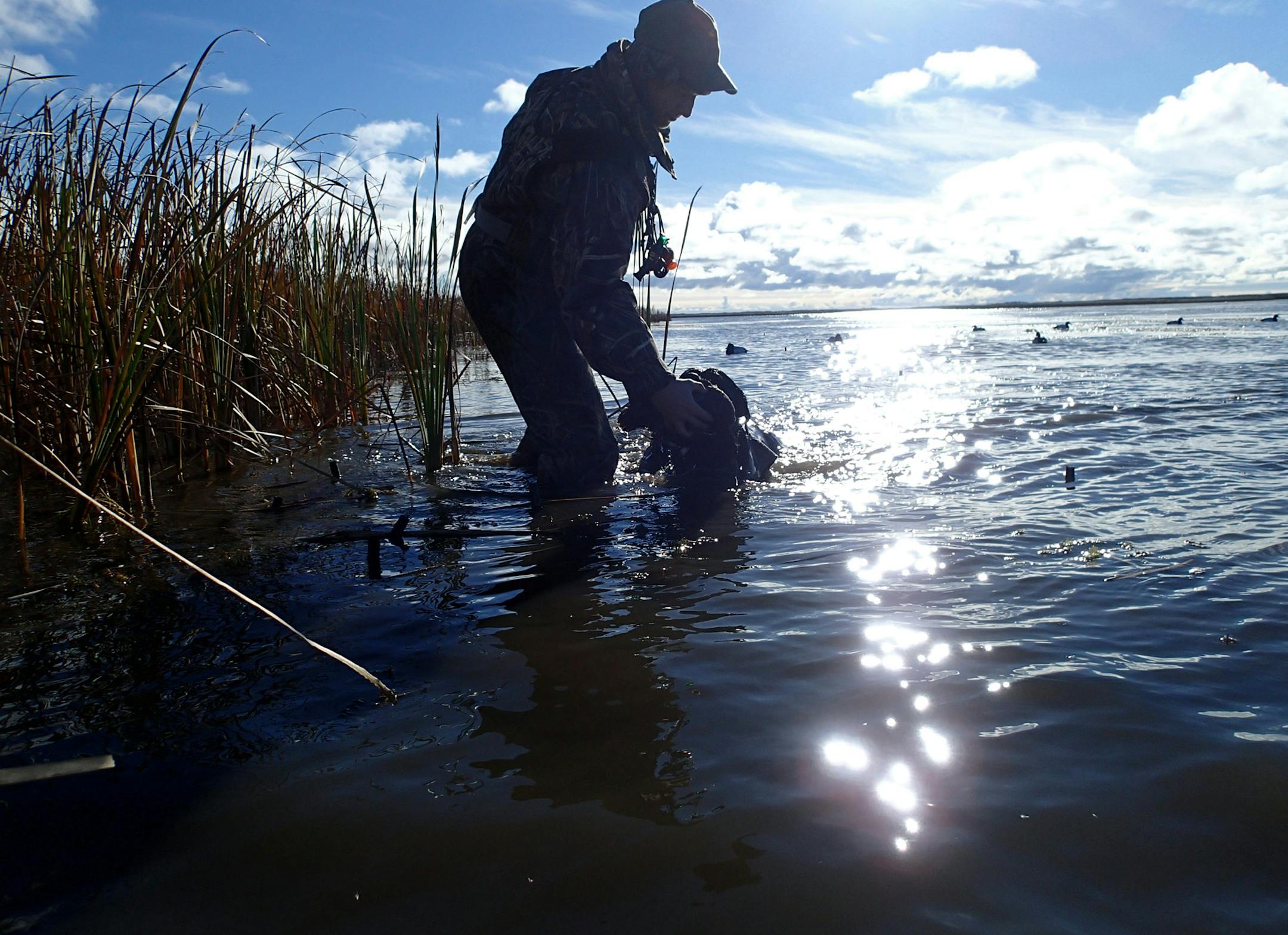
ON DELTA MARSH, MANITOBA
Early Thursday morning the wind was from the northwest, brisk but manageable, and this big, shallow lake, some 50 miles long, appeared a darkened labyrinth of narrow waterways and reedy islands and points. Among these, we had come looking for ducks, bluebills in particular, but also canvasbacks, redheads and mallards.
Made famous more than a century ago by the late Jimmy Robinson, outdoor writer and pal of Ernest Hemingway, Clark Gable and others he hunted with, the marsh today remains pretty much the same as Jimmy knew it. By turns a duck haven and dangerous place to paddle — no motors are allowed — Delta bears an attraction not soon forgotten.
For 20 years, I traveled here nearly every fall, always with my friend Willy Smith. We first hunted ducks together in college, and our trips throughout western Minnesota expanded as time and funds allowed. We were water hunters, so Delta seemed a natural destination, and as time passed we learned how to play its winds, break its ice and call its bluebills. Season by season, we returned to shore with progressively more ducks, and earned every one of them.
Thursday was different. Willy was back in Willmar, being a pharmacist, and I would push off onto Delta with my son, Cole, and his pal, Max Kelley, both 18, and both first-time visitors.
The trip had begun inauspiciously Wednesday afternoon while we were scouting and I buried my truck's front axle in mud. This happened a long way from anywhere, and as darkness approached, I learned anew the value of other hunters willing to help — and the value of tow straps kept handy.
So we wanted Thursday morning to unfold more positively. The alarm rang at 4, and Max, Cole and I soon departed from the same motel in Portage la Prairie, Manitoba, that Willy and I stayed in those many years ago. With block walls, the place isn't fancy. But it has a stove, a refrigerator, a TV and is "pet friendly,'' meaning the dog can sleep on the bed if he wants.
Terrain turns soft
On the advice of a friend who hunts Delta every year, we had toted a four-wheeler along on the trip. Always changing, the marsh was thrown for a loop a couple of seasons back by massive flooding, and now water edges that once could be driven to are in some cases separated from hard ground by hundreds of yards of muck. So we unloaded the machine from our pickup, connected it to our canoe by a rope, packed it with decoys and other gear, and maneuvered the lot of it to our hunting water.


