IN WESTERN MINNESOTA
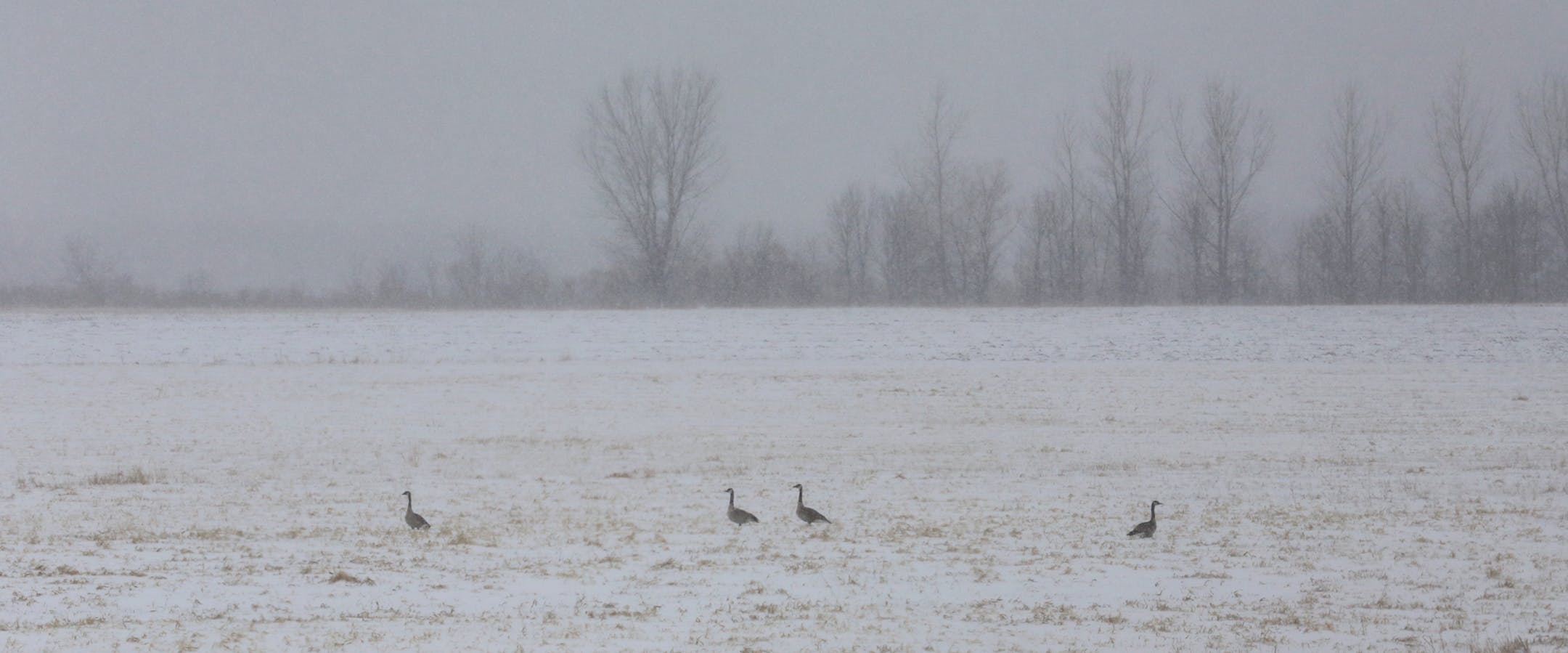
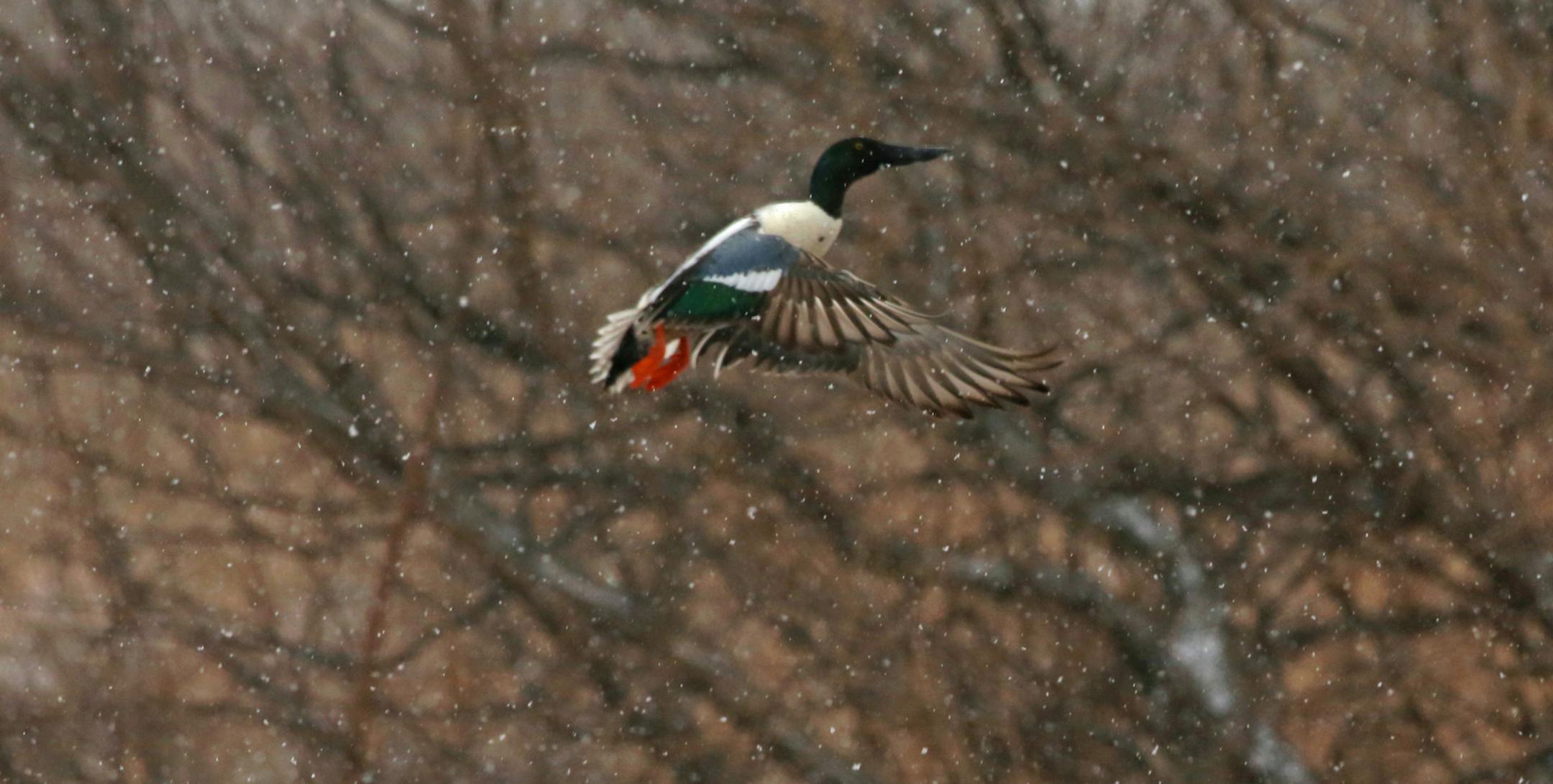
The snow had begun falling outside Litchfield, swirled in great tornadoes as I drove through Willmar and cascaded crossways as I angled slowly west on Hwy. 40 toward Milan, not far from the South Dakota border. This was on Wednesday, and the truck bucked and yawed on the snowy ruts, windshield wipers beating against the whiteout and the smallest ponds and water-catches alongside the road freezing over. Visible fleetingly in one field stood four Canada geese, tails north toward the wind, their migration interrupted.
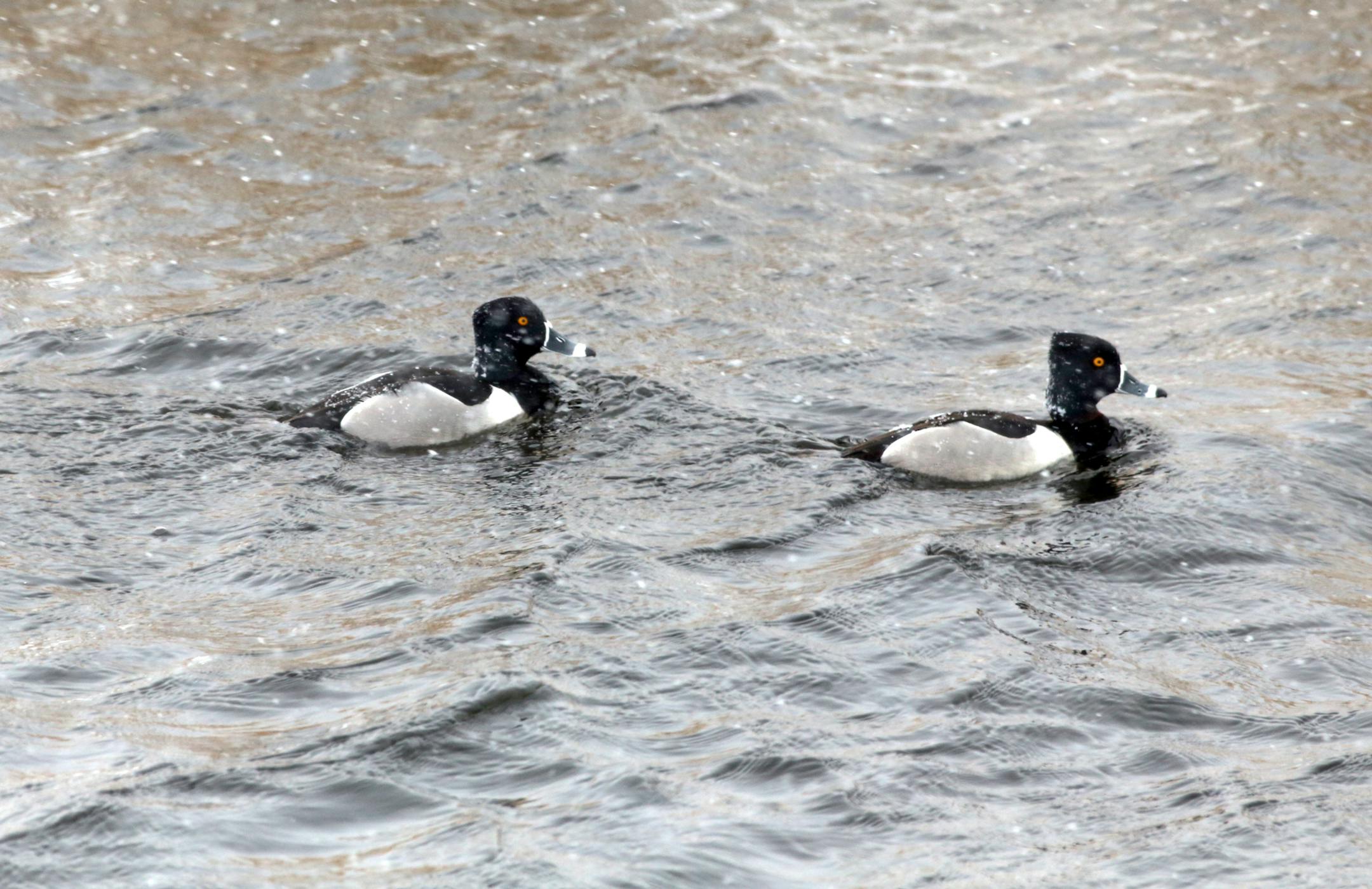
In fall in these parts, camouflaged hunters hunker low in cut corn and bean fields. The great north-to-south patterning of birds along the state's western corridor is the attraction, and typically ducks arrive before the geese. When geese do arrow overhead in long skeins, mostly they are Canadas, with some snows and blues mixed in. Ducks can be a royal flush: mallards, all of the teal, shovelers, widgeon, gadwall.
In fall, during hunting season, very few of these waterfowl bear the showy colors they do on their return trips in spring. Thus the attraction of a visit in March or April. Also in spring, absent unforeseen circumstances, you really don't need a gun, thus lightening the load, though a dog remains a good idea. I had one riding shotgun, Millie, a black Labrador, snoozing.
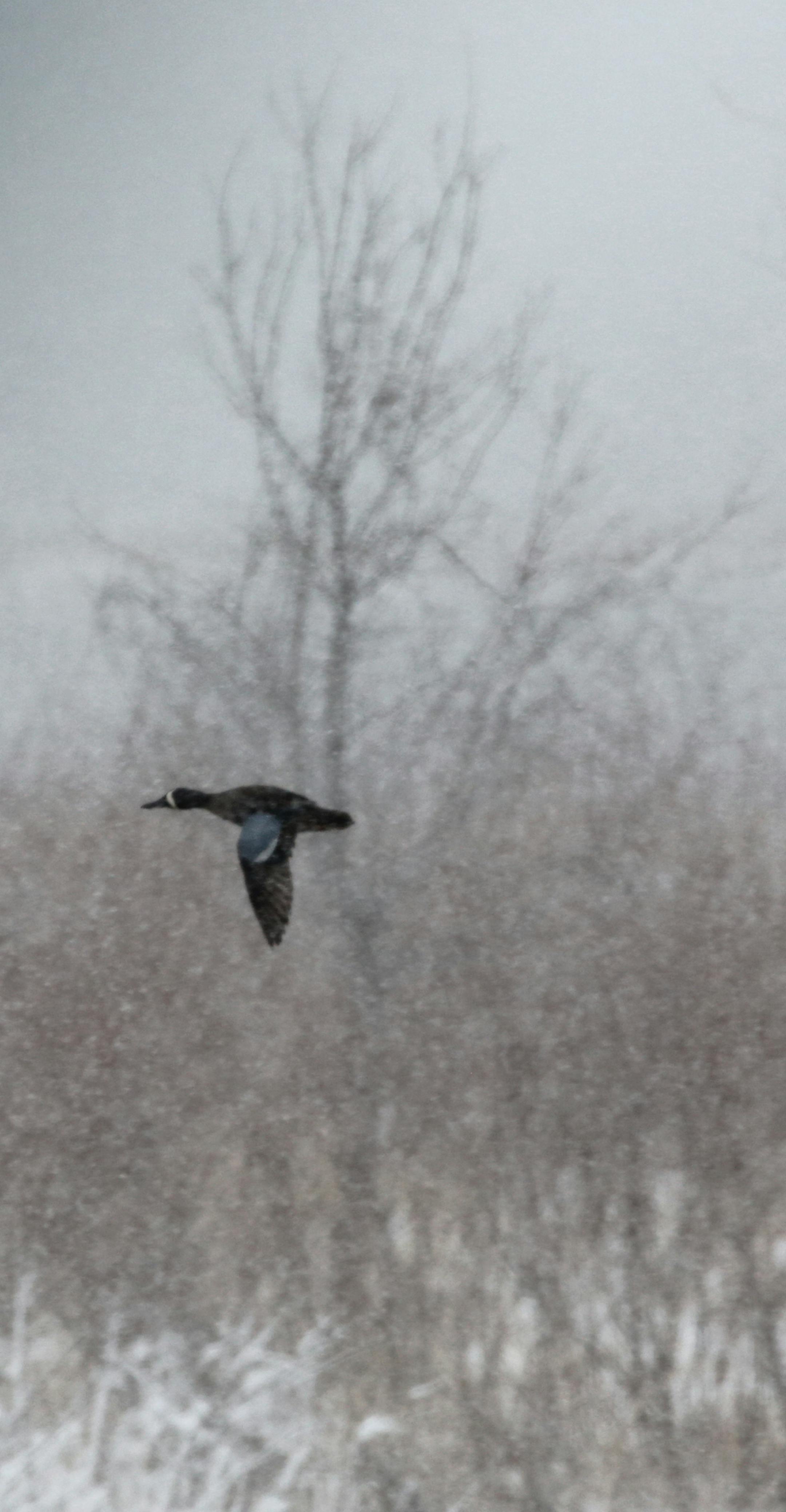
It is true as Leopold said that to those lacking imagination, blank spaces on a map suggest useless waste. Others welcome these as possible hotbeds of the unexpected. Frame of reference is important here, notably an appreciation of the broad arc beneath which seasons cleave and yield. To some a red-winged blackbird with its bright epaulets is a red-winged blackbird with bright epaulets, while to others its sudden appearance signals that changes are afoot, winter to spring, or fall to winter. In Wednesday's maelstrom, I doubted these or many other songbirds would reveal themselves. But ducks and geese would.
I found the old county road that bordered a series of my favorite wetlands, turned there, and in my rearview mirror saw tire tracks following me in the now-drifting snow. Weather was an impediment. But I intended nonetheless to park, pull on a pair of coveralls and stride through the underbrush toward the lee of one of these waters, and watch from there the comings and goings of birds that doubtless were as curious about the day's elements as I. This wasn't easily accomplished, and I stumbled occasionally over brush obscured by the gathering snow. But in time I was there, shoulder into the worst of it, my camera in hand.
The question of time spent or time wasted inevitably arises, and anyway the attraction of Chippewa, Lyon, Stevens and the other western counties can be less easily distilled for some than, say, that of Lake County along the obviously picturesque North Shore or Fillmore or Winona County in the bluff-and coulee-rich southeast.
For some observers, prairies, or what's left of Minnesota's prairies, and wetlands and shallow lakes and bisecting gravel roads and implement dealerships and Cenex stations, tin-can water towers and small-town cafes with creaky floors can be an acquired taste. Reading history helps — this was great Indian country, with bison and tall grasses and wild fires that swept horizon to horizon. Also, the poet Robert Bly and the late short story writer Carol Bly didn't draw from nothing on their farm near Madison in Lac qui Parle County. Ditto Tom Hennen of Morris and the late Bill Holm of Minneota, and the resident-in-spirit Larry Gavin. Each, among others, exhales easily in these lands, and writes well of them.