

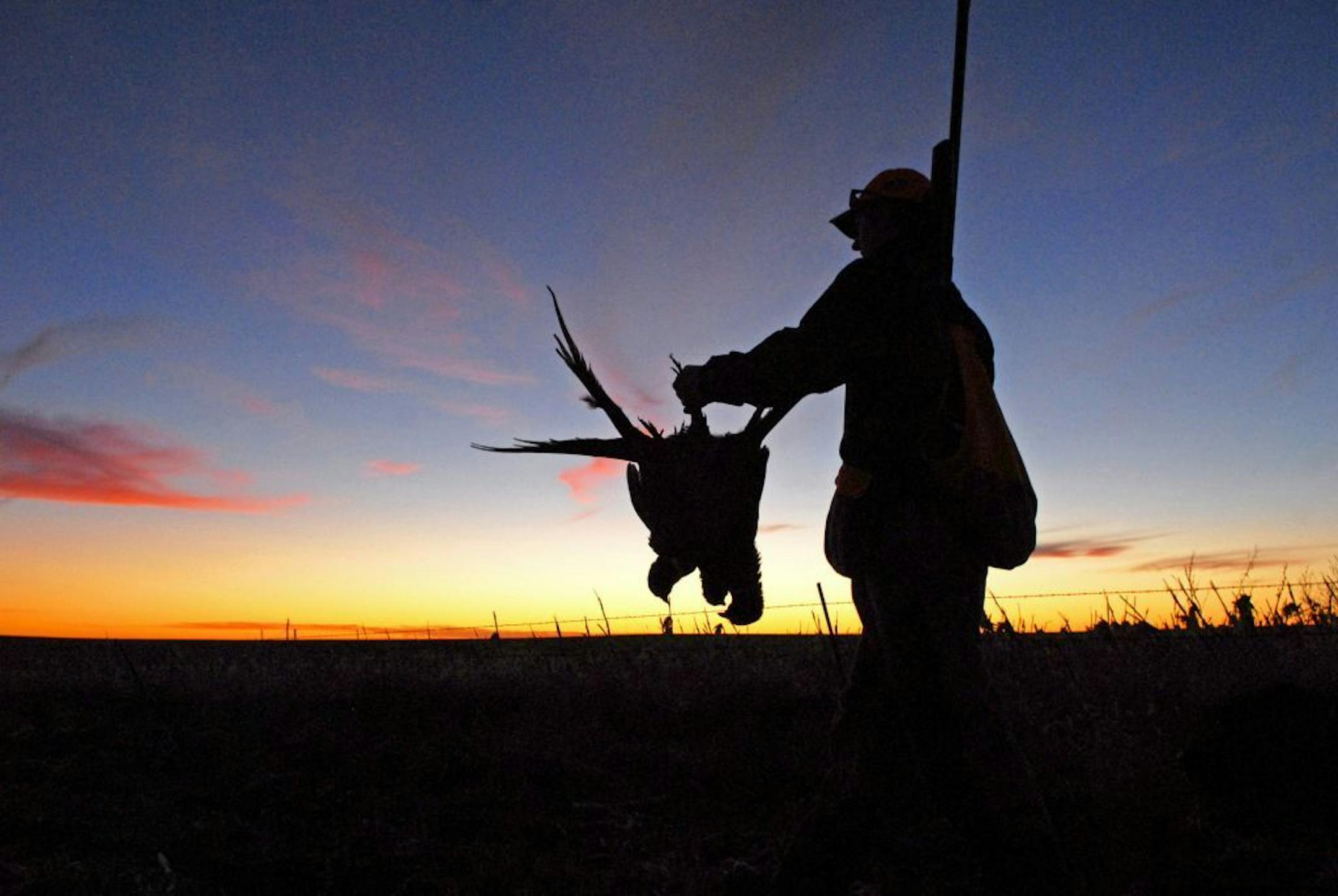
At last weekend's Pheasant Fest, conservationist hunters rubbed shoulders with outfitters, vendors and others on the business side of upland hunting, while a smattering of Washington politicians pressed the flesh.
The apparent intent of this last bunch, including USDA Secretary Tom Vilsack, an Iowa native, and Sen. Amy Klobuchar and Rep. Collin Peterson of Minnesota, was to validate the conservationists' gathering, before retreating to the nation's Capitol -- far from the massive conservation problems facing farmland America.
The event itself, Pheasant Fest, was well organized and attended by nearly 30,000 people.
Many who ponied up its $10 admission perhaps have only a few days each fall to tramp public land in search of roosters, while others who made the pilgrimage own fine double guns, kennels full of dogs and hundreds of acres of prime South Dakota ground on which to hunt.
Regardless, the two were bound -- are bound -- by a common lust for wild lands and wilder birds, both preferably enjoyed beneath October skies, with a full moon rising.
Yet regardless an upland hunter's station, he and his favorite bird face uncertain futures.
As evidence, count the endless burning marshes that drifted smoke across North Dakota and South Dakota horizons last fall, also declining pheasant-hunting opportunities throughout the heartland and a federal crop insurance swindle that abets the conversion of Midwest grasslands to corn and soybean fields.
Long obvious to hunters, this conversion was substantiated this week by researchers Christopher Wright and Michael Wimberly of South Dakota State University, in a study published in the Proceedings of the National Academy of Science.


