

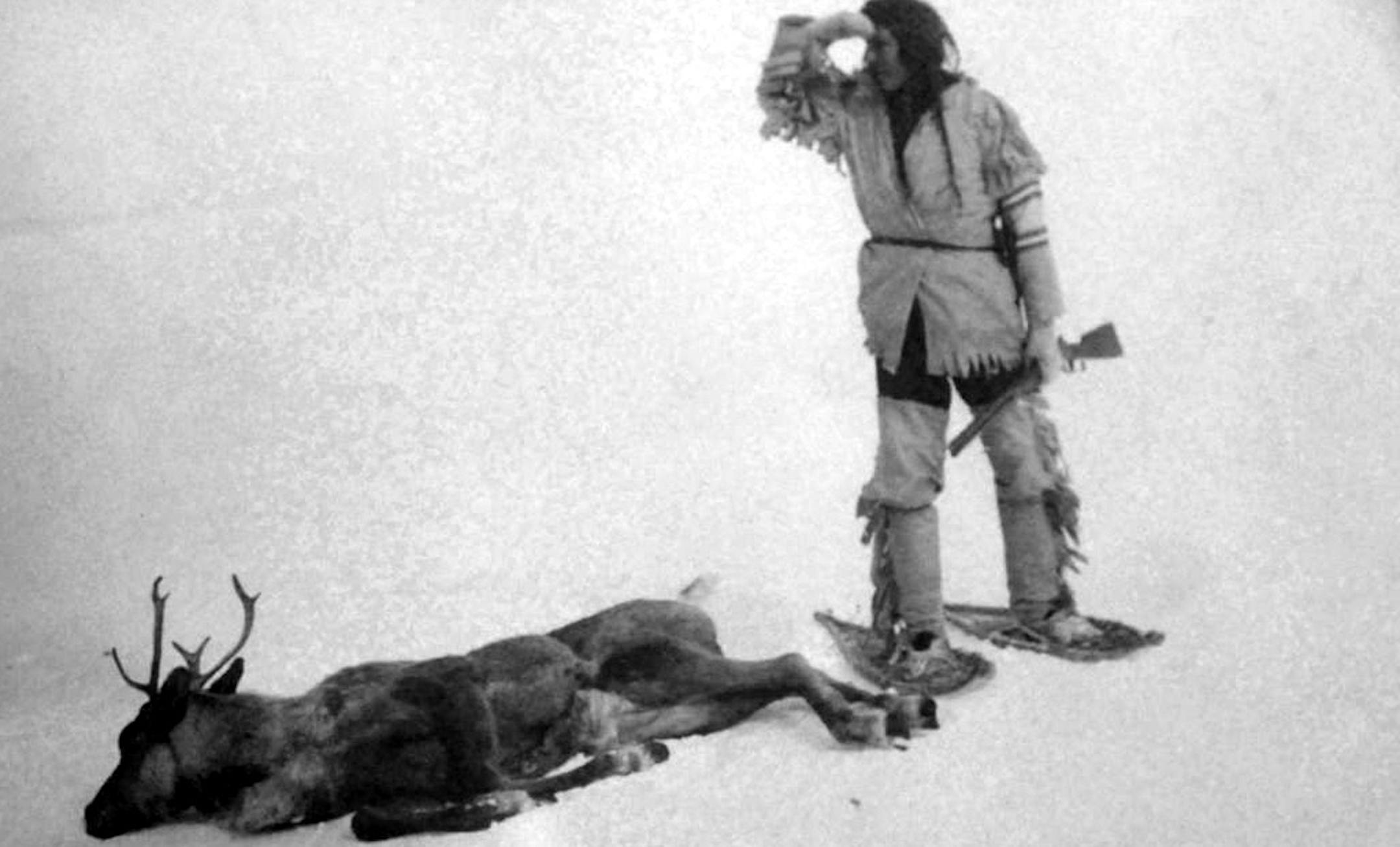
Found in the belongings of a woman who passed away recently in San Diego, a photo dated "1915" and purporting to show the last caribou killed in Minnesota has, by odd circumstances, ended up in the hands of Ed Rosenberger of South St. Paul.
Rosenberger, an avid bow hunter, received the photo -- a copy of the original -- from his daughter and son-in-law, who live in San Diego, who in turn were given it by the son-in-law's boss after his mother died.
In the photo's lower right corner, along with the date, is the photographer's name, "Reed." Accompanying the photo was a note from the photographer -- full name, Roland W. Reed:
"This shows an endless plain of snow with a dead caribou, the last ever shot in Minnesota, in the foreground," the note says. "A lone Ojibway is regarding the prey he has pursued so long. Behind the deer [caribou] and the Indian the snow is disturbed by tracks of hoof and snowshoe, but ahead and away back to the cold horizon the silent sheet of white stretches smooth and pitiless."
Born in Wisconsin in 1864, Roland Reed, who later moved to Minnesota and had studios in Red Wing, Ortonville and Bemidji, achieved considerable fame as a photographer of Native Americans, including those of the Great Plains and the Southwest, as well as in Minnesota.
The photo interested Rosenberger because of its reminder that caribou, not white-tailed deer, once were the abundant big game in northern Minnesota. Caribou disappeared following white settlement and the widespread logging that occurred across the central and northern parts of the state.
In the old growth forests, caribou had thrived. But deer were better adapted to the shrubs and saplings that emerged after the loggers moved on. Additionally, deer and caribou aren't compatible, because deer carry brain worm, to which caribou are highly susceptible.
Whether the caribou pictured actually was the last one killed in Minnesota is suspect. A Department of Natural Resources research paper from the 1970s places the end of caribou in the state around 1940. Regardless, it's likely that when Reed took his photograph, caribou were near their end here, if not yet entirely extinct.


