

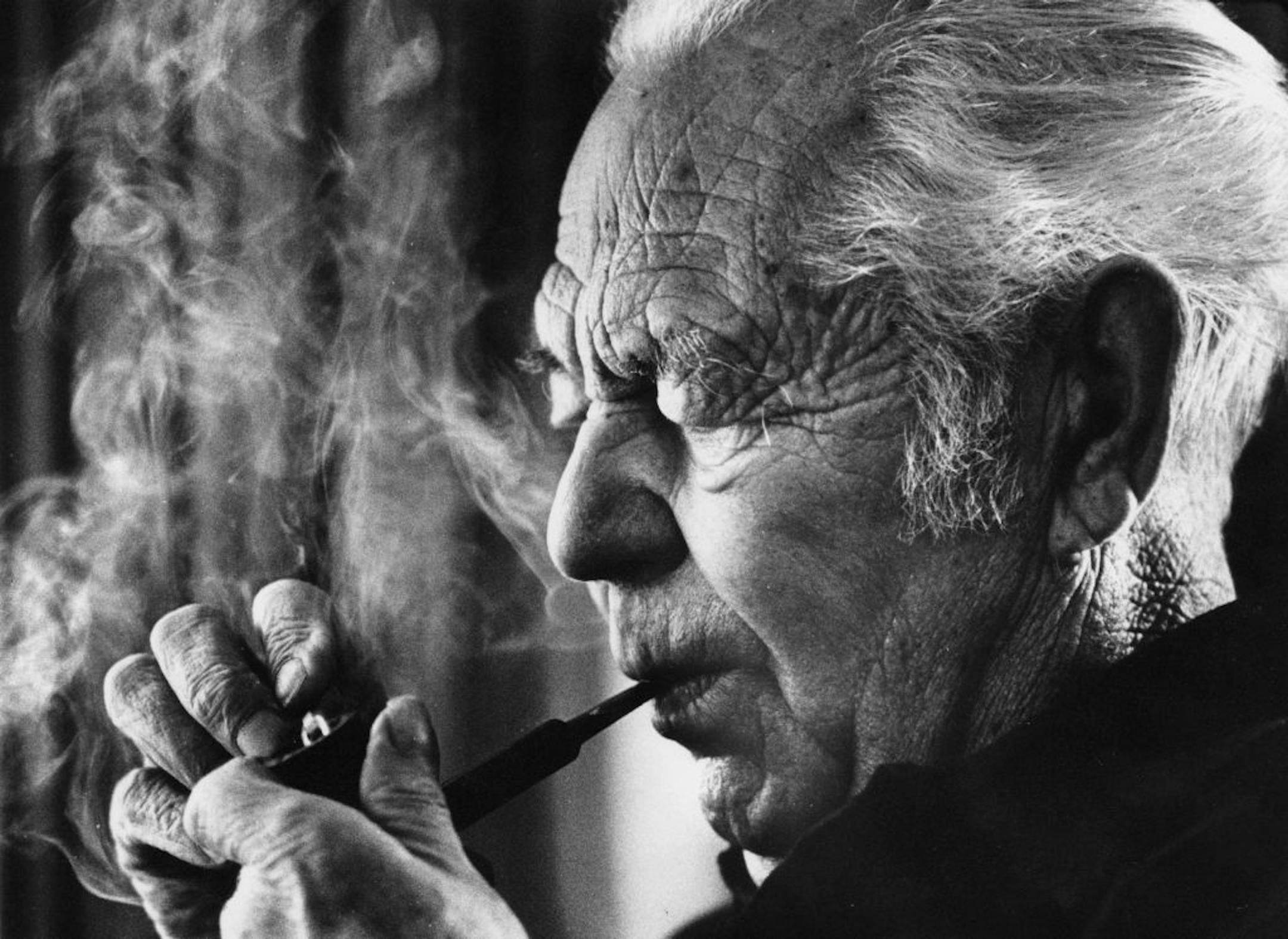
By the time I met Sigurd Olson, he was a man in full. Not so much in the sense of Tom Wolfe's novel of the same title, whose characters contort mightily over their self-images. Rather, by 1977, when I first visited Sig and his wife, Elizabeth, at their Ely home, he was in important ways well-settled, with many voyages behind him -- least profoundly, perhaps, those he took by canoe over more than a half-century in Quetico-Superior border country.
Instead, in Sig's wake, and happily so, were the high water marks of a career as a national conservation leader, including important turns as president of the National Parks Association and Wilderness Society.
Trailing him as well were the tormented decades during which he struggled to find his writer's voice, and audience, and the conflicts also that arose from his need to make a living while forever in the grip of a tempestuous muse he never could shake; not from his childhood days in Door County, Wis., to the afternoon he died while snowshoeing near his home.
Now, 30 years to the week after Sig collapsed on a cold January afternoon, what remains of the legacy of this wilderness advocate whose nine books published between 1956 and 1982 still find readers worldwide, and whose beloved boundary waters might yet, in the mining of precious metals nearby, find their greatest challenge?
Such questions at first seem easily answered.
An environmental institute that bears Sig's name thrives at Northland College in Ashland, Wis. Listening Point, the quaint cabin on Burntside Lake near Ely that embodies the beauty Sig found in simplicity, is a sort of Mecca to his followers (see accompanying story). And professors of ecology, nature writing and wilderness studies often speak of Sig in the same breath with John Muir and Aldo Leopold.
Yet, in the 30 years since Sig's death, much has changed, and in those changes arise challenges to the tenets of the personal philosophy Sig forged over his 82 years -- the foundation of which was his belief in the universality and agelessness of spiritual benefits that accrue from nature, particularly in the context of wilderness.
• • •


