

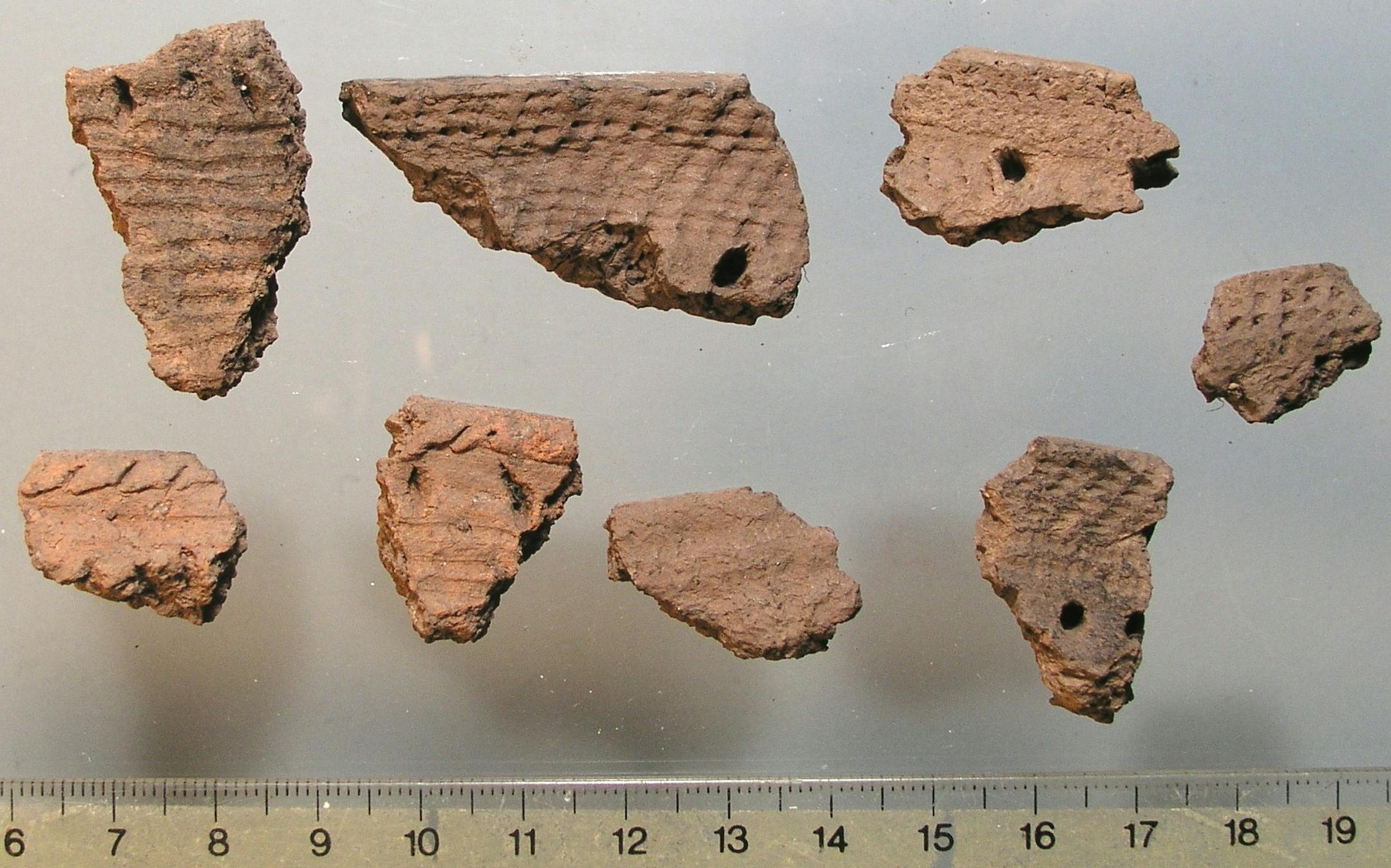
DULUTH — The day archaeologists discovered ancient pottery pieces in a remote area of the Superior National Forest in 2003 wasn't especially significant.
The pieces emerged while a team from the U.S. Forest Service was mitigating erosion in the border lakes region of the Boundary Waters Canoe Area Wilderness.
"I remember thinking it was very cool, this beautiful pottery," said conservation archaeologist Lee Johnson.
But pieces are handled carefully in the field to preserve them, and it wasn't clear that day that some still bore the traces of a long ago meal, the key to pinpointing when an intact bowl was used and which ancient people used it to hold food.
Then the sherds sat for 19 years in a curation room at the Forest Service's Duluth office, until the agency last summer found the funding to perform radiocarbon dating testing on those pieces and some others in its collection.
In December, the results came back: The sherds are from 1,750 to 1,600 years ago — or 272 to 422 A.D.
"We talk about the Superior National Forest and border routes, people living here 10,000 years ago," Johnson said. "Having that date to back up that story is really important for us. Archaeology is like a book with pages ripped out. This adds a really cool page in that book, and it is clear."
The decorative pattern of the vessel points to a group of ancestral Native Americans called the Laurel people, known to live in a wide-ranging area that extended from Lake Superior to Manitoba and Ontario between 2,100 and 1,200 years ago. They were the earliest in the area to adopt mound building and trade networks, said David Mather, an archaeologist with the Minnesota State Historic Preservation Office.


