

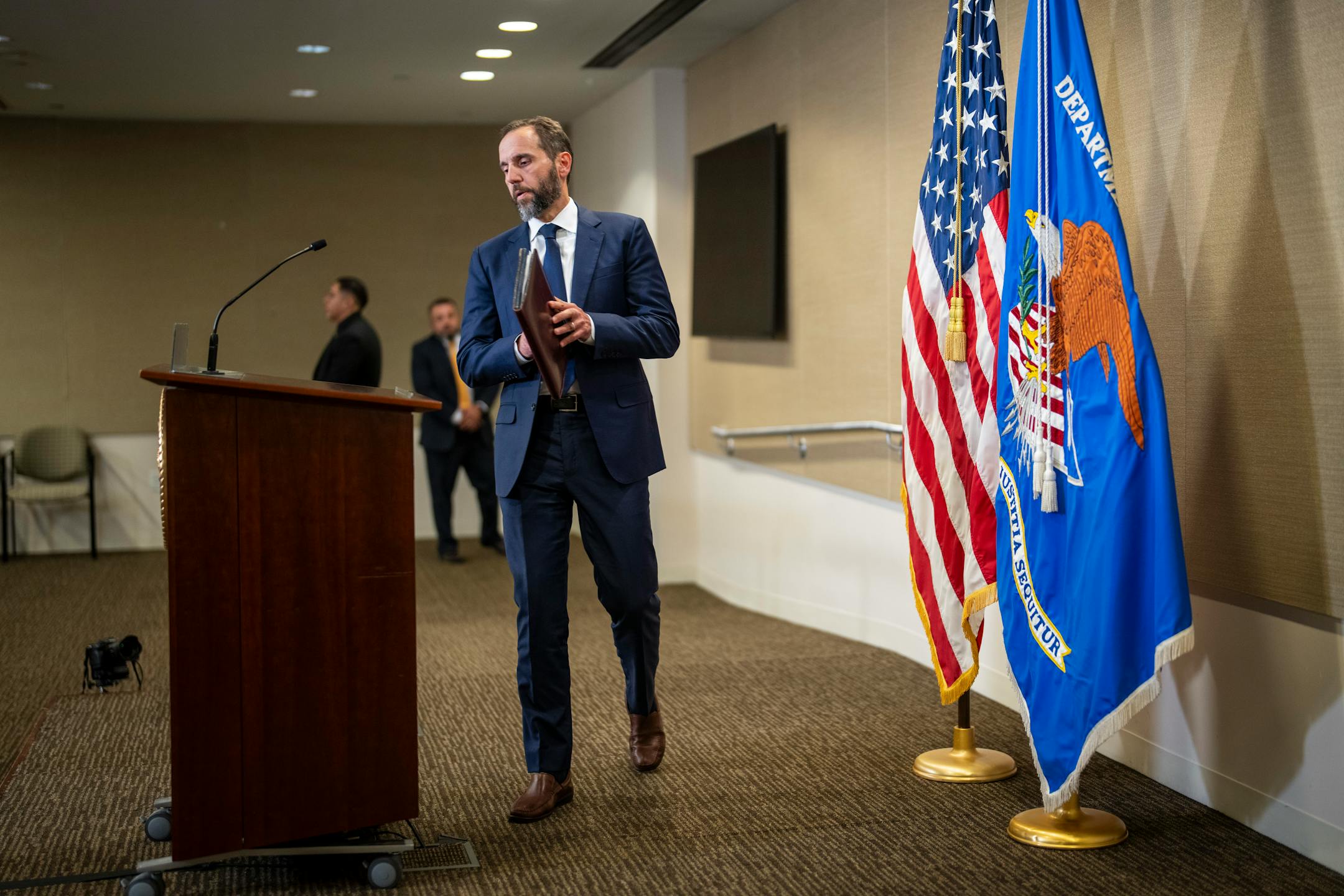
WASHINGTON — In accusing former President Donald Trump of conspiring to subvert American democracy, special counsel Jack Smith charged the same story three different ways. The charges are novel applications of criminal laws to unprecedented circumstances, heightening legal risks, but Smith's tactic gives him multiple paths in obtaining and upholding a guilty verdict.
"Especially in a case like this, you want to have multiple charges that are applicable or provable with the same evidence, so that if on appeal you lose one, you still have the conviction," said Julie O'Sullivan, a Georgetown University law professor and former federal prosecutor.
That structure in the indictment is only one of several strategic choices by Smith — including what facts and potential charges he chose to include or omit — that may foreshadow and shape how an eventual trial of Trump will play out.
The four charges rely on three criminal statutes: a count of conspiring to defraud the government, another of conspiring to disenfranchise voters, and two counts related to corruptly obstructing a congressional proceeding. Applying each to Trump's actions raises various complexities, according to a range of criminal law experts.
At the same time, the indictment hints at how Smith is trying to sidestep legal pitfalls and potential defenses. He began with an unusual preamble that reads like an opening statement at trial, acknowledging that Trump had a right to challenge the election results in court and even to lie about them, but drawing a distinction with the defendant's pursuit of "unlawful means of discounting legitimate votes and subverting the election results."
While the indictment is sprawling in laying out a case against Trump, it brings a selective lens on the multifaceted efforts by the former president and his associates to overturn the 2020 election.
"The strength of the indictment is that it is very narrowly written," said Ronald S. Sullivan Jr., a Harvard Law School professor and former public defender. "The government is not attempting to prove too much, but rather it went for low-hanging fruit."
For one, Smith said little about the violent events of Jan. 6, 2021, leaving out vast amounts of evidence in the report by a House committee that separately investigated the matter. He focused more on a brazen plan to recruit false slates of electors from swing states and a pressure campaign on Vice President Mike Pence to block the congressional certification of Joe Biden's victory.


