

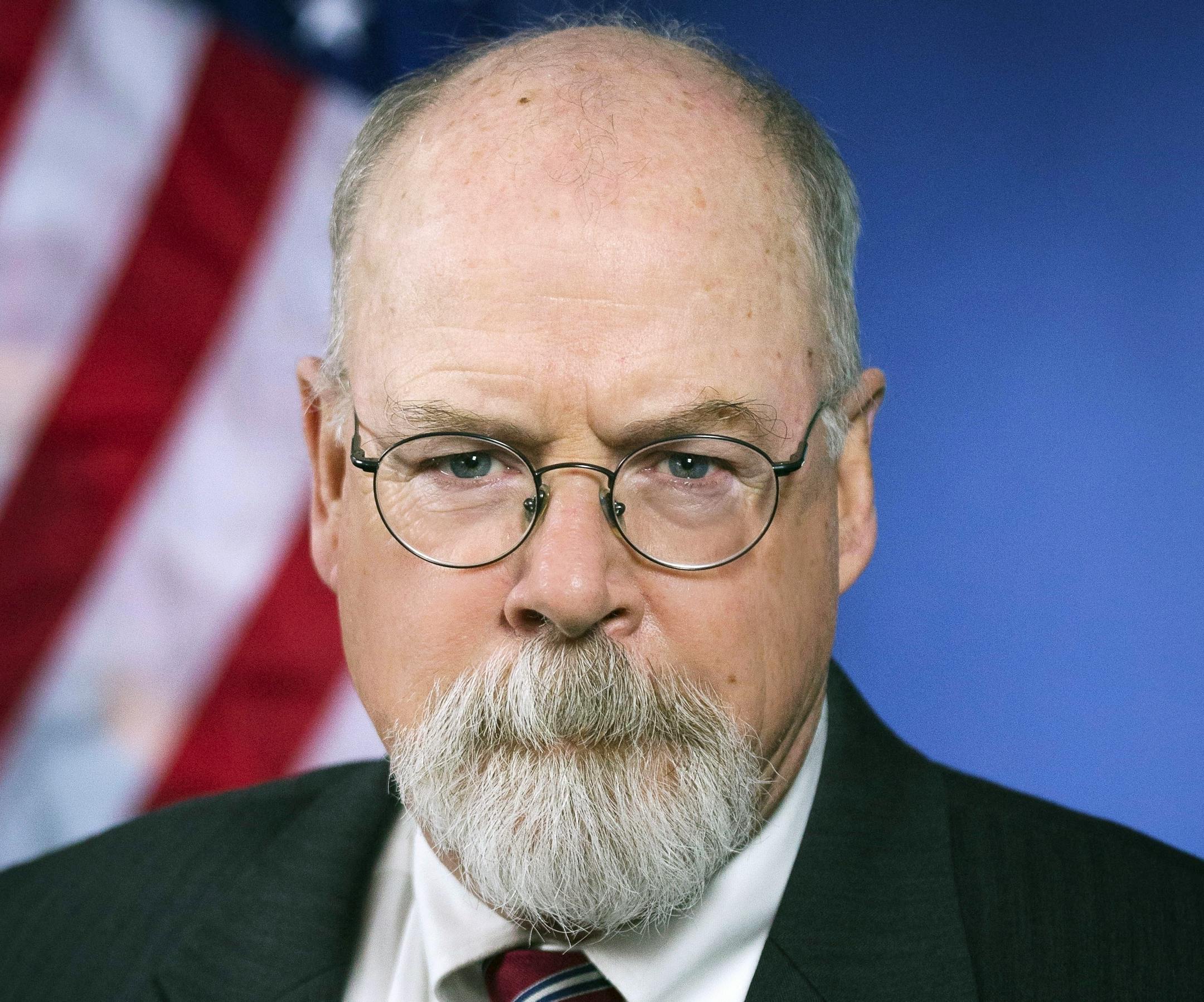
WASHINGTON — When John Durham, the Trump-era special counsel investigating the inquiry into Russia's 2016 election interference, filed a pretrial motion Friday night, he slipped in a few extra sentences that set off a furor among right-wing outlets about purported spying on former President Donald Trump.
But the entire narrative appeared to be mostly wrong or old news — the latest example of the challenge created by a barrage of similar conspiracy theories from Trump and his allies.
Upon close inspection, these narratives are often based on a misleading presentation of the facts or outright misinformation. They also tend to involve dense and obscure issues, so dissecting them requires asking readers to expend significant mental energy and time — raising the question of whether news outlets should even cover such claims. Yet Trump allies portray the news media as engaged in a cover-up if they don't.
The latest example began with the motion that Durham filed in a case he has brought against Michael Sussmann, a cybersecurity lawyer with links to the Democratic Party. The prosecutor has accused Sussmann of lying during a September 2016 meeting with an FBI official about Trump's possible links to Russia.
The filing was ostensibly about potential conflicts of interest. But it also recounted a meeting at which Sussmann had presented other suspicions to the government. In February 2017, Sussmann told the CIA about odd internet data suggesting that someone using a Russian-made smartphone may have been connecting to networks at Trump Tower and the White House, among other places.
Sussmann had obtained that information from a client, a technology executive named Rodney Joffe. Another paragraph in the court filing said that Joffe's company, Neustar, had helped maintain internet-related servers for the White House, and that he and his associates "exploited this arrangement" by mining certain records to gather derogatory information about Trump.
Citing this filing, Fox News inaccurately declared that Durham had said he had evidence that Hillary Rodham Clinton's campaign had paid a technology company to "infiltrate" a White House server. The Washington Examiner claimed that this all meant there had been spying on Trump's White House office. And when mainstream publications held back, Trump and his allies began shaming the news media.
"The press refuses to even mention the major crime that took place," Trump said in a statement Monday. "This in itself is a scandal, the fact that a story so big, so powerful and so important for the future of our nation is getting zero coverage from LameStream, is being talked about all over the world."


