

Q I'd like to know where to find more information on heirloom tomatoes, like how each kind tastes, what the difference is between an heirloom and a normal tomato, their history, and maybe which ones are worth the money. Oh, and could you maybe share a recipe that shows them off?
A Two heirloom authorities, Craig LeHoullier and Carolyn Male (we spoke to them when the term first surfaced years ago), divide heirlooms into four categories. They are quoted on www.tomatofest.com site:
• Commercial heirlooms: Open-pollinated varieties introduced before 1940, or tomato varieties more than 50 years in circulation.
• Family heirlooms: Seeds that have been passed down for several generations through a family.
• Created heirlooms: The result of crossing two known parents (either two heirlooms or an heirloom and a hybrid) and dehybridizing the resulting seeds for how ever many years/generations it takes to eliminate the undesirable characteristics and stabilize the desired characteristics, perhaps as many as eight years or more.
• Mystery heirlooms: Varieties that are a product of natural cross-pollination of other heirloom varieties.
They also point out that all heirloom varieties are open-pollinated but not all open-pollinated varieties are heirlooms. Open-pollinated means you can plant the tomato's seeds next year and get the same tomato. Hybrid tomato seeds will not reproduce the same tomato. To grow that hybrid tomato, you must buy and plant new hybrid seed each year.
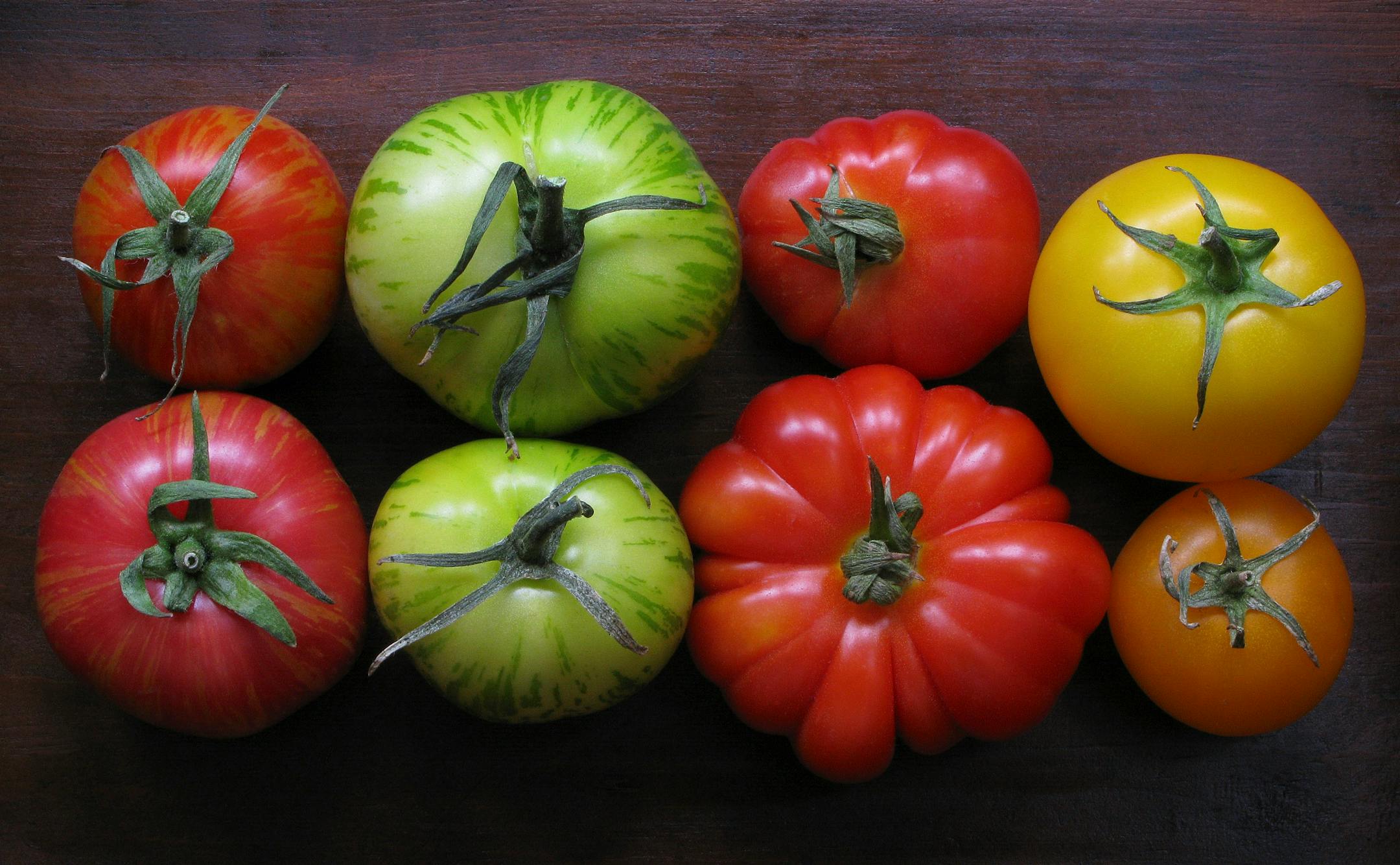
As to tastes, they vary from the yellows and orange types that are generally low in acid and quite sweet (too much so for my taste), to some of the striped kinds that are like sweet/tart candy, to the reds and pinks that taste like old-fashioned tomatoes, that is, lush, round and full to delicately decadent, to the over-the-top plushness of the blacks, which remind me of rich roast beef and red wine.


