

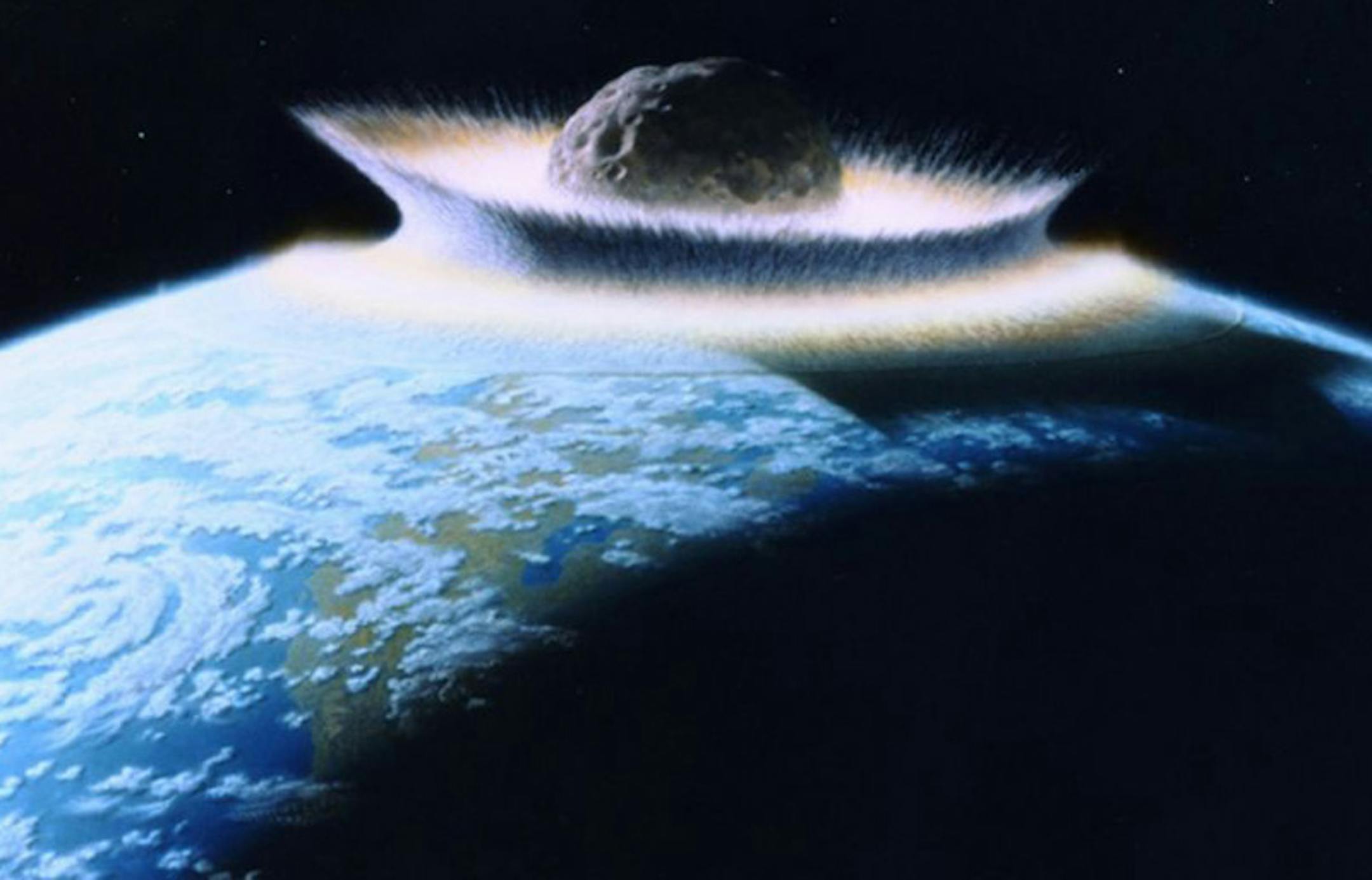
On Feb. 15, an asteroid designated 2012 DA14 will pass safely within about 17,200 miles of Earth's surface -- closer than the communication satellites that will be broadcasting the news of its arrival. The asteroid is about 150 feet in diameter and has a mass estimated at about 143,000 tons. Should an object of that size hit Earth, it would cause a blast with the energy equivalent of about 2.4 million tons -- or 2.4 megatons -- of TNT, more than 180 times the power of the atomic blast that leveled Hiroshima.
It's almost as if nature is firing a shot across our bow to direct our attention to the vast number of nearby rocky asteroids and a few icy comets that make up what we call the near-Earth object population. We should take the warning seriously.
While no known asteroids or comets represent a worrisome impact threat now, NASA's Jet Propulsion Laboratory shows more than two dozen asteroids have better than a one in a million chance of smacking into Earth within the next 100 years. That may sound reassuring, but we estimate that less than 10 percent of all near-Earth objects have been discovered. And while we are keeping a vigilant eye out for these objects in the Northern Hemisphere, we are considerably less watchful in the Southern Hemisphere.
It has been only within the last 15 years that astronomers, mostly supported by NASA, have begun discovering the vast number of near-Earth objects. Our findings have led us to the realization that Earth runs its course around the sun in a cosmic shooting gallery -- with us as the target. Basketball-size rocky objects enter Earth's atmosphere daily and Volkswagen-size objects every few months, but they burn up before they hit the ground.
Objects larger than about 100 feet in diameter, the size of a large house, strike Earth with an average interval of a few hundred years. The last one of about this size to hit was on June 30, 1908, in a sparsely populated region of Siberia called Tunguska. The Tunguska blast released about 4 megatons of energy and leveled millions of trees across 825 square miles.
A much larger asteroid or comet, 6 miles in diameter, collided with Earth 65 million years ago, killing most of the large vertebrates, including the dinosaurs. Fortunately, Earth collisions with objects so big happen only at average intervals of 100 million years.
What can be done if a rogue asteroid is judged to be on a trajectory that threatens Earth? Our best option would be to send a spacecraft to collide with the asteroid and modify its trajectory to ensure that the Earth is missed by a wide margin. We have the technology to do this -- and, in fact, did it in 2005, when we intentionally slammed a spacecraft into the comet Tempel-1. As the science fiction author Larry Niven once said, the dinosaurs became extinct because they didn't have a space program.
In April 2010, President Obama called upon NASA to send a human mission to an asteroid by 2025 as a steppingstone for the much more difficult human exploration of Mars. The technologies and life-support systems needed for the Mars expedition could be tested first at a nearby asteroid, with the round trip taking only a few months instead of a few years.


