Amy Senser will base her defense against a criminal vehicular homicide charge on a recent Minnesota Supreme Court reversal of a man's conviction on the same charge because the state failed to prove that he knew he struck and killed a man changing a tire when he left the scene, her attorney said Friday.
The Supreme Court's 2010 decision in the case of Mohammed Al-Naseer effectively means that prosecutors must now prove criminal intent by drivers who leave the scene of accidents, said Eric Nelson, who is defending Senser.
Nelson has maintained that Senser did not know she hit Anousone Phanthavong, 38, on Aug. 23 as he filled his car with gas on the Interstate 94 ramp at Riverside Avenue just east of downtown. She left the scene.
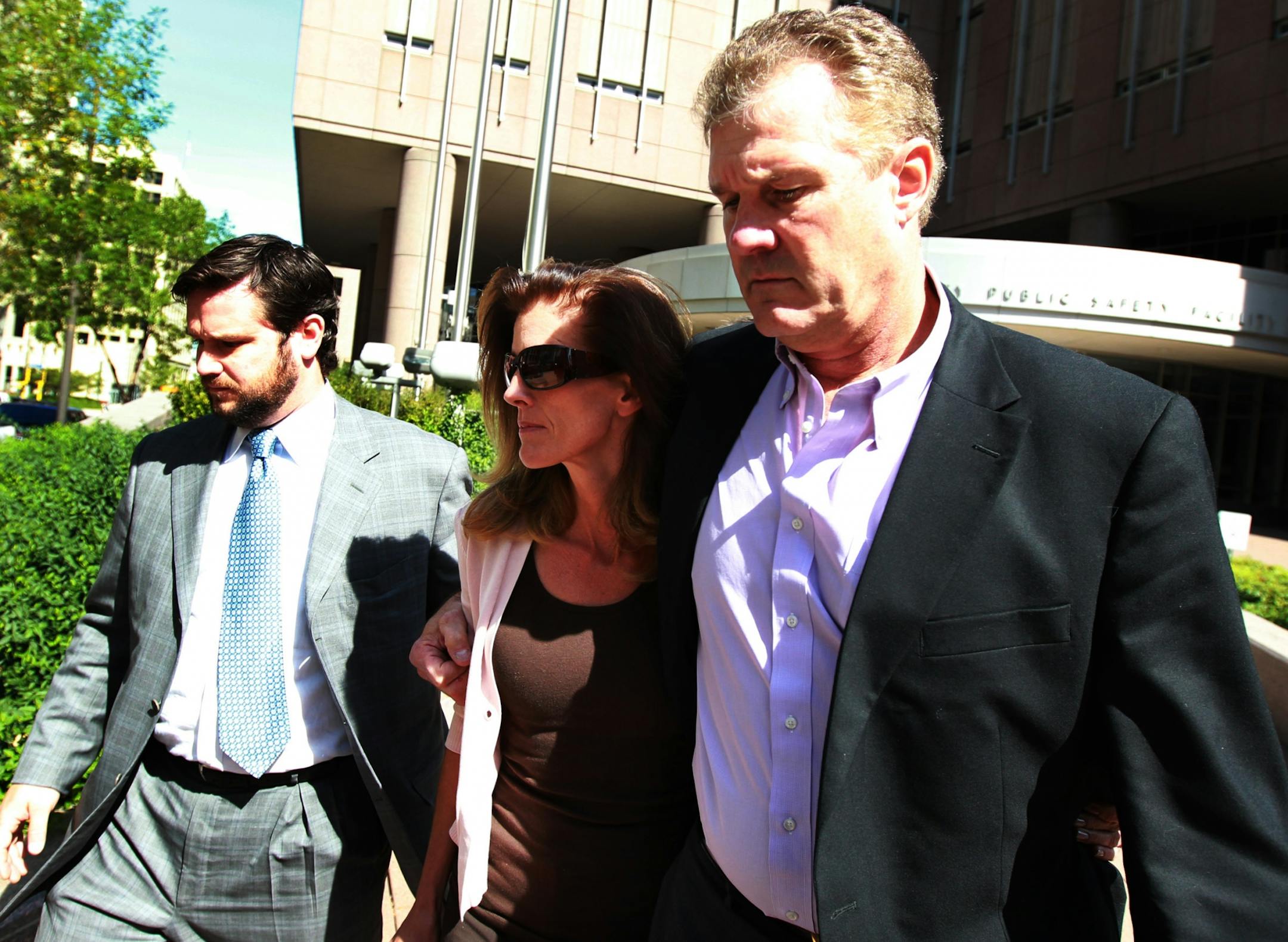
Senser, who was charged Thursday with felony criminal vehicular homicide operation, appeared briefly in court on Friday.
"You basically have to know you committed a crime," Nelson said. "If you don't know you committed a crime, what obligation do you have to report it?"
2002 crash with similarities
Al-Naseer was convicted of criminal vehicular homicide and sentenced to four years in prison for leaving the scene of an accident in the June 2002 death of Kane Thomson, 26, of Minnetonka. Thomson was changing a tire on Hwy. 10 in Clay County when Al-Naseer struck and killed him without stopping.
When Al-Naseer was stopped by a Dilworth police officer 6 miles from the scene, his headlights were off and his right front tire was flat. He told police that he hit something but he didn't know what it was.