
Amputee veteran helps train troops for realities of war

Marine who lost part of his leg in Afghanistan hopes to help others survive.

The Associated Press
March 26, 2013 at 12:52AM
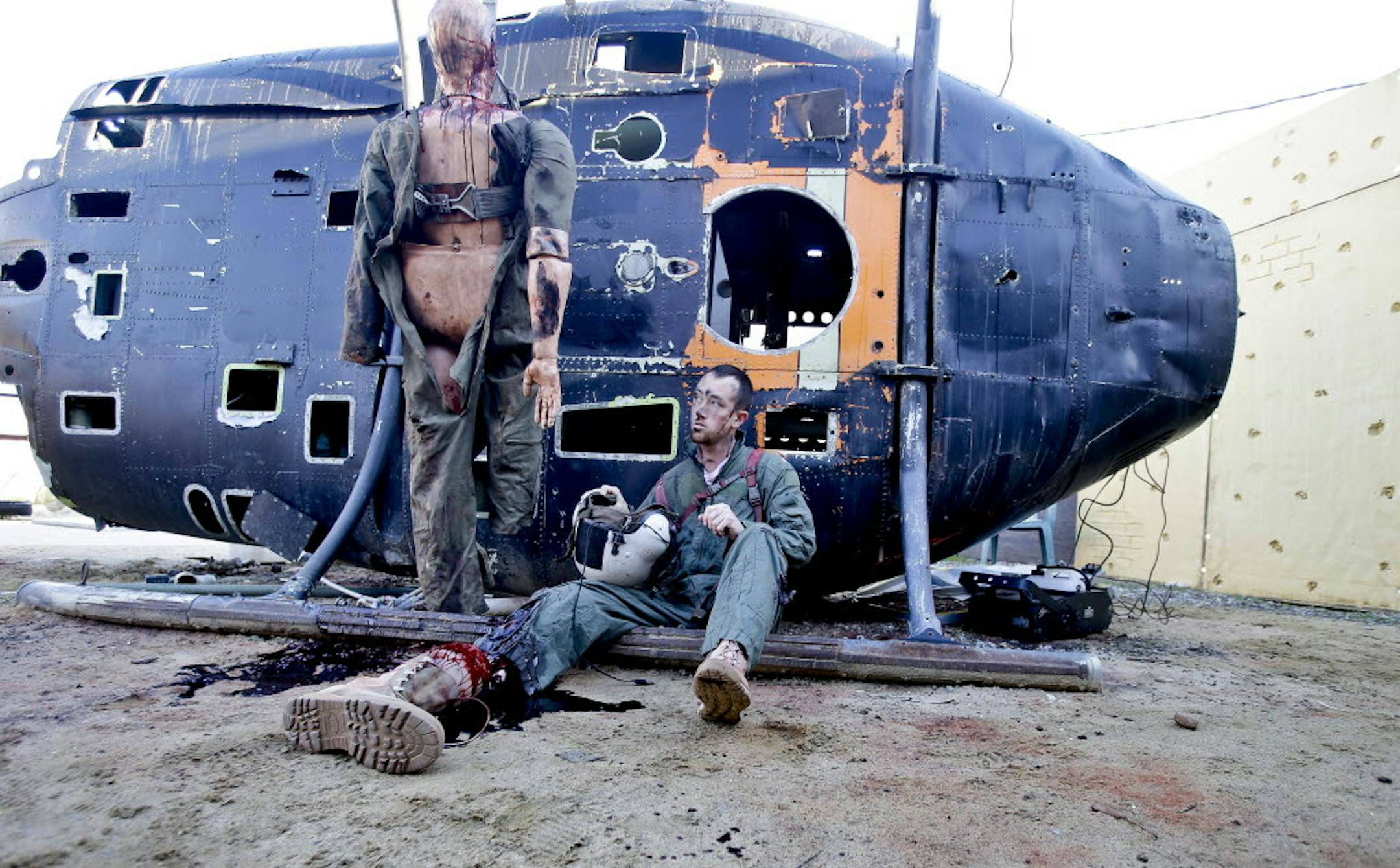
Former Navy corpsman Joel Booth, who lost a leg in Afghanistan, plays his role as a downed helicopter pilot in a military training exercise at San Diego-based Strategic Operation.
Former Navy corpsman Joel Booth, who lost a leg in Afghanistan, plays his role as a downed helicopter pilot in a military training exercise at San Diego-based Strategic Operation. (Stan Schmidt — Associated Press/The Minnesota Star Tribune)

SAN DIEGO – The sailor had been back from war for just over a year when friends invited him to watch an unusually emotional training exercise for troops preparing to deploy.

The drill happened not on a military base but at a film ­studio, where Marine and Navy medics role-played wartime rescue missions with actors who had, in real life, lost limbs in motorcycle or car crashes or to ailments such as cancer.

Those on hand weren't sure how Joel Booth would react. The 24-year-old had been attached to a Marine battalion in Afghanistan as a naval combat medic — until he stepped on an explosive device and doctors, two years ago, amputated his right leg below the knee. Since returning home he has had to learn to adapt while also ­coping with post-traumatic stress.

But Booth was transfixed as fake bombs exploded and medics practiced the type of rescue missions he'd once been on, saving the amputee actors — as he, in the end, had to be saved.

Then the young veteran did something unexpected: He asked for an audition.

Perhaps, he thought, this injury that had forever altered his life could help save someone else's. What he didn't know was how much reliving the horrors of war would help him, too.

"In society, amputees are seen by people on a large scale as having a disability, being weaker. But … even someone who doesn't have a hand can still operate a weapon to be able to defend themselves," he said.

"It's the same thing for me. I'm not afraid of it just because something bad happened. For people who haven't been in combat, it's hard to understand."
Producer Stu Segall started Strategic Operations in 2002 shortly after the start of the Iraq war to offer the military what it calls "hyper-realistic" training by using movie-making special effects and actors.

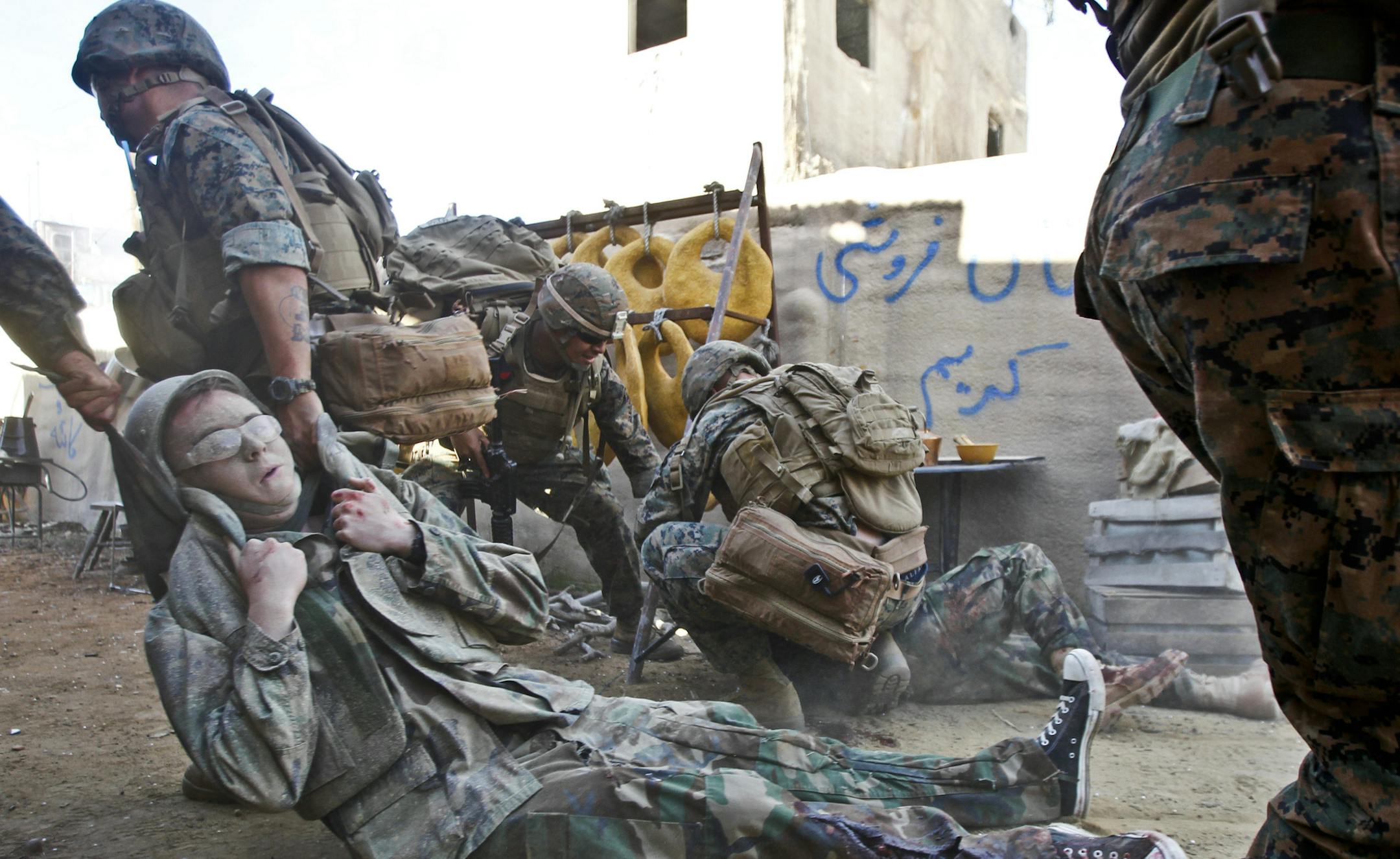
The group has since trained hundreds of thousands of troops in re-created scenes from Iraq, Afghanistan, Somalia and other hot spots. The creators strive to make the re-enactments as jarring as possible so troops experience war first in a controlled environment, and learn not to be rattled by it.

Marine Second Lt. Duane Blank, a commander who has gone through similar training, said amputee actors add a degree of realism that no one else can.

"The visual effect is invaluable because it's something you don't encounter every day," said Blank, an Iraq war veteran.

In this Dec. 10, 2013, photo, a U.S. Navy corpsman pulls an actor to safety during a training mission at Strategic Operations where "reality based training" is used while working with U.S. military personnel in San Diego. (AP Photo/Lenny Ignelzi)
A U.S. Navy corpsman pulled an actor to safety during “reality based training” in San Diego late last year. (The Minnesota Star Tribune)
about the writer

about the writer

JULIE WATSON

More from No Section

See More
FILE -- A rent deposit slot at an apartment complex in Tucker, Ga., on July 21, 2020. As an eviction crisis has seemed increasingly likely this summer, everyone in the housing market has made the same plea to Washington: Send money — lots of it — that would keep renters in their homes and landlords afloat. (Melissa Golden/The New York Times) ORG XMIT: XNYT58
Melissa Golden/The New York Times

It’s too soon to tell how much the immigration crackdown is to blame.