

I've been on a few trips recently and took the opportunity to do a bit of naked-eye economic assessment. As I'm sure many people can confirm, planes are flying full, and shops and restaurants are jammed. It definitely looks like a booming economy out there.
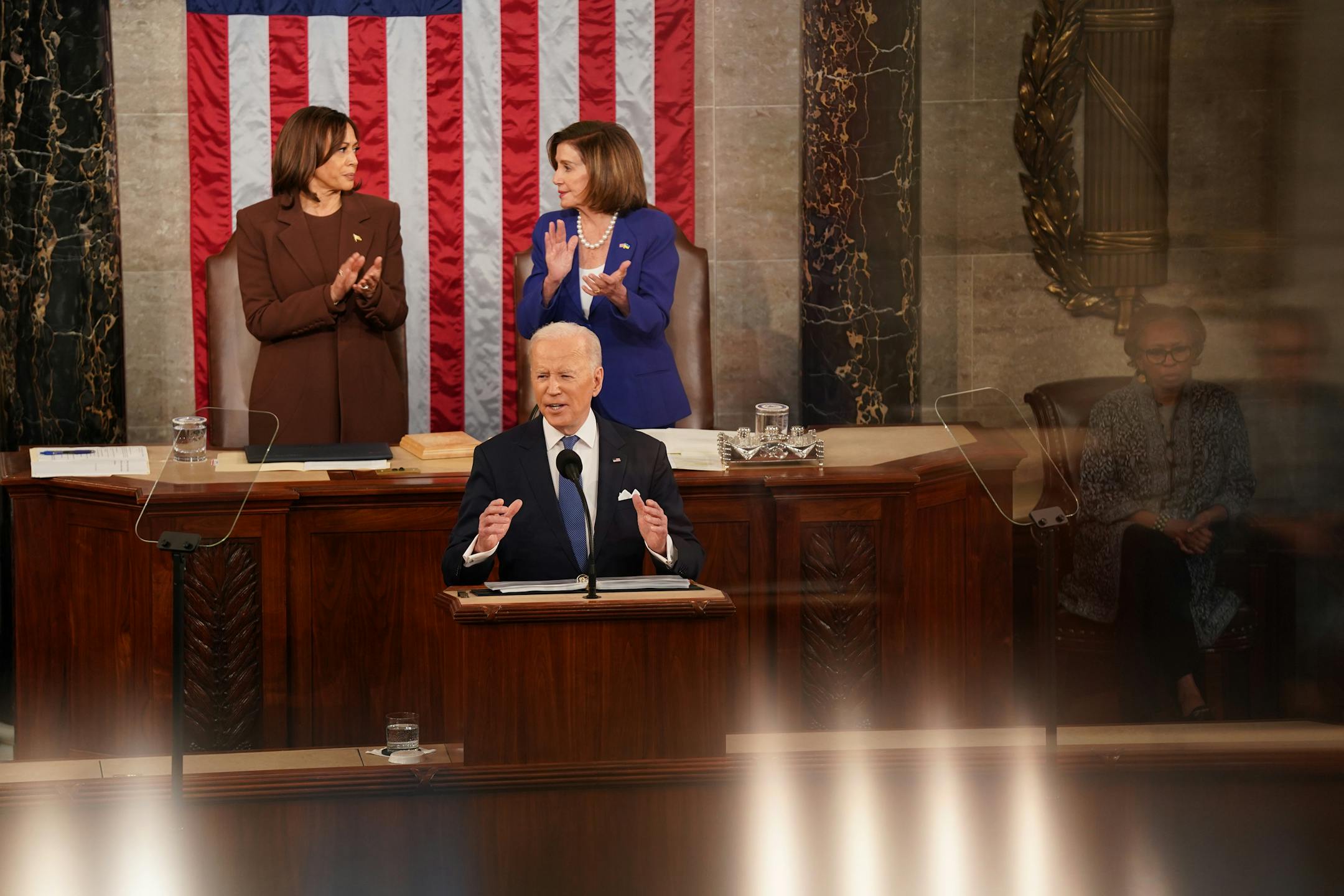
That's also what the numbers say. In his State of the Union address, President Joe Biden — while acknowledging that inflation has eroded wage gains — pointed to the 6.5 million jobs added last year, "more jobs created in one year than ever before in the history of America." This claim was entirely correct.
Yet the public doesn't believe it. According to a new survey by Navigator Research, only 19% of Americans believe that the U.S. economy is experiencing more job growth than usual, while 35% say that it is experiencing more job losses than usual.
You might be tempted to say that ordinary Americans don't pay attention to official statistics, that what matters is their lived experience. But what people are actually experiencing in their daily lives is a very strong job market. For example, according to the latest survey from the Conference Board, 53.8% of consumers said that jobs were "plentiful," a near-record, while only 11.8% said that jobs were hard to get. And anyone who walks around U.S. cities can see the proliferation of help wanted signs.
The survey results on the job market are, as I see it, the final nail in the coffin of attempts to deny that there's something very peculiar going on with how Americans perceive the economy, that there's a huge disconnect between economic reality, which is mixed — inflation is a big concern, but job growth has been terrific — and public perceptions, which are weirdly dismal.
It's not just the dissonance between what people say about their own employment prospects and what they say about job creation. The same dissonance is clear, albeit in a more muted form, when we contrast what people say about their personal finances and what they say about the state of the economy.
According to the long-running Michigan Surveys of Consumers, a plurality of Americans say that their personal financial situation is better than it was a year ago. This is consistent with estimates suggesting that despite inflation most people saw rising real income in 2021. You can quibble with the estimates, but it's clear that no major group is substantially worse off. And it's worth remembering, for historical context, that blue-collar real wages declined steadily for most of the Reagan era, which didn't stop voters from seeing that era as one of economic triumph thanks to strong job growth.
Yet if you ask people "How's the economy doing?" as opposed to "How are you doing?" you get a very different answer: Economic sentiment has plunged.


