

America is in a bad mood. Granted, this is a subjective impression, but it is common, and there is no shortage of analyses of it, examining everything from social media to income inequality. I would like to try on for size the simplest possible explanation: If Americans are much more negative than they used to be, it is mostly about politics, and in recent decades political failure has become much more pervasive than it used it be.
The result is a kind of national mood disorder. I am not so naïve as to think politics will suddenly become less important in America anytime soon. But conditions can change quickly, and outside of politics the outlook is more positive.
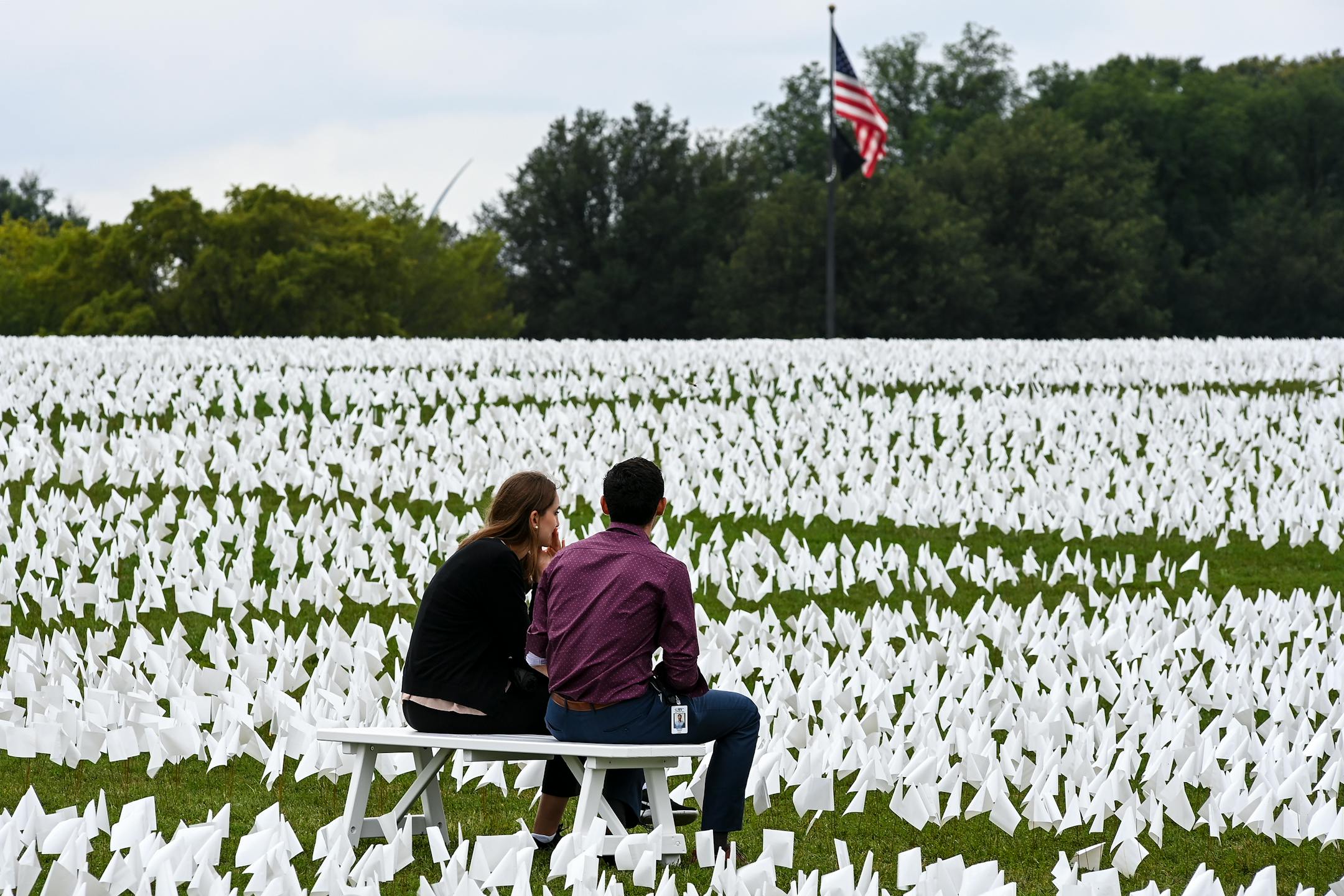
If you ask why Americans might have become more negative about politics, there is a ready answer: It is the combined effects of 9/11, the failures of the wars in Iraq and Afghanistan, the financial crisis and Great Recession, and the arrival of a major pandemic and 700,000 American deaths.
In all of these cases, the political class failed to respond adequately to crises. In contrast, the highly negative events preceding the 1980s, such as the high inflation of the late 1970s, were all addressed or even solved through politics.
A second question would be whether there is evidence to support the contention that Americans have become more negative overall. I am doubtful. Do fans of the Boston Red Sox hate the New York Yankees more than they used to? It's not obvious that the answer is yes. What about animosity between, say, Protestants and Catholics? That's probably a good deal weaker. There is almost certainly less homophobia, too, in addition to many other forms of prejudice. There are other indicators of progress; the surge in the number of Americans starting new businesses, for example, is hardly a sign of pessimism.
The negativity seems centered on our politics, our elites and the people who disagree with us politically. As political scientist Lee Drutman has written: "It's bad news for a democracy when 60 to 70 percent of people view fellow citizens of the other party as a serious threat." This phenomenon is much worse than in times past, and so our current negativity is more channeled and more focused.
I am struck by the comments section on the blog I run with Alex Tabarrok. We write mostly about economics, though other subjects often come up, such as technology, pop culture, my evil twin brother and, yes, politics. Our blog has been around for 18 years, and each year the commenters seem to become more scathing, not only about the blog's authors but also about each other.
The next issue to consider is whether this arrangement — for lack of a better term, call it political negativity — is stable, and if not how it might change.


