

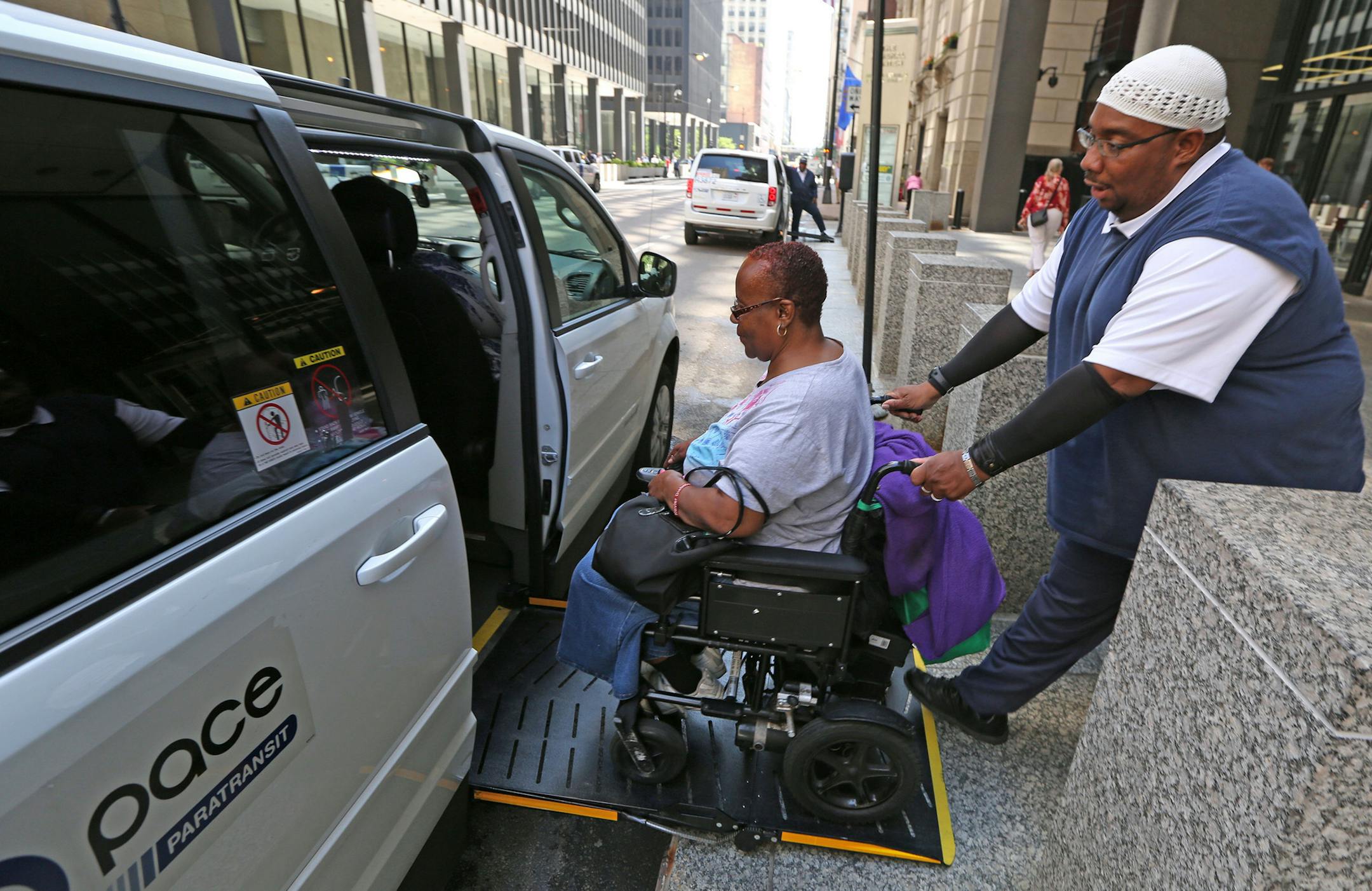
CHICAGO – Life can change in a second. Marca Bristo knows that.
Her second happened in 1977. The then-23-year-old world traveler and career woman inhaled deeply as she watched the waves on Lake Michigan. Next, she dove headfirst into the blue water and into life with a disability.
"Zap," she said. The plunge broke her neck and paralyzed her from the chest down.
"I lost my home, my health insurance, my means of getting around the city," she said. "One day I was one way, and the next day I was different."
Different meant living life seated. But it also meant realizing that her wheelchair did not limit her — the city around her did. "A wheelchair is a liberation device," Bristo said, but "1977 Chicago was sort of like a Third World country."
It was before the Americans with Disabilities Act, which was signed into law 25 years ago Sunday. Buses didn't kneel for wheelchairs and curbs weren't cut into ramps.
That grocery store a block and a half from Bristo's house? Impossible to get to. And if she wanted to go out for dinner, front steps were impassable mountains, and front doors were rarely wide enough.
But the federal act changed that, said Bristo, now president and CEO of Chicago's Access Living, which engages the city's disabled community.


