Rash: Beyond history, ‘The American Revolution’ is relevant today

The six-part PBS documentary begins on Sunday.

Columnist Icon
The Minnesota Star Tribune
November 15, 2025 at 11:01AM
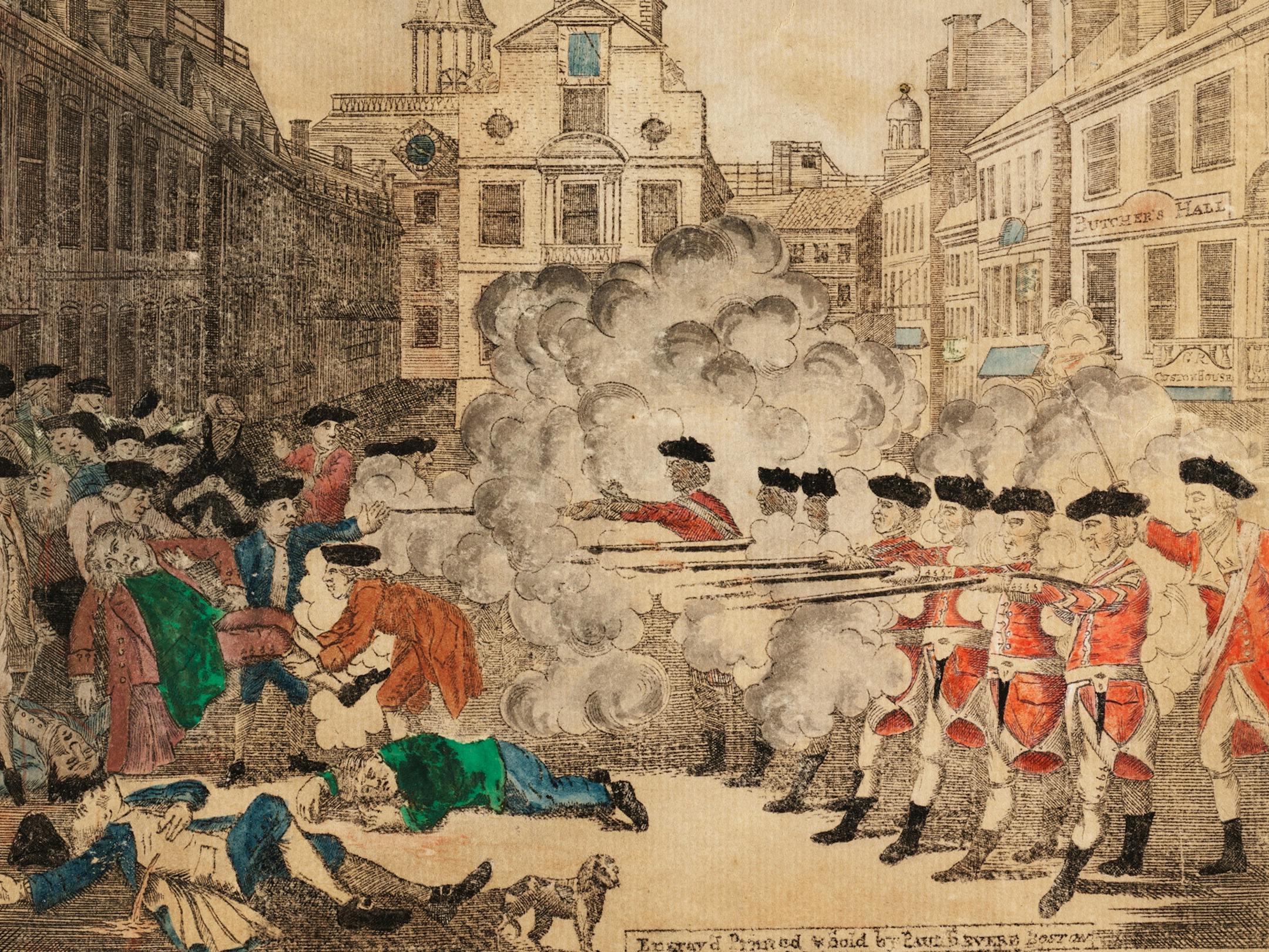
An engraving of the Boston Massacre. It’s important not to forget that the U.S. “came out of violence,” said David Schmidt, co-director of the six-part documentary "The American Revolution" by Ken Burns that begins airing Sunday on PBS. “We just don’t really think about the human cost of it.” (Boston Public Library/TNS) (Boston Public Library)

Opinion editor’s note: Strib Voices publishes a mix of commentary online and in print each day. To contribute, click here.

•••

As a co-director of “The American Revolution,” the six-part PBS documentary that premieres on Sunday, David Schmidt seems in every sense thoroughly modern.

And yet, he said in an interview, “I like to say that I grew up in 1774.”

Well, maybe a couple of centuries hence.

But in his youth, Schmidt did play the fife at Colonial Williamsburg, where he was a historical interpreter, inculcating totems of the time like the Fourth of July and American flag. And most everyone, he said, knew “something about the American Revolution before we even have conscious memories” and then “we learn about it in school.”

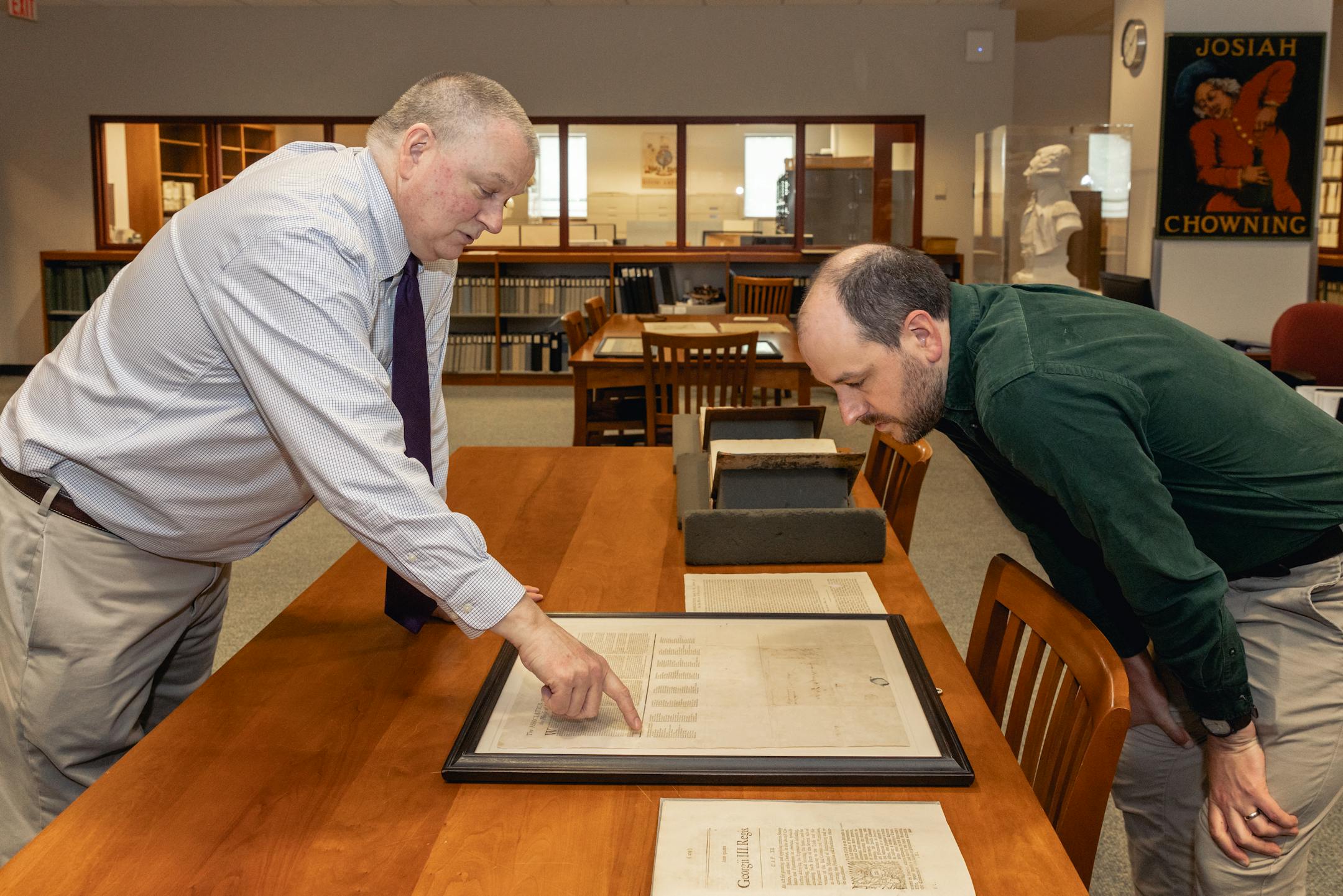
David Schmidt visits Special Collections at the John D.
Rockefeller Jr. Library on May 11, 2023, to capture video for a
documentary on the American Revolution. Pictured: Associate
Librarian Doug Mayo (left) shows director David Schmidt (right)
collections materials relating to the American Revolution.
Associate Librarian Doug Mayo (left) shows director David Schmidt (right) collections materials relating to the American Revolution at the John D. Rockefeller Jr. Library on May 11, 2023. (Brendan Sostak/The Colonial Williamsburg Foundation)
David Schmidt participating in a Colonial Williamsburg photography shoot
in 1999.
David Schmidt participating in a Colonial Williamsburg photography shoot in 1999. (Tom Green/The Colonial Williamsburg Foundation)

But now, Schmidt said, he realizes that “even I didn’t know this stuff.”

This stuff, expertly presented in “The American Revolution,” is history, of course. But with an emphasis on story — one that is surprisingly, well, surprising about America’s foundational event.

Among the insights, Schmidt said, is an understanding of three things that “really unlock the story.”

One: “The United States came out of violence,” which Schmidt said should be self-evident, “but I think we’re so used to thinking about this in oil paintings, if at all, that we just don’t really think about the human cost of it.” The documentary does, often through the words of those who lived through (and sometimes died in) it. Founding Fathers, of course. But also everyday colonists and notably Native Americans and enslaved people, who are often overlooked in most star-spangled, but mangled, versions of our origin story.

Two: The Revolution’s results weren’t necessarily the initial objectives. Yes, Schmidt said, the effort “won American independence, united the 13 colonies that created the republic that we still operate under. All that’s true — but none of those were on the table at the start of the Revolution.” Instead, he said, “what they were trying to do in April 1775, a year before July 4, was to liberate Boston, to have a redress of grievances, and to get things back to the way they used to be — when we were all happy under the British Empire. So it’s that independence, union and republic are not the cause of the revolution, but are necessary things that come about in order to win the war.”

The fact that it didn’t turn out that way — and that the revolution inspired people worldwide — reflects the third key point: It was a global war, involving European nations, particularly France, but also Indigenous ones that were profoundly affected by the outcome.

Beyond being compelling, viewers may contemplate how, in Mark Twain’s apocryphal phrase, “history doesn’t repeat itself, but it often rhymes.”

Indeed, the revolution “has absolute relevance to our current debates,” said Katharine Gerbner, a University of Minnesota associate professor of history. The event and its enduring impact are about “What is this nation? Who is it for? What rights do the citizens of this nation have? Who can vote? Issues of representation. These are all questions that were being debated during the revolutionary period, and they remain extremely important today in multiple ways. We are still wrestling with some of the fundamental tensions of the revolutionary era.”


The documentary, however, doesn’t intend any allegories to today, said Schmidt. “We’ve been working on this since 2015 and we’ve seen a lot of changes in the world in those 10 years, but nothing was reacting; it was just get the story right. And in doing that, there are different things that might feel close to home.”

Schmidt himself shared a moment like this, while working on a section about loyalists leaving after the British defeat. Meanwhile, in Kabul, panicked Afghans who were loyal to the U.S. clung futilely to fuselage of departing American planes.

“It just happened to be something that felt really familiar,” said Schmidt. “There’s all sorts of things like that I’m sure other people will see in this film, and they would see different things if they watched it in five years or 10 years or if it would have been made 20 years ago.”

The objective, observed Schmidt, was “just tell good history that will stand the test of time.” Otherwise, he added, “it wouldn’t have any staying power or just be skywriting.”

“The American Revolution” is the opposite: enduring, not ephemeral. And it accomplishes what Gerbner urges: “To move past a simplistic, heroic vision of the revolution into a more nuanced and multi-perspectival understanding of the tensions of that period and the debates that were unresolved at that time and remain unresolved today.”

The more “we see the revolutionary period as lived and as contested and as extremely relevant about the future of this country — whether the ideals expressed in the founding documents are actually enacted — I think the better.”

Some may see this relevance in real-life, real-time events, like recent “No Kings” protests, which may be a case of history not repeating but rhyming.

“Just read the Declaration of Independence,” said Gerbner. “We often remember the first few lines, but if you keep reading it, it’s a list of grievances against the monarch.”

Schmidt said while that July 4, 1776, was more of a “not that king day,” Thomas Paine’s pamphlet “Common Sense” might be considered a “no-kings publication.”

This extraordinary content comes in the context of an ongoing debate about the entity that made it possible: PBS, whose parent organization was defunded.

“We absolutely believe in public media,” said Schmidt, who added that “Ken [Burns] always says we wouldn’t be able to do what we do without PBS, and it has reach greater than anybody else. It’s trusted. They let us take the time to make this, and it took a long time to make this — and you can watch it for free. That’s special.”

Free viewing — and an invaluable lesson on our country as it nears 250 years. Given our deep divisions, it’s important — imperative, even — that Americans understand what united the United States in the first place. “The American Revolution” does just that, which these days seems revolutionary itself.

about the writer

about the writer

John Rash

Editorial Columnist

John Rash is an editorial writer and columnist. His Rash Report column analyzes media and politics, and his focus on foreign policy has taken him on international reporting trips to China, Japan, Rwanda, Kazakhstan, Turkey, Lithuania, Kuwait and Canada.

See Moreicon

More from Columnists

See More
card image
Carlos Gonzalez/The Minnesota Star Tribune

Nick Shirley’s viral video on X amplified outrage faster than verified facts could follow.

card image
card image