

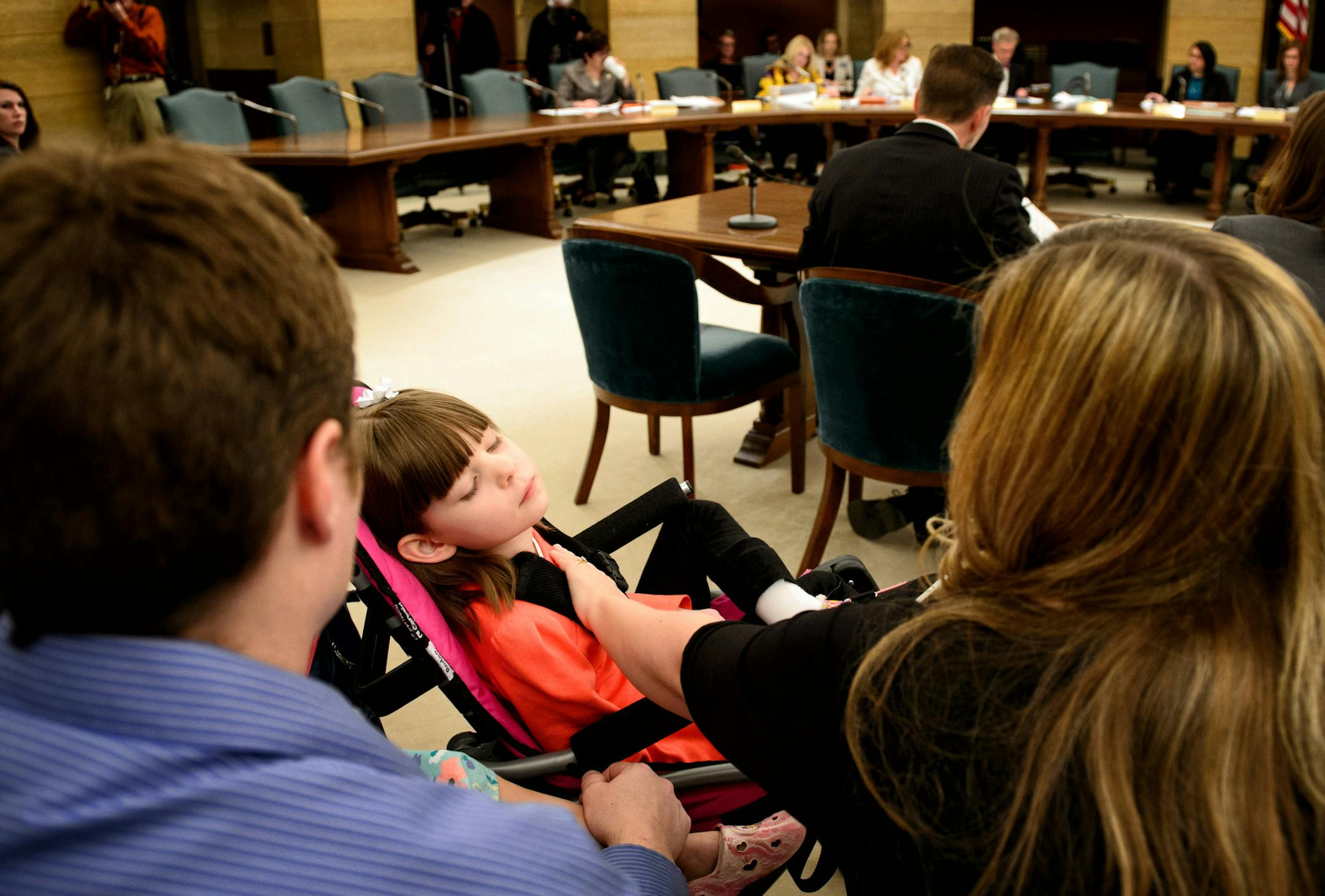
Amelia Weaver, the little girl from Hibbing, Minn., who made headlines as her family fought for — and won — access to medical marijuana to ease her frequent epileptic seizures, died Aug. 16. She was 12.
Amelia's case was among those that persuaded legislators in 2014 to make Minnesota the 22nd state to legalize some form of the drug, answering the prayers of people suffering from cancer, HIV/AIDS, epilepsy and other medical conditions.
Weaver and her mother, Angie, put a human face on the idea that medical cannabis offered hope. "This means the world to my family," Angie Weaver told reporters in 2014.
While the medication made a powerful difference in Amelia's life, allowing her to go for days without a seizure, her illness still left her in a fragile state. She became seriously ill earlier this month and was airlifted to the Mayo Clinic in Rochester, where she died.
When Josh and Angie Weaver shared the news of Amelia's passing on a Facebook page they used for updates on their daughter's life, thousands of people left compassionate notes sharing their heartbreak. "We did not take one single moment with our Amelia for granted," her parents wrote. "It was the greatest privilege of our lives to be Amelia's parents. There are no seizures in Heaven, sweet girl."
Weaver caught the flu at 18 months and had a seizure at the doctor's office, something Angie Weaver later described to City Pages as the "scariest experience of my life." She recovered, and at 3 years old was knocking off developmental milestones — walking, talking in full sentences and counting up to 20.
Then the seizures returned, sometimes dozens of times a day, and over the course of several months, Amelia lost the ability to walk, talk or focus her eyes on her parents. She received a diagnosis of Dravet syndrome SCN2A, a rare form of epilepsy thought to afflict just 150 children worldwide. Her parents tried a variety of antiepileptic medications, but none brought relief.
By that time, medical cannabis was available in some states, but not Minnesota, and as the Weavers searched for something to help their daughter, Angie Weaver became a powerful voice pushing the state to allow families like hers to try medical cannabis.


