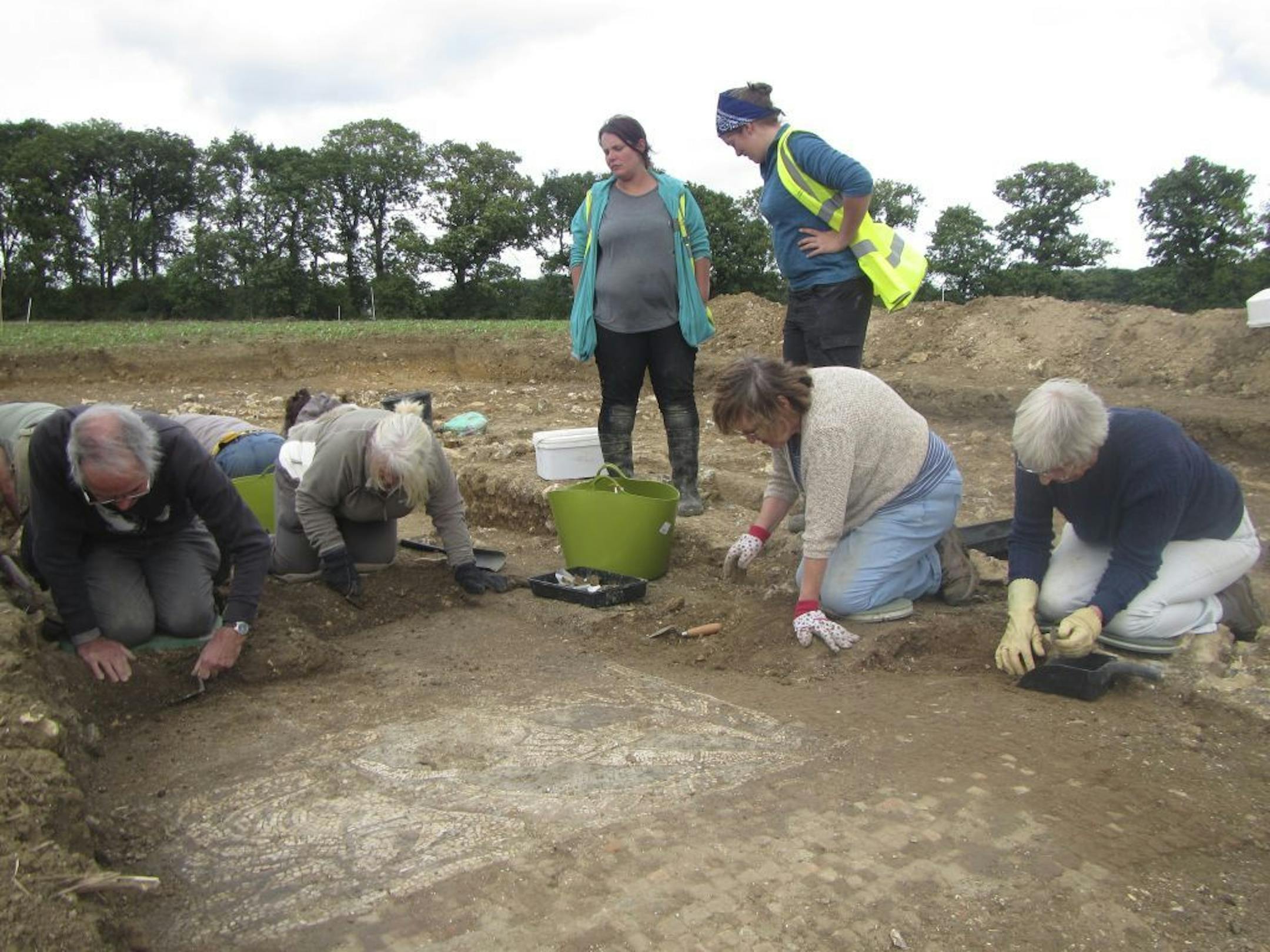
BOXFORD, England – Their ages range from 9 to about 80. They include a butcher and a builder. Some devoted vacation days to laboring on their hands and knees in an open field.
The group of amateur archaeologists — 55 in all, though only two dozen toiled on a typical day — were part of an excavation project near the village of Boxford, in southern England. They had to contend not just with days of backbreaking work, but also with a daunting, two-week deadline to complete the challenging dig.
Their commitment was handsomely repaid, though, in a few magical moments one Saturday in August. As a layer of soil was carefully scooped away, small, muddy pieces of red-colored tiling glinted in the sunlight, probably for the first time in more than 1½ millenniums.
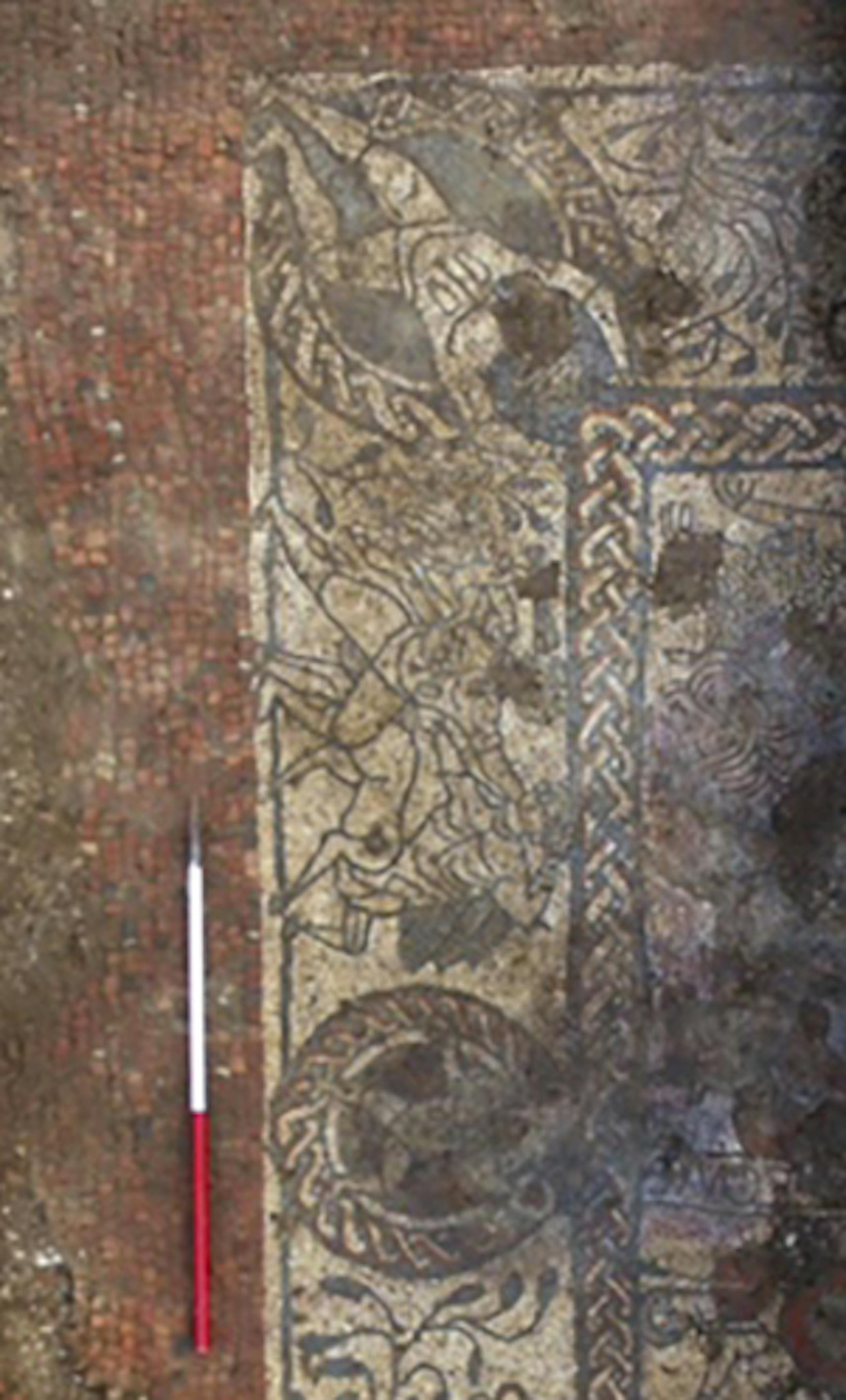
The mosaic that slowly emerged from the earth is part of a Roman villa, thought to date from 380 A.D., toward the end of the period of Roman domination of England. The find is being described as the most important of its type in Britain in more than half a century, and in this picturesque, riverside village of thatched cottages, the scale of the discovery is still sinking in.
While surveys had shown something of interest beneath this stretch of gently undulating English countryside, they had suggested that it was a medium-size Roman villa that was unlikely to yield anything exceptional.
Among the first to spot it was Joy Appleton, who leads the Boxford History Project and who was a driving force behind the excavation.
"I was stunned into silence," Appleton recalled of her first sight of the small red tiles, each the size of her fingernail. "Which is unusual."
"I will never forget that moment," said Matt Nichol, a professional archaeologist who was supervising the dig. "It was down to the volunteers, it really was. I get quite emotional about it; it was something to see their drive."