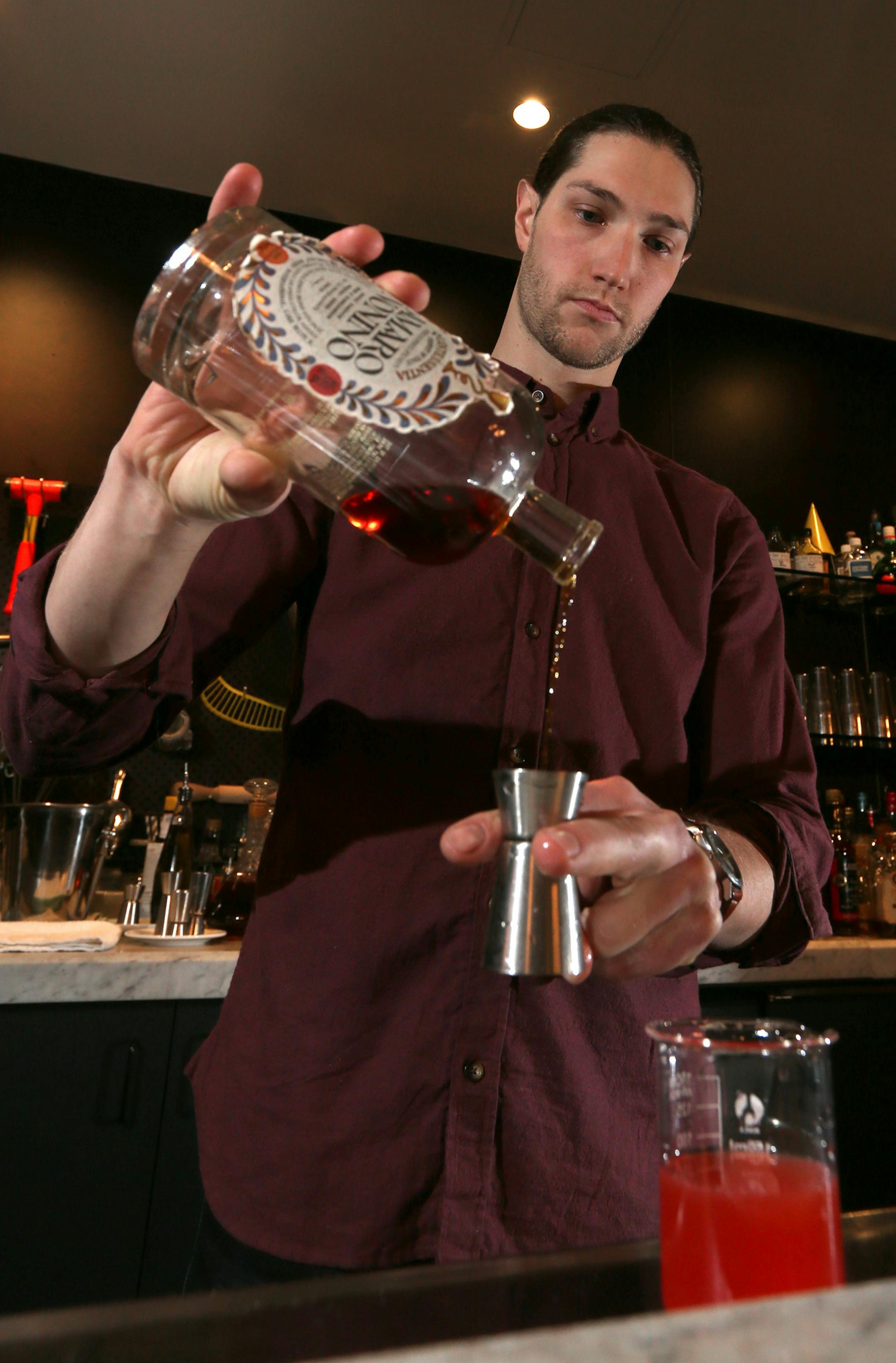
It's no secret that cocktail junkies have a thing for old-time imbibing. But lately, bartenders are bringing Little Italy to Don Draper-style drinks.
Amaro — a category of Italian bittersweet liqueurs dating back to the 1800s — has found its way into contemporary cocktail culture and stateside bartenders are infatuated with these herbal elixirs.
"The fact that young American bartenders have picked it up as their hot new thing is a little bit odd," said Marvel Bar mixing guru Pip Hanson. "It's a cultural artifact that's hard to get a solid grasp on for an American bartender unless they've really spent time in Italy."
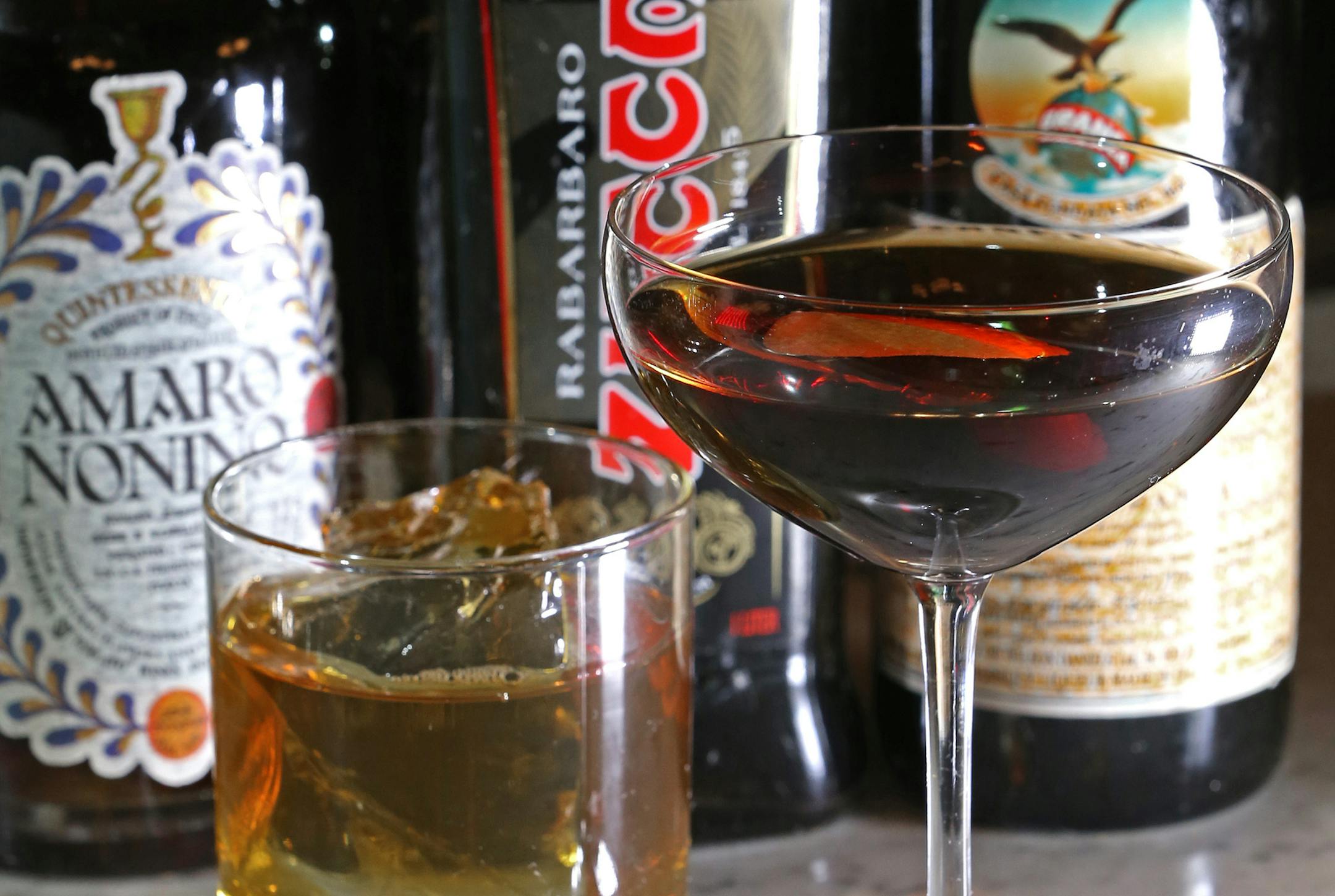
In bruschetta country, amari (the plural for amaro) are commonly enjoyed straight as after-dinner sippers, though some are used as aperitifs with soda or tonic, said Eric Seed, an Edina wine and spirits importer, who is one of the semifinalists for best spirits professional for the James Beard Foundation awards. Through his company Haus Alpenz, Seed imports several amari, including the deep and dark Rabarbaro Zucca — a northern Italy staple made with rhubarb root.
"Part of the lore of the products is the feeling that they give as a digestif," Seed said. "They've historically been consumed to settle the stomach after a meal, even though there are no medicinal qualities."
Despite amaro's increased back-bar presence in recent years, Hanson and other amaro-enamored bartenders say it's somewhat of an elusive category. Unlike bourbon or tequila, amaro — Italian for "bitter" — is not a regulated classification, which leads to wide variations among producers and exponential subcategories often based on ingredients or regions. The free-range flavor palette ranges from rich, vegetal expressions such as Luxardo Amaro, to grappa-based Amaro Nonino's hints of caramel and orange.
"The field is so vast and we see so little of it," said Peder Schweigert, barman for Marvel, which is a semifinalist for outstanding bar program in the James Beard Foundation awards. "We might see one example of a given class, and not the depths of the field."
The scope of the potable bitters is even wider when accounting for other countries' pungent liqueurs, such as France's gentian-distilled Suze or Hungary's Zwack Unicum, with its licorice and chocolate notes. "[Amari] have the advantage of being a semi-definable category, but really they are part of this broad spectrum of ancient herbal liqueurs that little farmsteads have been making for centuries," Hanson said.