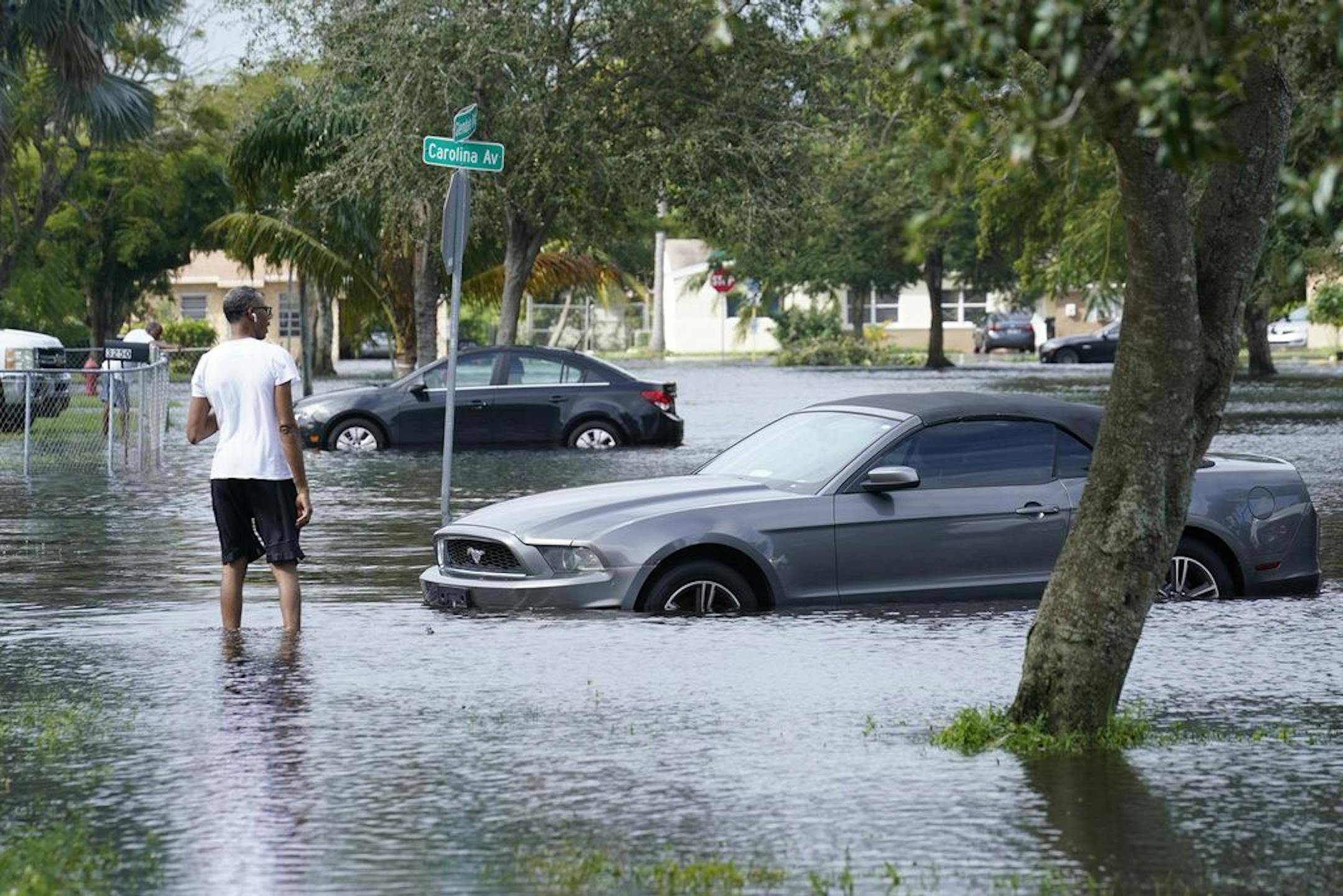
FORT LAUDERDALE, Fla. — A deluge of rain from Tropical Storm Eta caused flooding Monday across South Florida's most densely populated urban areas, stranding cars, flooding businesses, and swamping entire neighborhoods with fast-rising water that had no place to drain.
Elsewhere, forecasters announced that Subtropical Storm Theta, a record-breaking 29th named storm of the 2020 hurricane season, had formed far out in the northeast Atlantic by late Monday night. It posed no immediate threat to land.
Eta made landfall in the Florida Keys and posed a serious threat across South Florida, which was already drenched from more than 14 inches (35 centimeters) of rain last month.
"Never seen this, never, not this deep," said Anthony Lyas, who has lived in his now-waterlogged Fort Lauderdale neighborhood since 1996. He described hearing water and debris slamming against his shuttered home overnight.
After striking Nicaragua as a Category 4 hurricane and killing nearly 70 people from Mexico to Panama, the storm moved into the Gulf of Mexico early Monday near where the Everglades meet the sea, with maximum sustained winds of 50 mph (85 kph).
"It was far worse than we could've ever imagined, and we were prepared," said Arbie Walker, a 27-year-old student whose Fort Lauderdale apartment was filled with 5 or 6 inches (13 to 15 centimeters) of water.
"It took us 20 minutes to navigate out of our neighborhood due to the heavy flooding in our area," Walker added. Floodwaters also submerged half of his sister's car.
As much as 16 inches of rain damaged one of the state's largest COVID-19 testing sites, at Miami-Dade County's Hard Rock Stadium, officials said. Throughout the pandemic, it has been among the busiest places to get a coronavirus diagnosis. The site was expected to be closed until Wednesday or Thursday.