

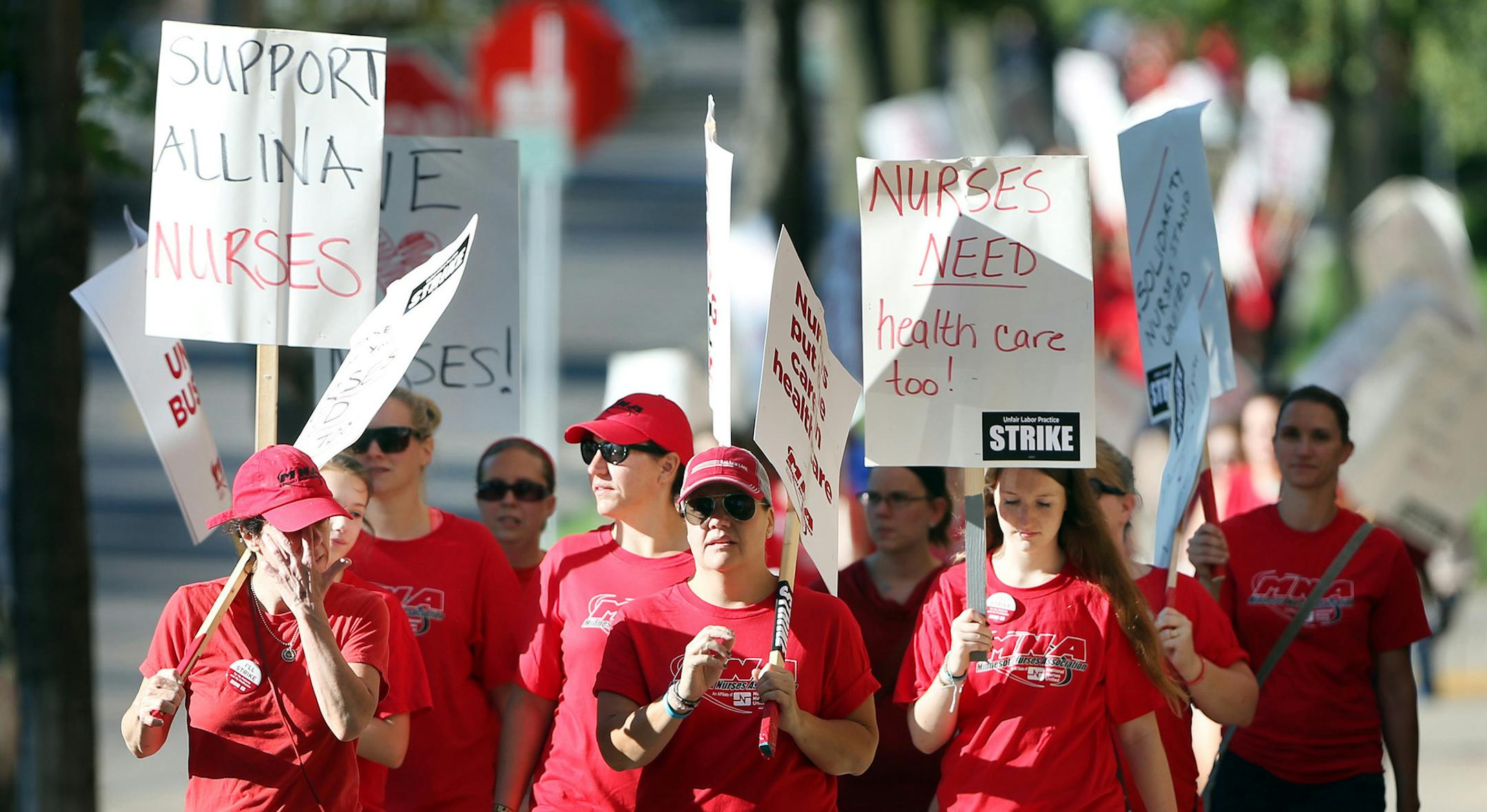
I am a labor and delivery nurse at United Hospital in St. Paul. I worked during the seven-day Allina Health strike in June. And if an open-ended strike is called, I will work again. I know that I am in the minority, but my viewpoint (shared by a small number of RNs and a large portion of the community) deserves sharing.
I've been a fair-share union member from the beginning. I crossed in 2010. I debated whether or not to cross this year. My internal conflict was not because I find the union justified in its demands; rather, I finally felt that I was a member of a team on my unit. I knew my colleagues would learn that I worked, and I know how high emotions are running. I realized that working during the strike could (and did) damage the camaraderie I shared with my fellow nurses. I worked anyway.
I worked because I got into nursing to care for my community members — to help women welcome newborns into their families, to attempt to alleviate some of the fear and stress that comes with poor pregnancy outcomes. I put myself in the position of the women who come into our unit simply attempting to remain pregnant long enough for their babies to survive. Do they deserve to be abandoned by the nurses who best know their physicians, the protocols, the treatments for their conditions? Should I abandon them so that I can enjoy platinum rather than gold insurance coverage?
I considered the families with sick loved ones in the intensive-care unit. Do they deserve to see a travel nurse (skilled and talented though they are) appear less than skilled when fumbling with our electronic medical record? How much stress are we adding to our community members when we are outside their sick rooms hollering about how we are the ones "putting the care in health care"? During the strike, it was the agency nurses at the bedside caring for our communities.
I saw firsthand the strain that the Minnesota Nurses Association (MNA) inflicted upon the rest of the care team forced to pick up the pieces that the MNA nurses left in the wake of their strike. This strike does not benefit our non-RN colleagues; they deserve better than to have their lives disrupted by such conflict.
If faced with an open-ended strike, Allina will begin to close units and reduce services. Allina may be forced to cancel "elective" life-changing surgeries (joint replacements or gastric bypass, for instance). Our community members who have managed to get approval for time off work, coordinate assistance in their recoveries at home, establish relationships with their surgeons and go through necessary counseling for their surgeries will suddenly be told they have to indefinitely delay treatment.
As the sole income earner supporting a family of five, I would have faced immediate financial hardship for my family if I had gone on strike. The income loss of even one week is far more immediate and real than the potential deductibles for my children's speech therapy or pulmonology visits. Contractual wage increases are essentially nullified. Financially, a strike does not make sense for my family. Other nurses are in a similar boat of primarily, if not solely, supporting their families.
Not once have I heard a union representative lament the damage being done to our communities with a strike. In a sickening twist, I watched the MNA nearly salivate in anticipation of a bad outcome during the strike; the blame if any undue harm occurs during a strike belongs to the MNA, not Allina. Allina is not abandoning our communities.


