Editor's Pick

Editor's Pick

Yuen: Fighting dementia, the Sandwich Man keeps feeding Minneapolis

Allan Law can no longer roam Minneapolis streets at night, but his kindness is still being passed hand to hand.

Columnist Icon
The Minnesota Star Tribune
January 20, 2026 at 12:00PM
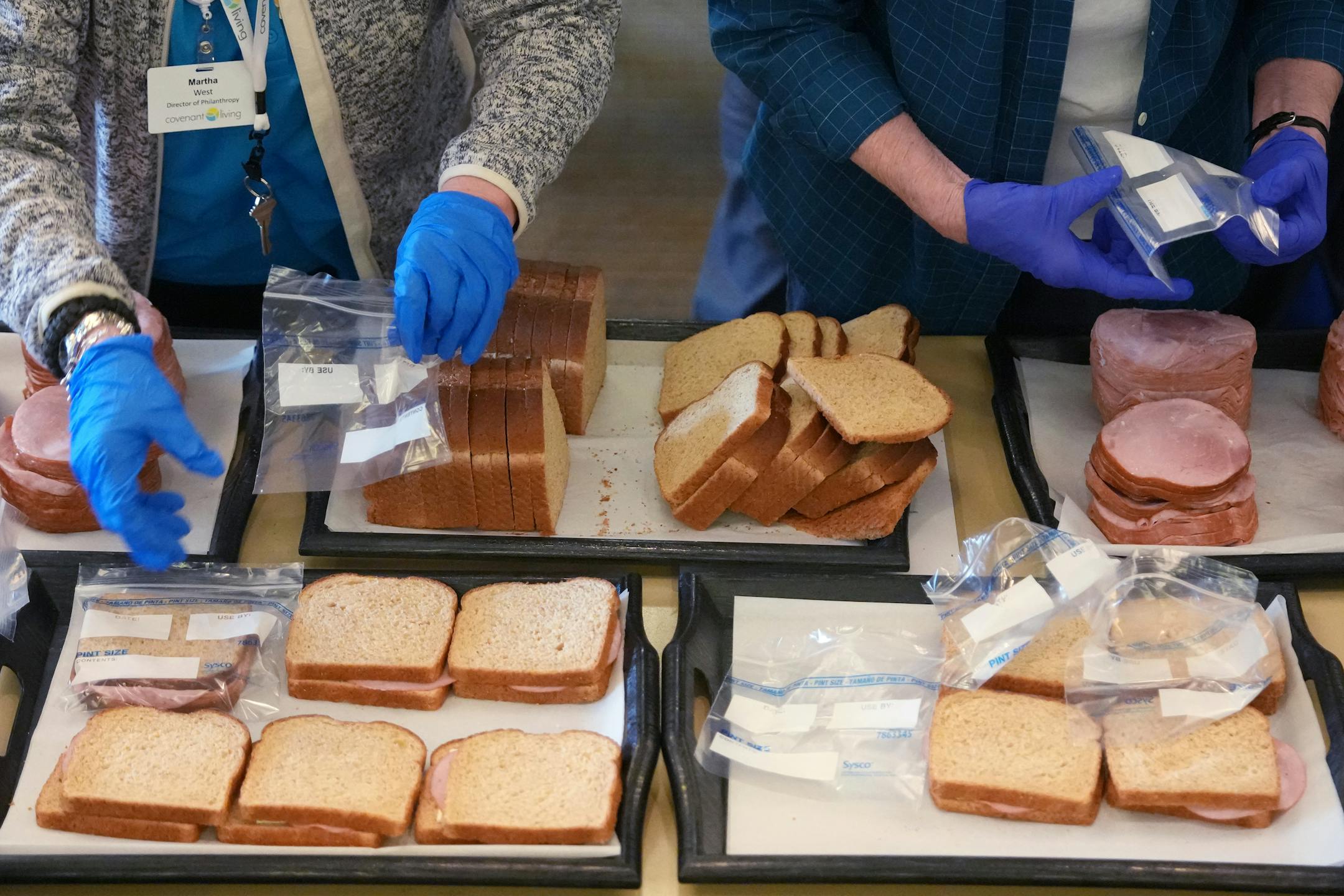
Allan Law, who was known for decades as the "Sandwich Man" for feeding the homeless in Minneapolis, watched from his wheelchair as volunteers prepared 2,500 meat and cheese sandwiches. (Anthony Soufflé/The Minnesota Star Tribune)

The Sandwich Man lives.

These days you can find him in a wheelchair or leaning on a walker, his body and mind slowed by decades of overnight work feeding and serving people living off the streets of Minneapolis. Now, that work continues, in slightly different form.

Allan Law has been hailed as an urban servant, a hero and a modern-day Mother Teresa. He was featured in a documentary and has been lauded by three U.S. presidents. Although he’s dedicated much of his life to providing blankets and bus tokens to people experiencing homelessness, he is known mostly for the thousands of sandwiches he handed out each night.

Now 81 and in declining health, the retired schoolteacher lives with dementia in a nursing home in Golden Valley. Last week, staff and fellow residents prepared sandwiches and care packages to serve the unhoused, in his honor. He observed from his wheelchair and tried to explain his life’s work.
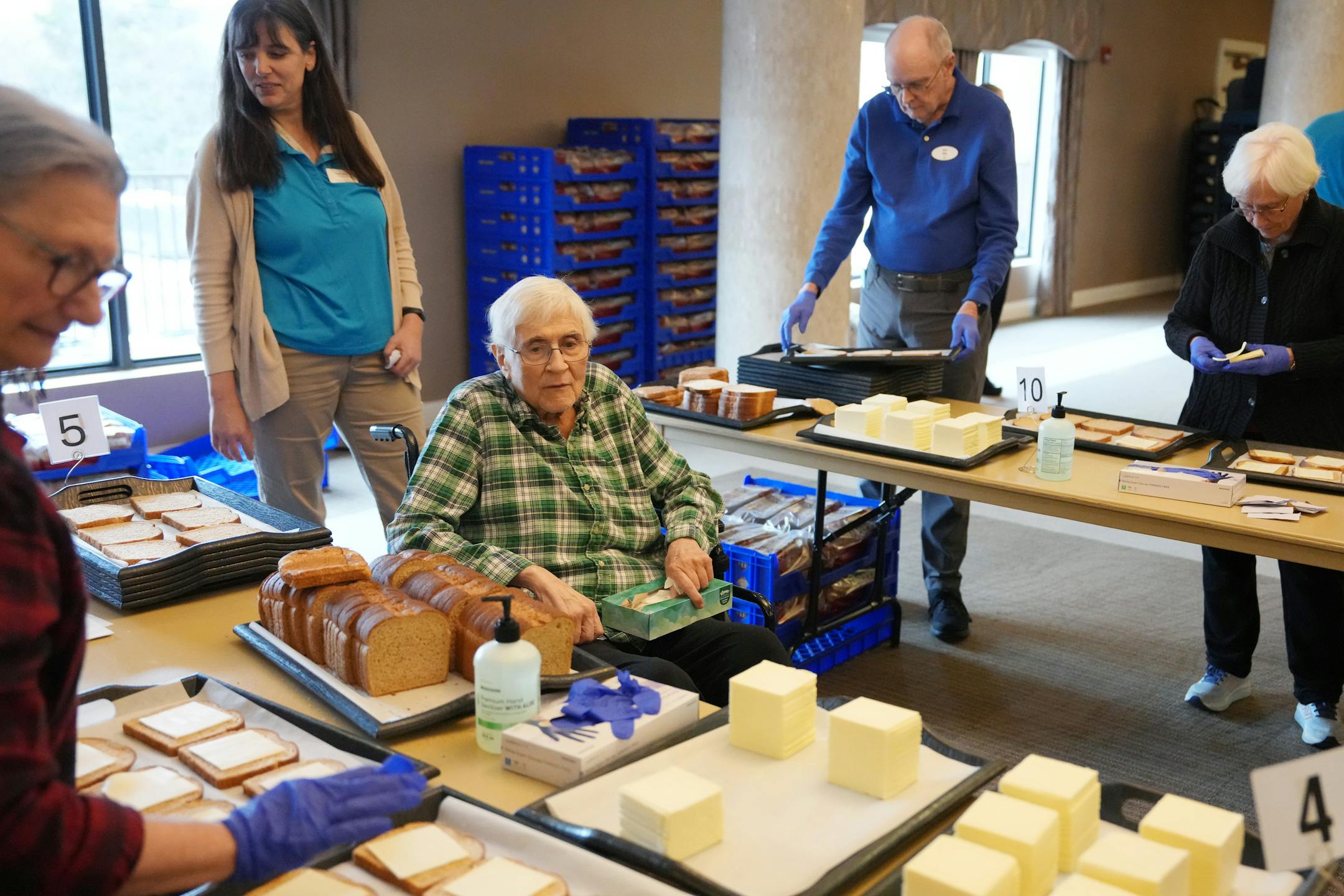
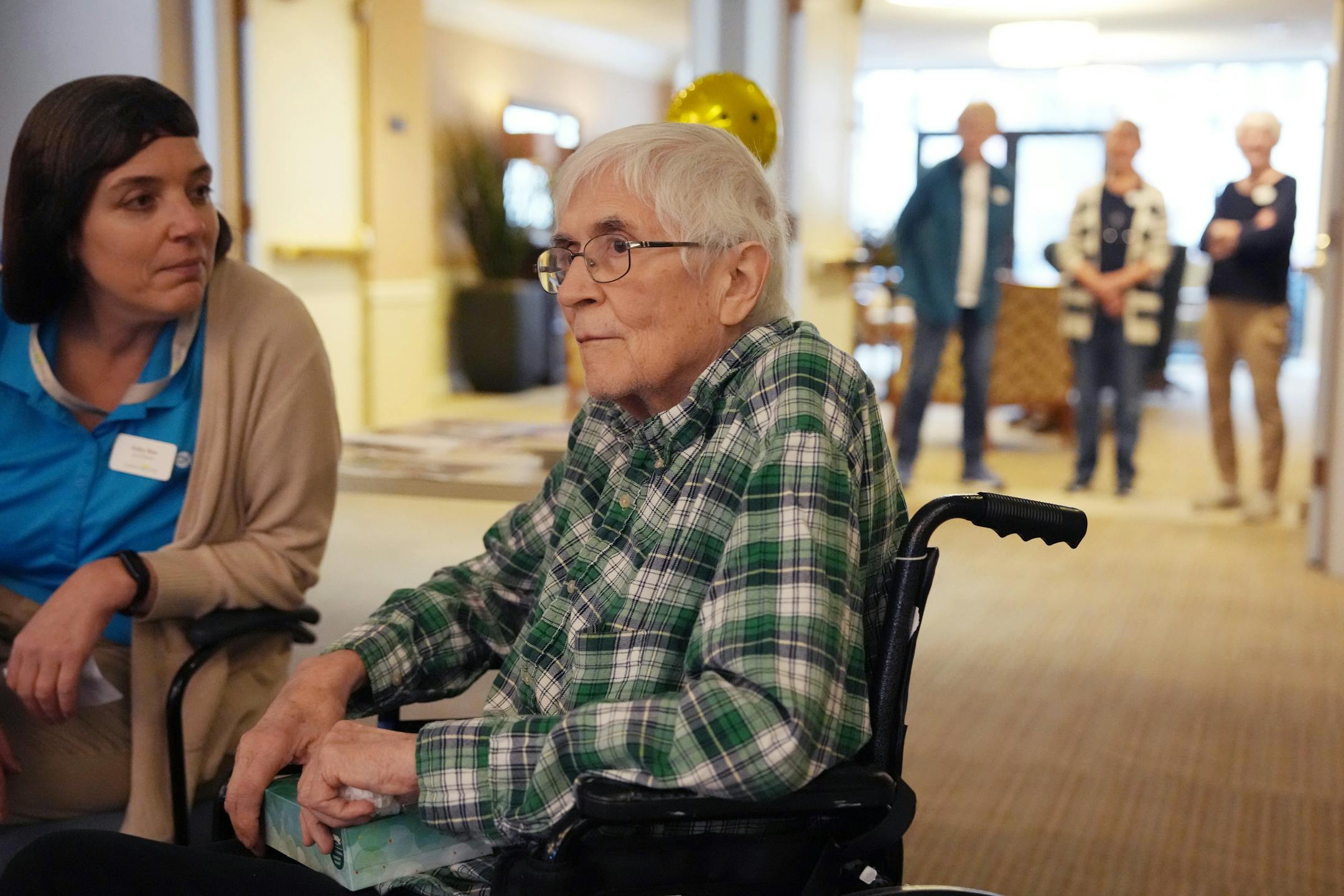
"I hope they've got a place to put them all," said Allan Law, regarding the 2,500 sandwiches assembled by fellow residents and staff at Covenant Living of Golden Valley. (Anthony Soufflé/The Minnesota Star Tribune)

Why did Law give out sandwiches?

“Because people were hungry,” he says matter-of-factly.

A hip injury a couple of years ago pulled him away from his street outreach. “Life is just different than it was before,” he laments.

“On a good day, he has enough self-awareness to know he can’t be out there doing what he’s done in the past,” says his brother Lanny. “He gets very frustrated and irritated. But nobody could do what he did. He did some crazy things.”

Law famously stored sandwiches, most of them made by volunteers organized by community groups and businesses, in 17 freezers out of his two-bedroom apartment. Before he set out for the night, he crammed his minivan from floor to ceiling with sandwiches.

He often ventured out at 10 p.m., not returning until 9 in the morning, his brother recalls. Law made up to 50 stops a night, including encampments and places that served the needy.

Law was lucky to catch an hour or two of sleep, often sneaking in a cat nap in his van.

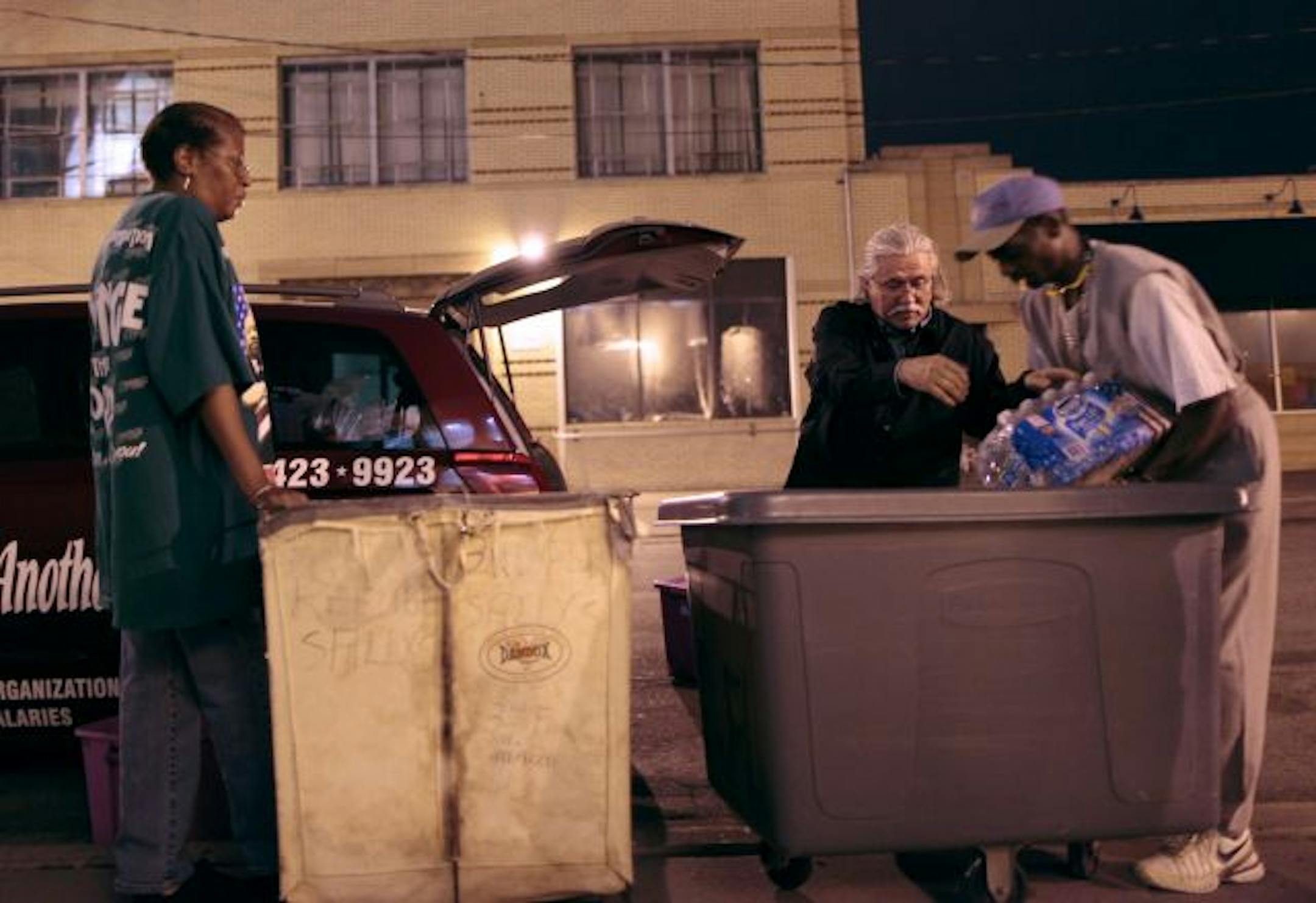
Allan Law fills bins with food for homeless people with the aid of Salvation Army employees Annette Sharp, left, and Steve Austin at right.
In 2009, Allan Law filled bins with food for homeless people with the aid of Salvation Army employees Annette Sharp, left, and Steve Austin. (Carlos Gonzalez/The Minnesota Star Tribune)

When Jim Hoey first met Law at a McDonald’s in 2017, the silver-haired man with the Sam Elliott mustache assured Hoey, “I am the craziest person you will ever meet.”

‘He’s a saint’

Hoey, from Eagan, learned the depth of Law’s sacrifices, and eventually wrote a book about him called “Sandwich Man.” He describes Law as an eccentric storyteller who built a food-security program that was remarkable in its simplicity. Law had very little overhead. He accepted donations for bus tokens and supplies but did not take a salary.

“He’s a saint,” Hoey says. “He’s given up his life to help people.”

In 1967, Law created his organization, Minneapolis Recreation Development Inc., while teaching at Minneapolis Public Schools. He was inspired after noticing how many of his students came from poverty. He took kids after school to the Capri Theater in north Minneapolis or to see wrestling at the Armory.

The students also sold candy to local businesses to pay for Law’s traveling “summer camp,” which involved excursions to Chicago, Denver or the Black Hills in South Dakota. As a kid growing up in north Minneapolis, Trace Massie piled into a station wagon with other boys. The candy money paid for hotel stays, meals at Perkins and trips to circuses and amusement parks.

“Our summer camps were amongst the funnest summer camps in the history of summer camps,” says Massie. “All the kids who are in their 60s right now would confirm that.”

Law became a father figure to Massie, now 65, and his two older brothers. A longtime board member with the nonprofit Law founded, Massie credits his former substitute teacher for setting an example that steered him away from a jail cell or an early trip to the graveyard.

“There’s such a long list of individuals whose lives have been touched by Mr. Law,” he says.

After retiring from teaching in 1999, Law pivoted to serving the homeless and his sandwich ministry. His nonprofit is more commonly known as Love One Another, a saying he had splashed onto the side of his van. The slogan is a nod to his mom’s needlepoint work that carried the same message.

His work is not done

In August, after a series of falls, Law, a cancer survivor, moved into the skilled-nursing section of Covenant Living of Golden Valley. He proudly shared with other residents how he used to help people.

But he spoke entirely about his calling in the past tense. “We didn’t want him to think his work was done,” says Grace Gobler, a health care administrator at the facility.

Volunteers from Covenant Living of Golden Valley prepare 2,500 meat and cheese sandwiches in honor of resident Allan Law, who was known for decades as the "Sandwich Man" for feeding meals to homeless people in Minneapolis. (Anthony Soufflé/The Minnesota Star Tribune)

So Gobler and her colleagues decided they would help see that Law’s mission would continue.

Last week, a caregiver wheeled him through the aisles between tables supporting the sandwich-making operation. Volunteers assembled 2,500 sandwiches to carry on Law’s legacy.

Resident Pat Johnson’s job was placing a slice of turkey or ham atop a piece of bread, before moving it along the assembly line for cheese and bagging.

She remarked that “everyone does a small part that ends up making a huge difference.”

That was always Law’s hope. That compassion would beget compassion. That a tiny kindness would snowball into something bigger and lasting. He tears up when he thinks of former students who still visit him, and the deep connections he’s forged.

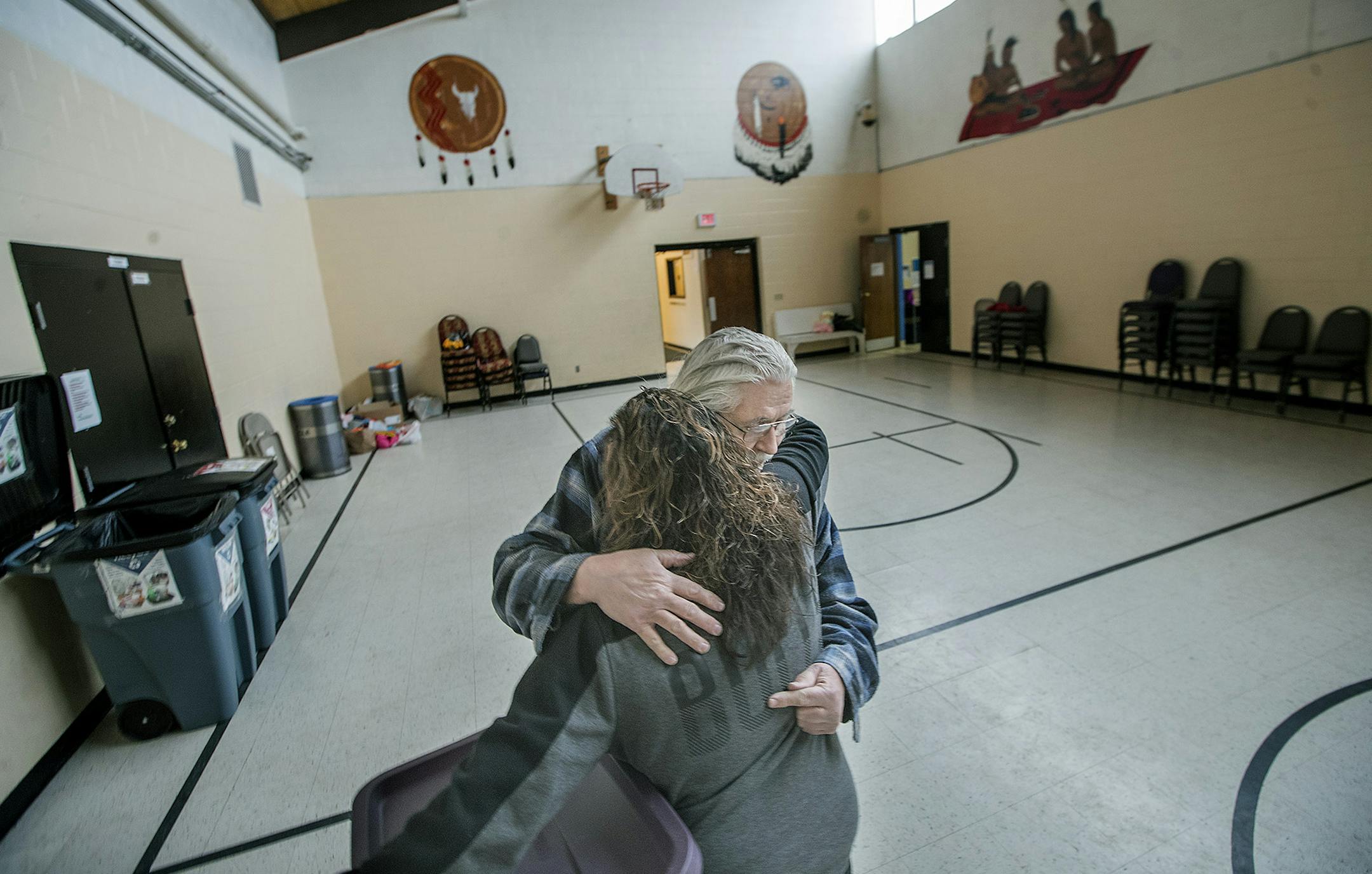
Allan Law, 73, who has helped the needy for more than 50 years, hugged a former student at the Little Earth gym.
In 2018, Allan Law, who had helped the needy for more than 50 years, hugged a former student at the Little Earth gym. (Ellen Schmidt/The Minnesota Star Tribune)

Minnesota is in crisis now. As some immigrants are afraid to leave their homes, their neighbors are delivering them groceries. Moms are raising rent money for families separated by ICE. Students are checking in on friends who are too scared to come to school. Extreme cold adds an additional stress for the unhoused.

I’m reminded that there is so much need in our community. And yet, there are countless people like Law, ready to meet it. That’s where my hope resides.

“You never fill the need up,” Law says. “Nope. You never.”

How to help

Minneapolis Recreation Development Inc. plans to ramp up its sandwich distribution for the unhoused. If you would like to host a sandwich-making event, visit 363days.org to learn more or send an email to mrd.363days@gmail.com.)

about the writer

about the writer

Laura Yuen

Columnist

Laura Yuen writes opinion and reported pieces exploring culture, communities, who we are, and how we live.

See Moreicon

More from Culture

See More
card image
card image