

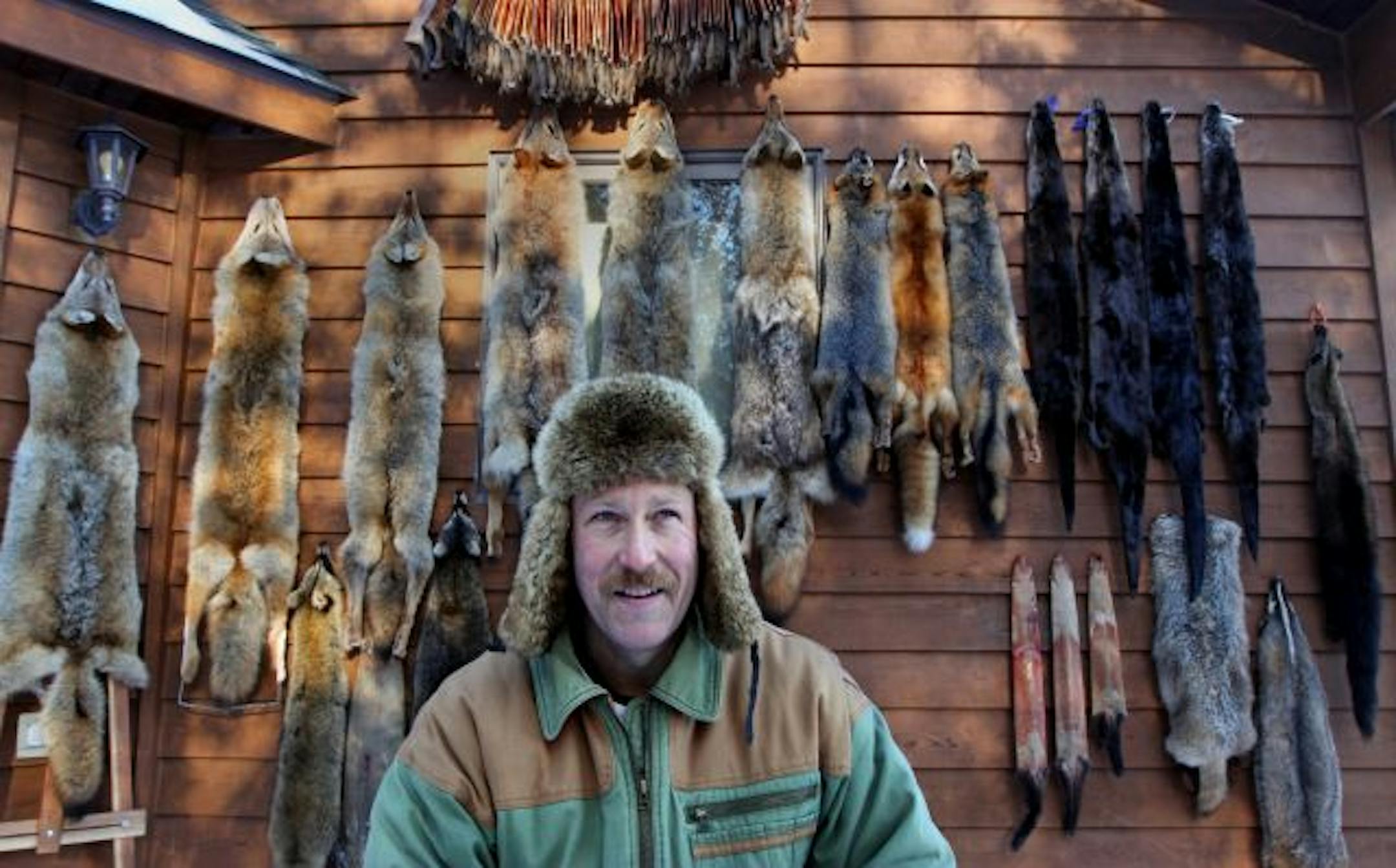
In the original territory we now call Minnesota, there was once only one commercial industry: trapping. From about 1650 to 1850, a time known as the Fur Trade Era, fortunes were made by traders with such still-familiar names as Sibley, Le Sueur and Radisson. Native people, Ojibwe and Dakota, were paid for their pelts with the wonders, some would say curse, of modern-day Europe: copper kettles, knives and guns. The currency of those days, so-called soft gold, was animal pelts.
The end of the Fur Trade Era came rather abruptly when European fashionistas decided beaver skin hats, all the rage on the continent for decades, were suddenly so yesterday. Trapping has never been the same.
Today, by the whims of fashion and the swing of the mindset pendulum toward the rights, real or imagined, of our fur-bearing neighbors, animal pelts have lost their golden luster for all but a few. Those few numbered about 5,500 Minnesota trapping- license buyers in 2009, down from nearly 25,000 in 1980.
Andy Shoemaker, a police officer who lives in rural Stillwater, is one of the hard-core cadre of Minnesotans who still tromp through snow practicing the ancient art of catching fur-bearing animals. Shoemaker's fascination with animal tracks led him to the sport of trapping.
"I was wandering around the old Mariner High School in White Bear," Shoemaker recalled, "and I came across some tracks that I knew from my books were mink. I went home and told my dad I was going to catch a mink. He just laughed. But the very next day I had that mink."
By the time he was 9, Shoemaker had a neighborhood trap line and was catching 30 to 50 muskrats a season. He sold his pelts to Lee Schommer, a modern-day fur trader and taxidermist in Prescott, Wis., who has a habit of paying kids more than adults for the same pelts to encourage their trapping interest.
Today Shoemaker places 75 foot traps for muskrats, beavers, badgers, mink and otter and another 20 to 30 snare traps for fox and coyote. He lists his ability to read the lay of the land, his experienced understanding of the habits of various fur bearers and his powers of observation as keys to his success. "It's the old real estate maxim," Shoemaker said. "Trapping is all about location, location, location. Where is that coyote going to cross this fence?"
Shoemaker notes, despite the waning interest in trapping, the fur bearer populations are far better today than when he was a kid. For example, the DNR recently expanded trapping for otter to the entire state because their numbers are so high. Otter pelts must be inspected and tagged by the DNR to monitor their take.


