

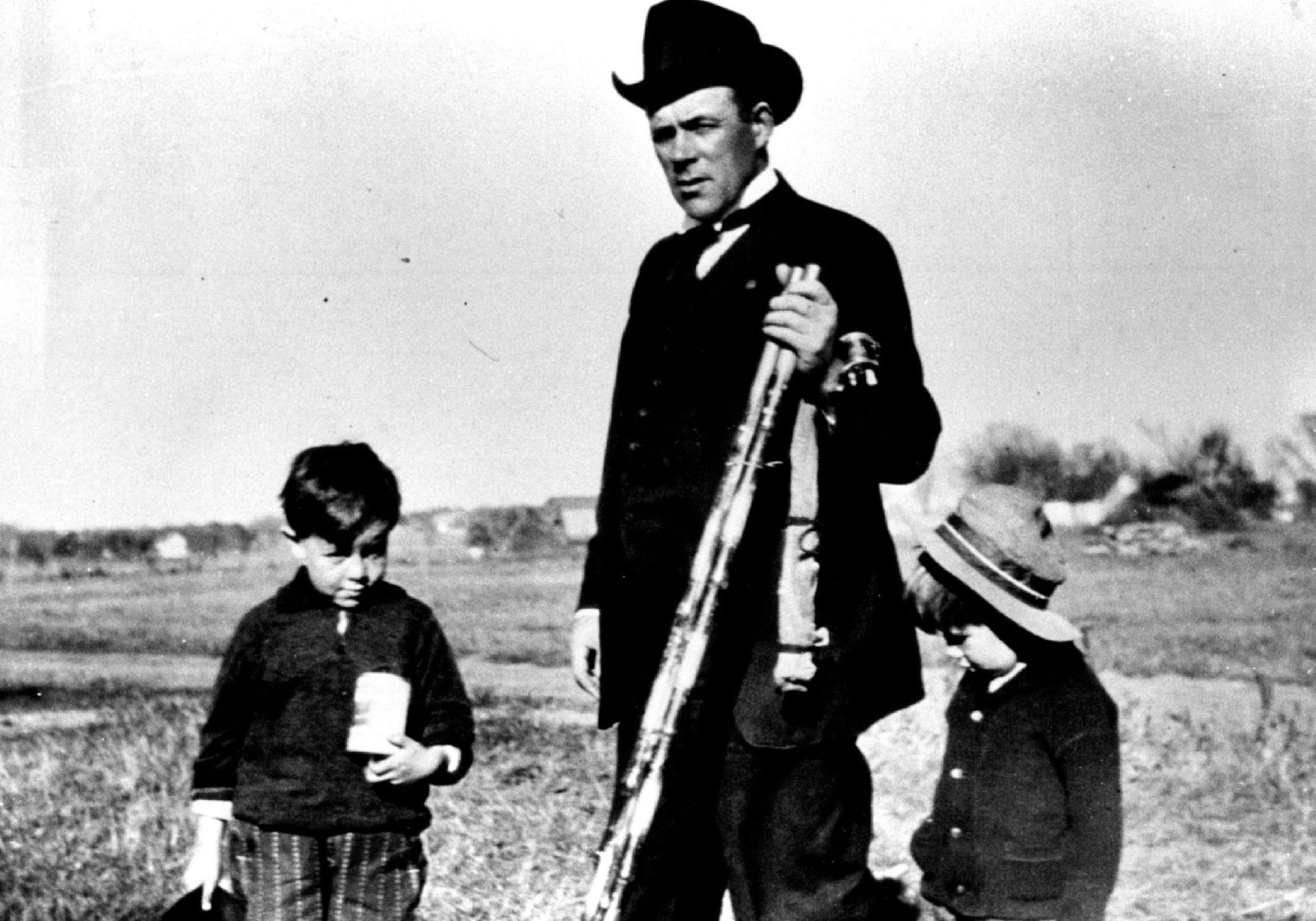
The best book ever written by a Minnesotan — one of the six most important American novels, poet Carl Sandburg said — is a tragedy of immigrant life.
Ole Edvart Rolvaag, whose son Karl would one day become Minnesota's governor, emigrated from Helgeland, Norway, to the Upper Midwest in 1896. Instantly, he succumbed, he wrote, to "a feeling of utter helplessness, as if life had betrayed me … the sense of being lost in an alien culture. The sense of being thrust somewhere outside the charmed circle of life."
I last wrote about Rolvaag's heartbreaking 1926 masterwork, "Giants in the Earth," almost 30 years ago. It was in an editor's note for another publication that at the time was reporting on maladjustments among Minnesota's Hmong refugees, who were then fairly recently arrived.
This spring seems another suitable moment to remember Rolvaag and his book, as Minnesotans struggle to comprehend, or even imagine, the kind of alienation that is inspiring young Somali-American men in our community to sign up for duty with savage terrorist armies in the blood-drenched Middle East.
Rolvaag's harrowing account of the sufferings of my Norwegian immigrant forebears in the 19th century at least makes one thing clear: Self-destructive estrangement among new arrivals to America is nothing the least bit new.
"If you couldn't conquer that feeling," Rolvaag continued, describing the Scandinavian immigrants' anguish, "if you couldn't break through that magic hedge of thorns, you were lost indeed.
"Many couldn't and didn't — and many were lost thereby."
We like to say America is a nation of immigrants. But our understanding of immigrants' psychological struggle — that "sense of being lost in an alien culture" — seems to die with the first generation or two.


