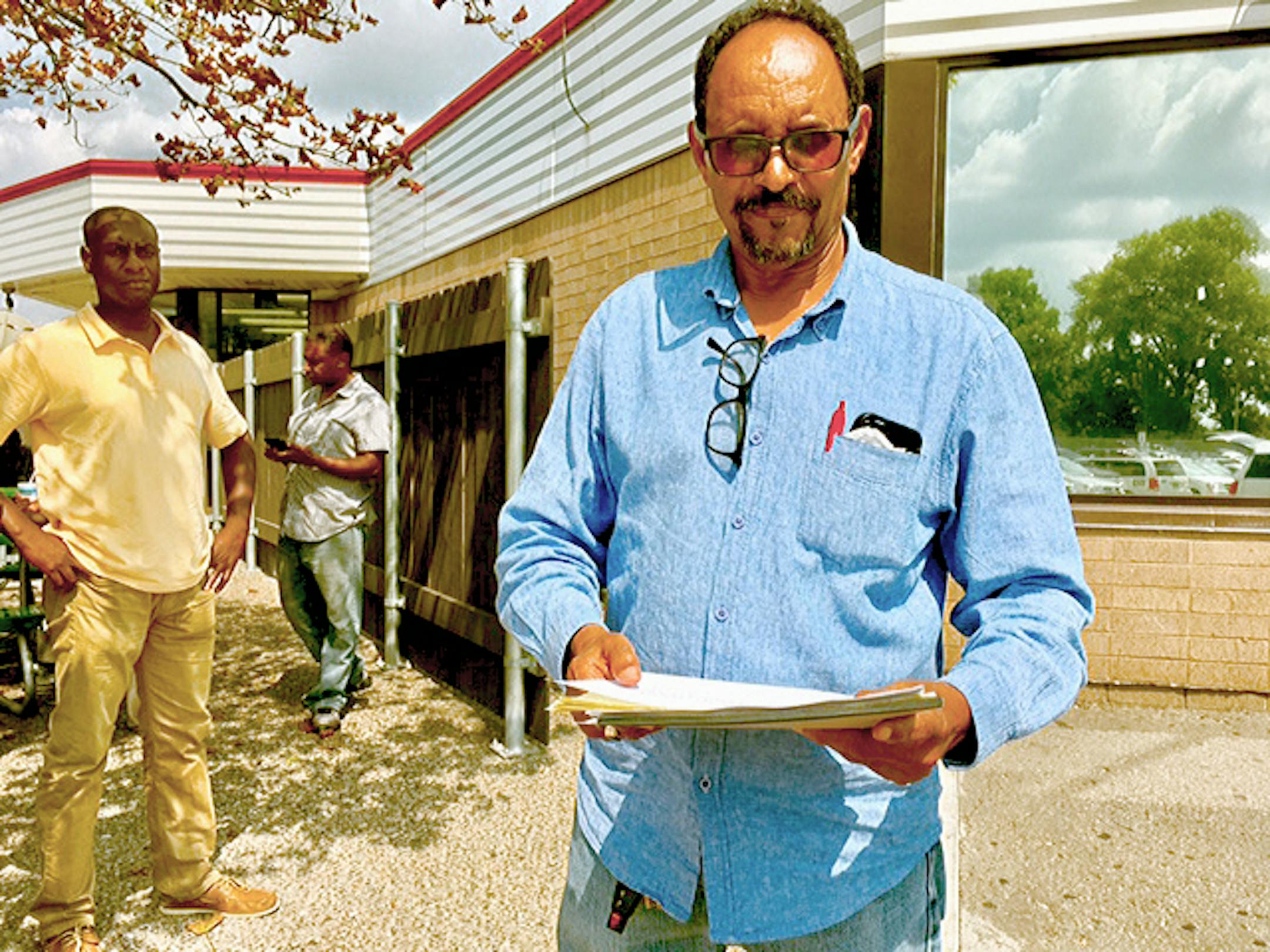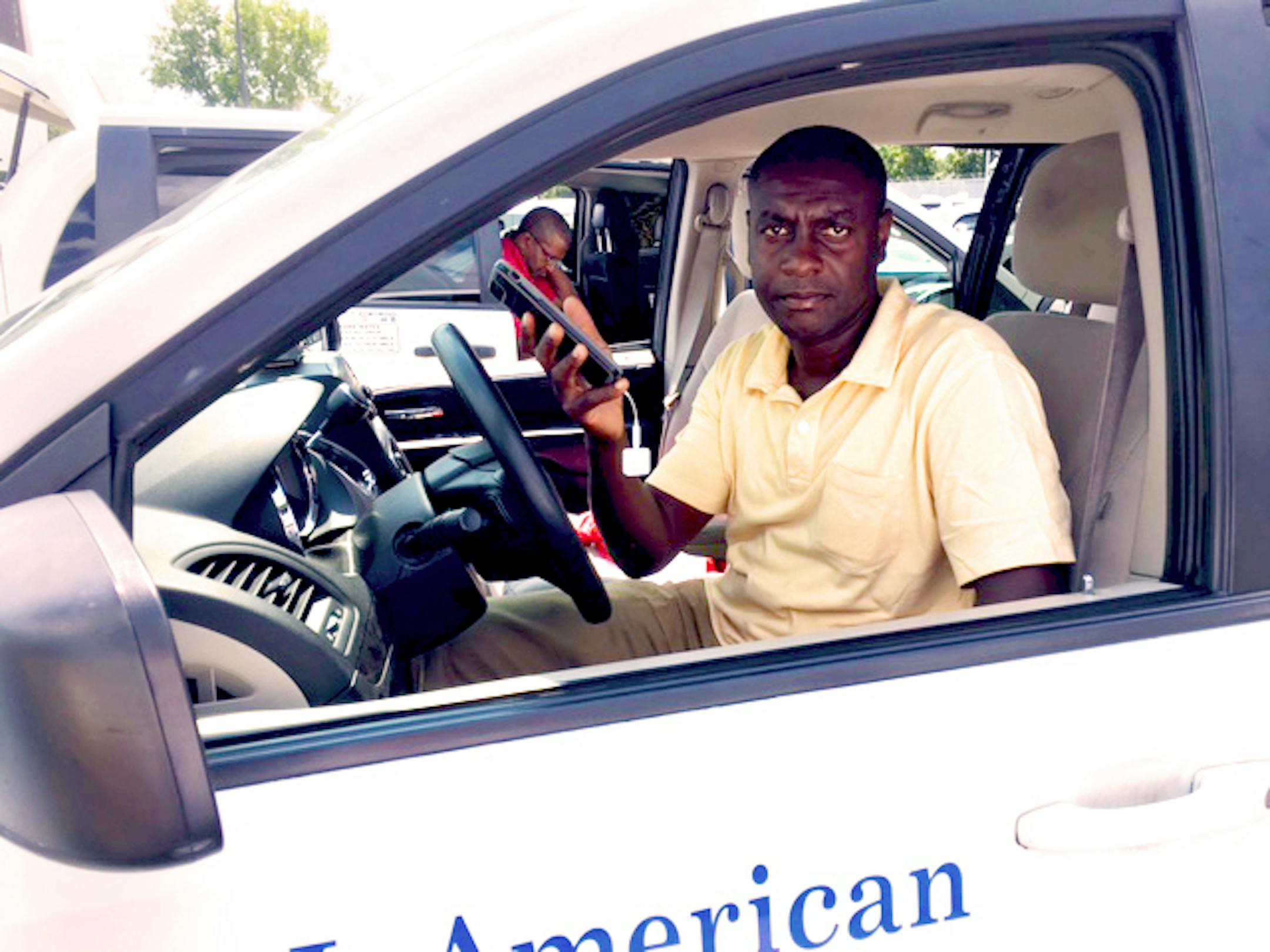
Several hundred taxicab drivers at the Minneapolis-St. Paul International Airport are upset about new rules overseeing the way credit card payments are processed for cab rides.
The requirements are part of a new regulatory framework adopted by the Metropolitan Airports Commission (MAC) last year as upstart ride-sharing services such as Uber and Lyft have grown increasingly popular with travelers at MSP.
The MAC now requires taxi companies to mount a credit card reader in the back of every cab, which the commission claims is a more secure method of payment. But cabbies say fees associated with these readers deeply erode their income stream — already hurting due to fierce competition from Uber and Lyft.
"To impose this is unfair," said Cowami Di Senard, a cabdriver with Airport Express Super Taxi. "We can't lose more than what we're losing today. I've already lost 30 percent of my business. It's too much."
More than 374 airport taxi drivers signed a petition that triggered a public hearing last week. "It's like they don't want us to make money," said Muluneh Belai, a cabdriver for more than 20 years.
Drivers say the credit card readers charge a 7 percent fee for each transaction, plus $25 a month, and require a three-year contract with an early-termination penalty of up to $700. They say these fees are passed on to them.
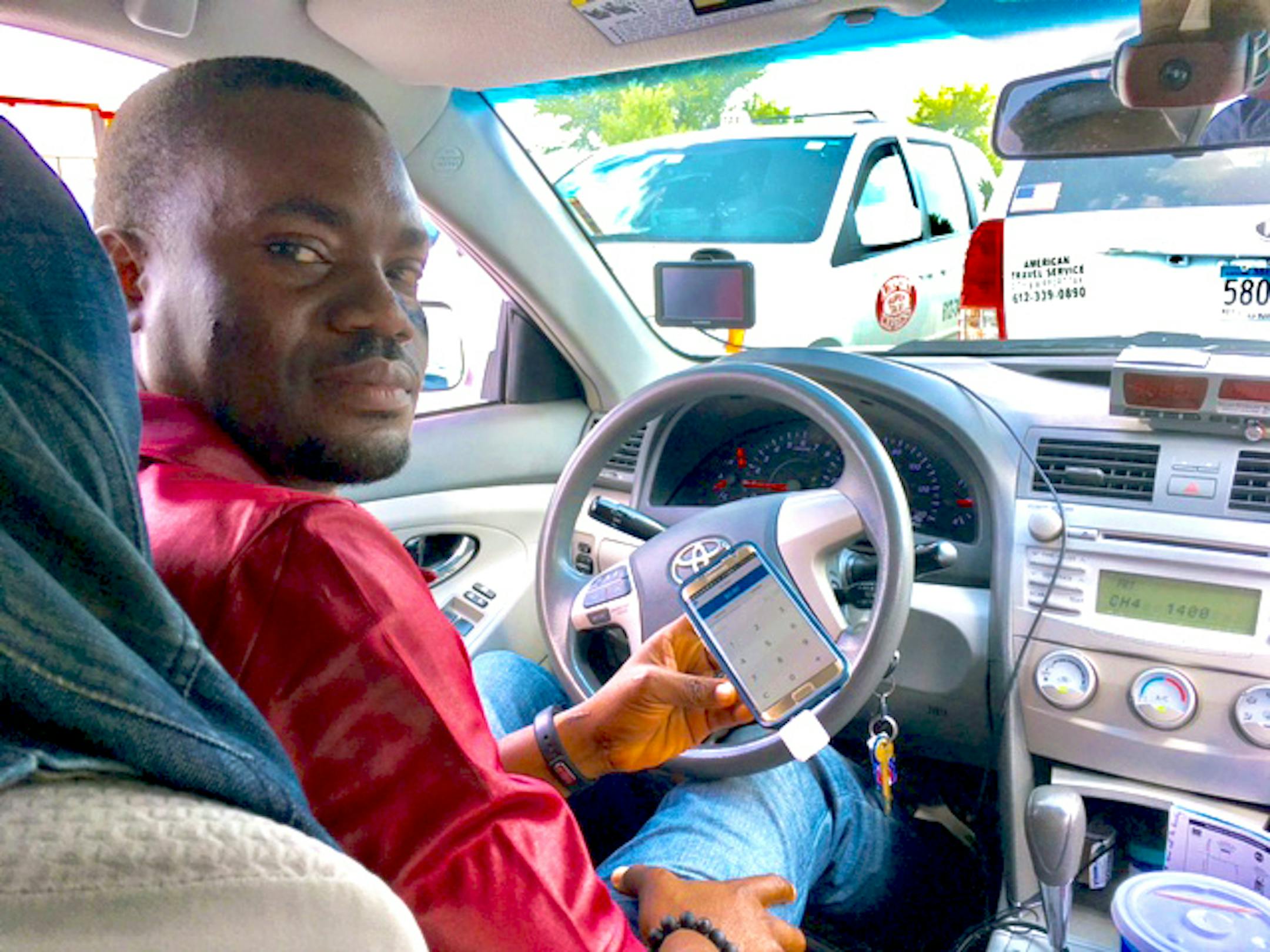
Many cabbies prefer to use a popular smartphone accessory for credit card payments called Square, which charges a 2.75 percent fee for each transaction. Users swipe their credit card through a cube device, then sign on the phone's screen. Receipts are delivered by e-mail or text.
Based in San Francisco, fast-growing Square Inc. introduced the tiny attachment about eight years ago and is now generating nearly $50 billion in gross payment volume a year.