

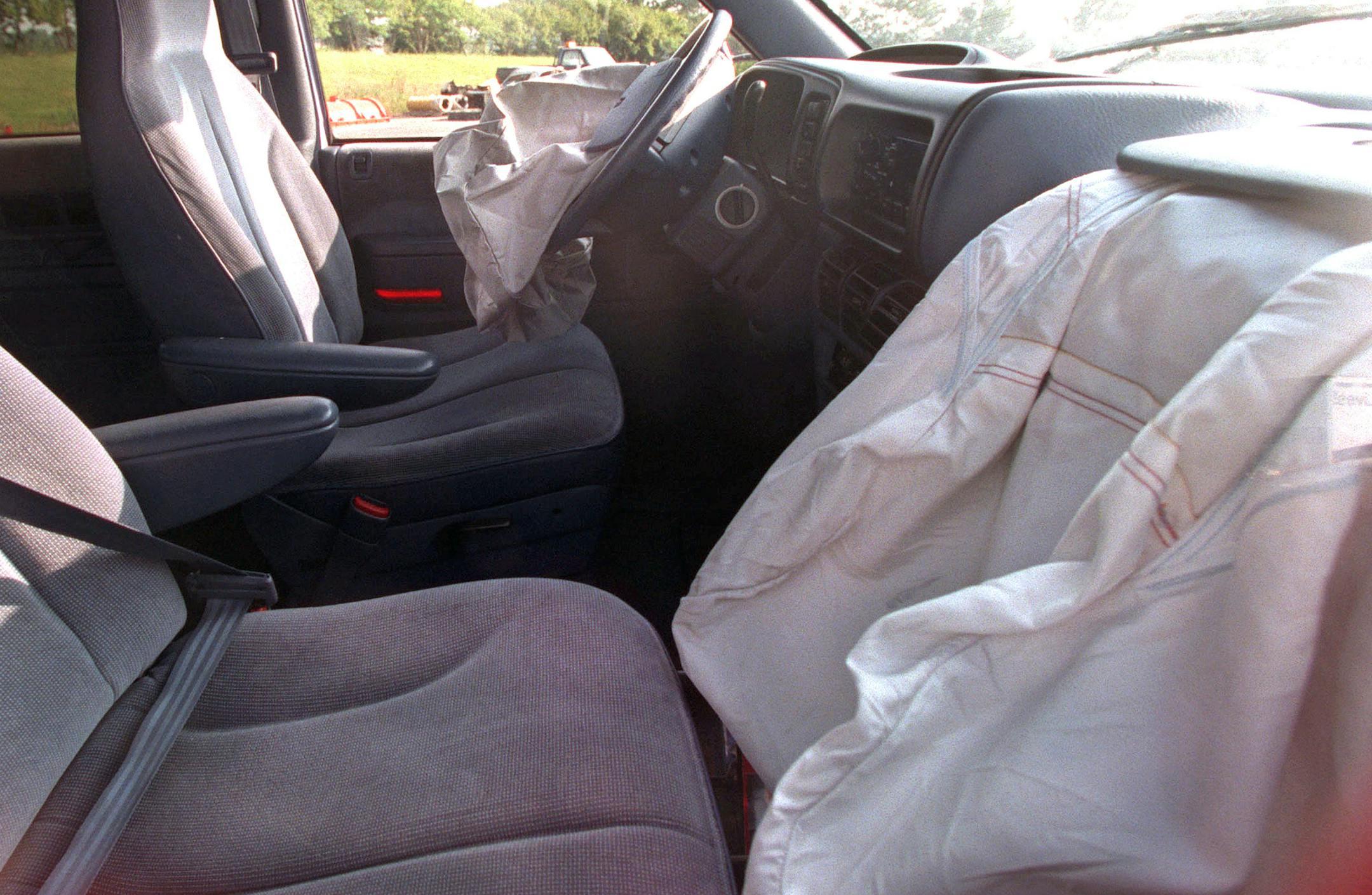
SOUTHFIELD, Mich. – When Ford recalled 600,000 sport-utility vehicles last week, it became the fourth carmaker this year to acknowledge an issue with malfunctioning air bags.
So far in 2014, automakers in the United States have recalled about 6.6 million cars and trucks, more than a third of the total, for defects that could prevent air bags from deploying properly in a crash. At Ford, engineers found buggy software could delay air bags from activating in a rollover. In March, Nissan recalled almost 1 million cars, including the 2014 Altima, because software sometimes thinks a passenger seat is empty, leading to an air-bag failure.
A technology that's saved thousands of lives has become a preoccupation for carmakers and regulators ever since General Motors acknowledged air bags failed to deploy in accidents linked to 13 deaths. While a defective ignition switch was responsible in those cases, software is often the culprit, a byproduct of cars' growing complexity. Some models now feature 11 computer-controlled air bags that protect everything from the head to knees.
Hard to test everything
"The more situations you're trying to cover, the more complex your algorithms get, and the harder it is to know that it's going to do the right thing," said David Zuby, chief research officer for the Insurance Institute for Highway Safety. "It's hard to test everything and the real world is a lot more complicated than the test laboratory."
While the National Highway Traffic Safety Administration has been studying air-bag non-deployment for at least a decade, the top U.S. auto regulator is under increasing pressure from safety advocates to better understand a technology that gets more complicated with each new wave of models.
In April, the Center for Auto Safety asked NHTSA to investigate reports that a software fault can misread a passenger's weight and render air bags inoperative in 2003-2010 Chevrolet Impalas. At least 143 people have died in frontal crashes when an Impala's air bag didn't deploy, said Donald Friedman, a safety consultant, who cited data collected from NHTSA's fatal-crash database. Other automakers may be using the same technology, he said.
Despite its flaws, the air bag is considered a successful technology, having saved an estimated 37,000 lives from 1986 through 2012, NHTSA said.
While not mandated for all light vehicles until 1999, front air bags began appearing in the 1970s. The devices were much simpler then. In a severe crash, a ball bearing was forced down a tube, completing an electrical circuit and deploying the bag.


