

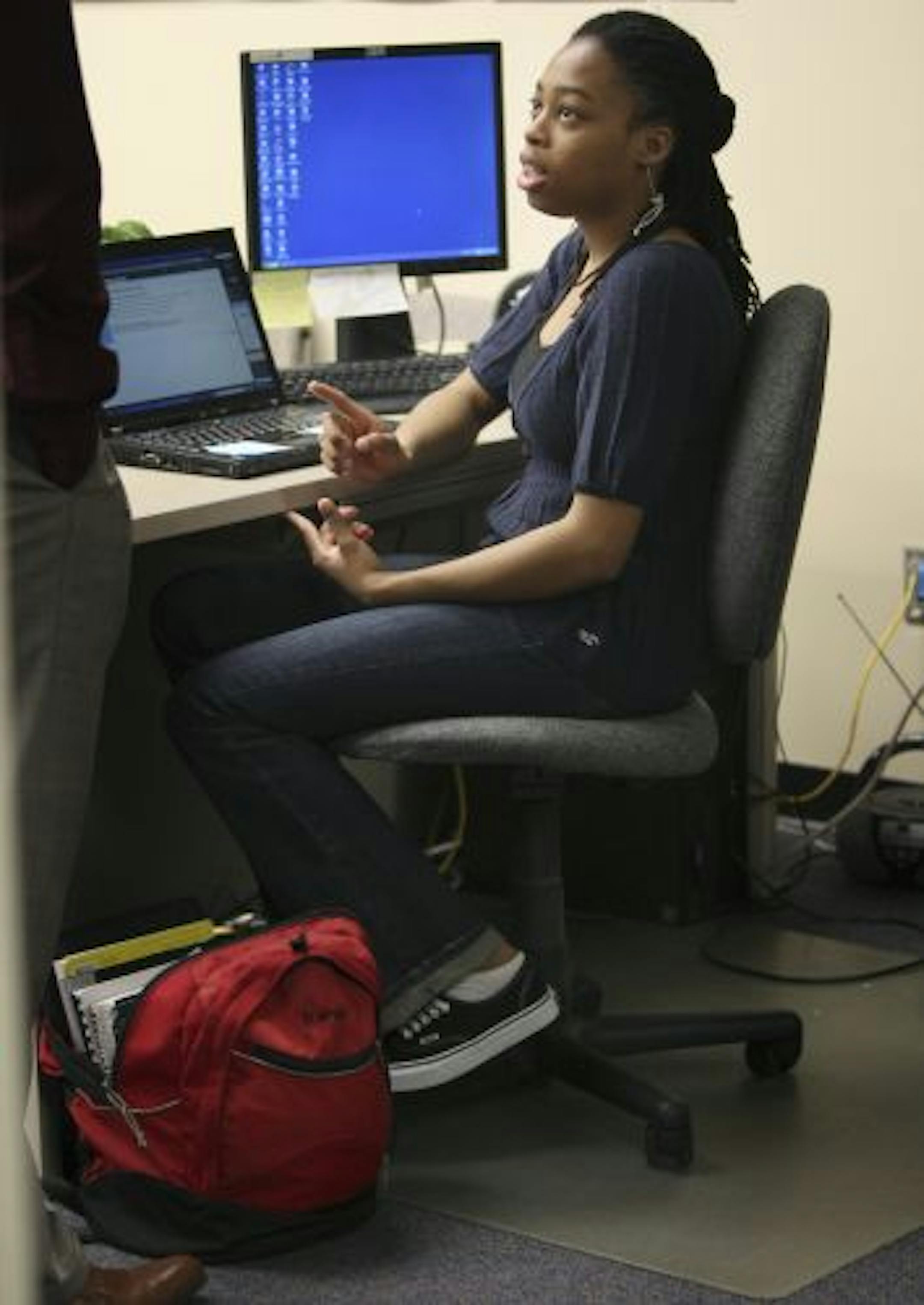
Marquita Walker is smart enough to win scholarships, poor enough to get grants, disciplined enough to work three on-campus jobs.
But the Concordia University junior worries that next year, she won't have enough money to pay tuition.
Federal and state grant programs for low-income college students face unprecedented cuts. Last weekend, the U.S. House of Representatives passed a measure that would shrink next year's maximum per-student Pell Grant by $845.
Even without further cuts, Minnesota's already-strained State Grant program will shrink student grants to grapple with a projected shortfall. Last year it awarded $168 million to 103,400 low- and middle-income students.
Facing tough times themselves, many public and private colleges and universities don't expect to make up the difference.
"The fact is that we can't," said Kris Wright, director of the Office of Student Finance at the University of Minnesota. "We can't afford to do that in a time when our own budgets are getting cut."
Officials fear the bottom line will mean fewer students going to college.
Add in another tuition increase, and "we may have a lot of folks heading off to some other institutions or just plain dropping out," said Rep. Joe Atkins, DFL-Inver Grove Heights.


